Monday, October 09, 2017

New Texas Ranger Mystery Series from J M Gulvin, THE LONG COUNT

US cover
The name J M Gulvin won't be familiar even to readers of this British/American author's long series of previous books, because it's a new pen name -- earlier titles came out from "Jeff Gulvin" and the pseudonym "Adam Armstrong."

Hard to say whether this newest nom de plume is intended to sound like Texas. In fact, the toughest part about THE LONG COUNT, a debut in a Texas Ranger series, is that almost nothing in the book "sounds like" the Lone Star State. And for a region with such distinctive language, that's quite a drawback in a novel set there.

On the other hand, there's plenty of Southern in the book, where Ranger John Quarrie (careful, don't confuse this with Quarry, a creation of Max Allan Collins) is struggling to keep up with the work load during student protests during the Vietnam War. Quarrie's tangled connection with a recently returned Nam veteran, Isaac Bowen, takes him dashing along back roads and sometimes all the way past the Texas border to Louisiana. What's the story behind Isaac's father's death -- and is it suicide (which John Quarrie doubts) or murder? Where is Isaac's missing brother Ishmael? Why do the members of this devastated family have ties to a high-security asylum for the criminally insane?

It took me a while to get into THE LONG COUNT because of the lack of Texas feel to it. But I finally found Quarrie -- or John Q, as he is also known -- such an interesting detective that I fell into the story after all. Quarrie's friendships and unusual extended family, including his young son, are especially intriguing. So is the rich language with which Gulvin piles details into the scenes:
Quarrie approached the house along the overgrown footpath with a flashlight the chief had retrieved from the truck. The stoop was cut from rough-looking wood and two of the steps were rotten, the edges turned to mush. He picked up a scraping of mud that seemed to have been deposited at an odd angle. Coasting the beam from the flashlight across the grass he saw where it was flattened in places and that was not due to the rain. Moving away from the stoop he looked more deeply and shone the torch on the turned earth under the window.
You can see from that sample that Gulvin's Britishisms haven't been fully pruned out. It makes for some odd descriptions, with a bit of a strange rhythm to the prose. But the plot twists are smart and dark, and the book is still a good read.

Besides, I love getting in on the first book of a series -- it's exciting to wonder how the author will grow with the characters in the titles yet to come!

THE LONG COUNT -- the title refers in one sense to going underwater and holding your breath -- is brought to American readers by Faber and Faber, and comes recommended by the magnificent Ann Cleeves. Keep your expectations modest, and enjoy the ride.

PS:  Looking for more mystery reviews, from cozy to very dark? Browse the Kingdom Books mysteries review blog here.

Sunday, October 08, 2017

Brief Mention: THE FURY, John Farris, Classic Crime and Horror Fiction Re-Released by Chicago Review Press

Film buffs may be far more familiar than I was with THE FURY, released in the horror genre in 1978 (a Brian De Palma film). The recent release of this book in softcover by the independent Chicago Review Press gives an exciting way to see the original book and how John Farris, known for his contemporary horror, handled the plot some 40 years ago.

Today's fiction has surged past the premise of THE FURY in many ways -- it's not at all surprising to find that a CIA agent (Peter Sandza) needs to seek out his government-kidnapped exceptional son Robin. And the paired plot line with a mega-wealthy family's daughter, Gillian Bellaver, sharing some of Robin's unusual psychic gifts (and perhaps a psychic bond?) is not unusual, either.

But without the frills and imagery of the silver screen, it's fascinating to watch the author lay out these two young lives as the ordinary and familiar unravels. I didn't find it as chilling as the film surely was in 1978. But I couldn't put it down, either. And seeing the book as prelude to today's masters of the paranormal crime mystery (like John Connolly) is irresistible.

For insight into how the horror genre developed and for a fascinating look at the written precursor to the noted film, THE FURY is well worth picking up and ... dare I say, enjoying? (Oh, don't let the rather basic cover deter you. It's irrelevant to the work.)


PS:  Looking for more mystery reviews, from cozy to very dark? Browse the Kingdom Books mysteries review blog here.

Crime-Solving in the Korean DMZ (and Beyond) for Sueño and Bascom in THE NINE-TAILED FOX, Martin Limón

Soho Crime continues to bring remarkable international crime fiction to American readers -- and one of most enjoyable of the current series is the one from former military pro Martin Limón. Limón writes from his decade spent in Korea, with the complex mixture of love and despair that a friend of this small-but-fierce nation can easily develop. And his investigators from the US Army's military police in the 1970s, sergeants Ernie Bascom and George Sueño, operate from that same complicated standpoint: wanting to make things work out well for the Koreans around them who are so often misunderstood by the American forces, and pressed to a timeline of "solve this and get back to base" -- while also resisting the dangerous partnership with the Korean National Police that they've entered over the past few titles in the series.

There are already a dozen books before this just-released title, THE NINE-TAILED FOX, and I'm such a fan of these well-written crime novels that I suggest reading them all. But you don't need to have followed the series before plunging into this one. For one thing, Limón is a strong author who engages readers in both character and plot twists, without depending on prior knowledge; for another, it appears from the slightly uneven "explaininess" of the first few chapters that someone decided to make sure there were extra paragraphs to bring people into the situation. After all, Army life isn't simple, and neither was the Korean assistance in the 1970s, a presence by American forces that the Asian nation desired in order to hold back the Chinese, but also in some senses an Occupation operating from a narrow set of prejudices and military logic.

This time, George and Ernie -- the only ones on their base who seem able to navigate the streets of Seoul successfully -- are thrust into investigating three missing servicemen, in three different locations. The pressure's nonstop, from their superior officers (solve it, clean it up), from the Korean officer they've nicknamed "Mr. Kill" who's going to take things into his own hands soon, and of course from the sense of obligation these investigators feel when they witness murder and the associated local pressures of organized crime and prostitution.

The title refers to a Korean fairy tale of a sexually devouring woman called "the nine-tailed fox" -- or in Korean, the gumiho, a term that the investigators first hear described by others as a "gummy whore." (Their on-base informant, an eccentric pervert they've nicknamed "Strange," is quickly obsessed with this archetypal figure!) She appears to have lured each of the three missing men in some way, in order to kidnap them. But why? There are no ransom demands, no action that makes sense in American terms. Or Korean!

By the time Sueño and Bascom -- with dangerous assistance from Mr. Kill -- sort out what's really going on, they're in too deep to back out. But also too deep to keep themselves safe.

Let the awkward first few pages slide by, and follow the chase into the complicated crime and highly specific Korean negotiations that follow. This is a great page-turner, and at the same time a classic military-based mystery, packed with action and intrigue.

Oh yes, do get the rest of the series as soon as you can. I've rarely found a series with such diverse plots. And having a small taste of Korean culture in the past, I find the setting and motivations in Limón's books addicting, and the plots highly readable. Thanks to Soho Crime as well as the author, for keeping this one rolling.

PS:  Looking for more mystery reviews, from cozy to very dark? Browse the Kingdom Books mysteries review blog here.

Long Effects of Evil in BLOCK 46, Johana Gustawsson


US cover
Sometimes the movement of a good (or great) crime novel from Europe to the United States takes a while. Then again, some of them never come across the ocean. Still, the three-year transit for BLOCK 46 from French crime writer Johana Gustawsson was too long a wait for such a blockbuster of a novel.

UK cover
Like the generation-long effects of abuse and murder in the Irish "Troubles" so hauntingly portrayed by Stuart Neville, Gustawsson's terrain of Nazi terror creates people and events steeped in evil. But this author doesn't simplify in any sense -- while the serial killer in BLOCK 46 seems to reenact some trauma of Buchenwald's killings, the novel is told from three voices: his, and those of two women.

Emily Roy, a top-tier Canadian criminal profiler who works for the British police force, demands detailed support services and instant access to crime scenes and information. Considering that she's working on a killer who has already piled up three bodies in two nations when the book begins, she needs every crumb of information and insight possible.

Alexis Castells, a close friend of the first adult that the serial killer tackles, can't walk away from the murder of jewelry designer Linnéa, who at first is the lone victim in Sweden. Haunted by an earlier crime she's been unable to finalize emotionally, Alexis determines to tag along with Emily -- who, surprisingly, allows her into the pursuit process.

The book's three-voice construction is brilliantly balanced by Gustawsson. Her details of torment at Buchenwald -- the "camp" where her own grandfather suffered -- are acute and perceptive, but also rapidly exchanged for the more civilized scenes in London and Sweden as the investigation takes place. As reader, I found myself eager to return to Emily and Alexis and the assorted police officers they're teamed with. And yet after a few pages in their company, I was also ready to look again at the cold, bitter, twisted landscape and events in the concentration camp, wanting to know how (or whether) Erich Ebler, a medical student imprisoned and debased in the camp, was surviving.

BLOCK 46 was a huge hit in Europe; the author's website exposes interviews and background that fascinate almost as much as the book. Like this:
These places define me as a woman and writer: I'm not only Marseillaise and French, but I am also a Londoner and an aspiring Swede! I arrived in London in 2009, after seven years in Paris. At the time, I was a journalist, freelancing for French magazines. I immediately felt at home in this city of various villages steeped in history, great parks and ancient pubs, all mixed with a cosmopolitan culture that inspires you. Hampstead is my favourite part of town. It is truly a haven that feels just like Miss Marple’s St. Mary Mead. As for Sweden, it was my husband who brought the Scandinavian influence to our family. He introduced me to the rough beauty of the west coast, the Nordic folklore and the divine  chokladbollar !
Well done, Orenda Books, in bringing this debut crime novel across "the Pond." I will be watching for the next installment.

PS:  Looking for more mystery reviews, from cozy to very dark? Browse the Kingdom Books mysteries review blog here.

Sunday, October 01, 2017

New Thriller from Paul E. Hardisty, RECONCILIATION FOR THE DEAD

The third in Paul E. Hardisty's Claymore ("Clay") Straker series, RECONCILIATION FOR THE DEAD, is now available, and it's a double whammy of a book: a South African soldier thriller set in the gory battles of 1971, coupled with Clay's 1996 effort to clean up his past by testifying to the South African Truth and Reconciliation Commission. Both carry their own freight of terror -- and appalling risk.

Deepening the plot are Clay's deep and desperate love affairs -- one that builds during his efforts to untangle the corruption and possible biowarfare experiments during 1971 (at what point should loyalty to brother officers be tested against moral and ethical horror?), and another that continues in 1996 in his effort to merit the love of a woman we've met with him in the two preceding books in the series, The Abrupt Physics of Dying, which was short-listed for the 2015 John Creasey "New Blood" dagger from the Crime Writers Association (CWA), and The Evolution of Fear.

RECONCILIATION FOR THE DEAD -- and how can one read the title without also hearing an echo of "Requiem for the Dead"? -- can be read without the preceding books. In fact, its attachments to them barely affect this newest book, except for reinforcing Clay's motivation to give his testimony. The new title is a compulsive page-turner. Clay's earliest experiences of doubt toward the men he fights with -- his brothers in war, and the officer who in most ways is his father -- build ferociously through firefights and danger. The occasional glimpses of his future, layered into the story, give the reader confidence that in some form, Clay will survive. But the degree to which he'll compromise his integrity is in doubt at all moments, as he finds himself caught up in brutal experiments that reflect especially the racism of his country and his time.

I mostly raced through the book, eager to discover how Clay would confront his present and past, and to explore the dangerous terrain (human and geographic) of this thriller. Somehow, though, the whole time, I thought the biowarfare aspect would turn out to be fictional. So there was added shock and horror to learn in the author note that Hardisty based Clay's quandary on a real episode in the machinations of the South African apartheid government in 1981. Guess it just goes to show that truth can indeed be as dreadful and terrifying as fiction ...

Lee Child readers, espionage fans, and those savoring the new opportunities of this decade to enjoy global crime fiction will appreciate RECONCILIATION FOR THE DEAD. I expect to read it again, for the pleasure of this skilled author's layered plotting that tests the human heart and soul along with the capacity to navigate a battlefield and a crime. Highly recommended -- but leave time for this one, because it's worth savoring. And the powerfully drawn scenes and conflicts linger in my mind. Perhaps they will in yours, too.

All three titles are from Orenda Books.

PS:  Looking for more mystery reviews, from cozy to very dark? Browse the Kingdom Books mysteries review blog here. 


Saturday, September 23, 2017

Scandinavian Mystery, New from Vidar Sundstøl, THE DEVIL'S WEDDING RING

If you started your Scandinavian crime fiction with The Girl with the Dragon Tattoo or Henning Mankell's Kurt Wallander series, Vidar Sundstøl's mystery novels, deep and layered and rich with character, may provide a very different approach to Norway's singular history and culture. The latest from this award-winning author -- winner of the prestigious Riverton Prize for the Best Norwegian Crime Novel -- feels at first like a traditional "retired police officer" investigation. Max Fjellanger's odd compulsion to attend the funeral of fellow police officer he hasn't seen in more than 30 years, takes him to Eidsborg, a village noted for its impressive "stave church." And now it's also the source of an enduring disquiet that haunts Max and may have resulted in three untimely deaths. That is, in murder.

But can Max prove the interrelationship of the deaths, spread as they are by time, profession, gender? What ties them together has something to do with the church and a family of local sheriffs. And most of all with a haunting carved "saint" or possible ancient idol that sits in the church and has links to the village's ancient pre-Christian past.

The layering of such diverse forms of mystery -- those of vindictive or punitive death, possible suicide, cheating lovers, mystic beliefs, and family traditions of danger and threat -- is key to Sundstøl's writing. Fortunately for American readers, the University of Minnesota opted to publish over the past few years his Minnesota Trilogy: The Land of Dreams; Only the Dead; The Ravens. The dark human evil present in those volumes brings the same shudders as the classic story "The Most Dangerous Game" -- crossed with the suspense of Edgar Allen Poe. In fact, the middle volume Only the Dead may be the strongest and darkest full-length novel ever of hunting gone mad, and I plan to re-read all three books periodically, to recall how complex and probing a crime novel can become.

The press connection with the Sundstøl novels (with skilled translator Tiina Nunnally) is clear in the Minnesota Trilogy, which links crimes in that wild American landscape and its earliest inhabitants, with the lives of Norwegians who arrived as settlers, prepared to displace Native peoples by force as needed, forging their own connection with the Minnesota landscape.

It's less obvious how THE DEVIL'S WEDDING RING fits the press, except that clearly there is a heartfelt connection between Minnesota and Norway -- and Sundstøl sweeps sideways into that relationship through Max Fjellanger, whose confused defeat as a young law enforcement officer in Eidsborg led to his emigration from Scandinavia, to the United States. The bittersweet pain of a loving but childless marriage there and the death of his beloved wife carries Max into an impulsive trip to his "birth country" where the losses of his adult life began.

The book's title refers to a space in the wildest segment of the hillside adjoining Eidsborg's famous and ancient church, a space where it is claimed that "the devil" once dropped his wedding ring -- causing nothing to be able to grow again where the ring had landed.

In the community life as Max explores it, however, that location in the woods may have something to do with sustaining a dark and mystic practice that has more to do with primitive roots than with community as Max finds it today. University librarian Tirill Vesterli, eager to put her dream of becoming a detective in motion, soon links up with Max while supporting his research, with Max quickly realizing he has a valued new colleague in his risky investigation:
Possibly a little eccentric, but definitely compos mentis. And clearly sharp-witted.

"Do you have any idea what you might be getting involved in?" he asked.

She nodded eagerly.

"Then why are you doing this?"

"Because the truth is out there, even though we can't see it."

Max Fjellanger leaned back and took a sip of his white wine. That was the right answer. The truth had always been his lodestar -- the thought that it was out there somewhere, no matter how difficult it might be to see. Precisely as Tirill had just said.
Max hears the story of the devil's wedding ring from a local criminal named Tellev Sustuglu, who claims he heard the tale himself in prison -- a tale that emphasizes that the past is not necessarily dead, and neither are some of the dark personalities who have shaped the criminal events that once took place, even a generation earlier. Or more.

Sustuglu wraps up his tale by saying, "And they say a place like that still exists in the woods above the Homme farm. I've never seen it personally but ... So maybe you'll understand now why I won't say anything against [former sheriff[ Jørgen Homme in public, even though he's been dead for years. That man was from another world."

Max's confusion over this statement of "facts of the case" grows more intense -- as does the risk of his life, and Tirill Vesterli's.

Sundstøl spins a well-wrought, intelligent, and intense modern mystery with archaic roots, and much to offer about the roots of crime itself. THE DEVIL'S WEDDING RING gets a place on my "hold for reading again soon" shelf, with the books that enchant me because they also teach me about writing, about a really good story, and about how to comb out the complexities of the human spirit.

(And thank goodness for the University of Minnesota Press!)

PS:  Looking for more mystery reviews, from cozy to very dark? Browse the Kingdom Books mysteries review blog here.

Sunday, September 17, 2017

Powerful Trilogy by Tarn Richardson Concludes -- But Only in the UK So Far


Every now and then, a moment comes along when readers can make a huge difference in getting a good book published. This is one of them -- because the third volume of Tarn Richardson's stunning "The Darkest Hand Trilogy" has been published in the United Kingdom. But not yet in the United States. Overlook, the US publisher for the series, needs to see sales jump for the first and second books, and to hear from readers who want the third one NOW ... instead of in 2018, which is when the title is tentatively pushed back to, in the Overlook Press schedule.

Which of course immediately raises the question, why do you want these powerful World War I crime novels for your shelf, and how will Tarn Richardson's work pull readers into the desperate and dangerous adventures of rogue Catholic inquisitor Poldek Tacit?

Let's back up a bit -- to the three premises of the earlier volumes, The Damned and The Fallen. Poldek Tacit was raised by the Catholic Church to be one of its inquisitors, and that's premise number one: that the most powerful religious structure of modern history, one that still has its own city and its annointed God-listening leader, could have maintained a hidden force to fight evil and the inevitable corruptions of the faith that it brings: the Catholic Inquisition, a corps of dedicated trained experts in exorcising demons, battling Satanic forces, and preventing any earthly appearance of the AntiChrist.

Premise two, which calls for an almost equal suspension of disbelief -- or perhaps more realistically, for accepting an unusual metaphor for what a powerful church might bring into existence -- is that the church Poldek Tacit serves has created a dreadful half-caste of former humans that live in the dark places of the world and take the form of flesh-hungry werewolves. Starved and tormented though these half beasts may be, they still may have human emotions and loyalties. And Poldek finds himself in league with one such werewolf, Sandrine, whose loving loyalty toward a former soldier of the world war brings her into the fight against the surging evil in the world.

Premise three is the most outrageous, but the most compelling, despite its "paranormal" slant: that there might exist with the Catholic Church and among its priests and bishops a corps of power-hungry, devil-eager men, known as The Darkest Hand, determined to bring about the re-emergence of the AntiChrist, and thus the End Days of the World -- and that the otherwise irrational mass carnage taking place in the years of World War I, the Great War, is actually an intentional sacrifice of the innocent and brave, a killing spree intended as a worship effort toward the leader of the forces of evil.

If you've been reading the surging amount of World War I crime fiction (and literary fiction) being published, this leap of metaphor may begin to make astonishing and uncomfortable sense. How could we explain in any rational way how so many nations in Europe plunged into killing so many young men in such horrible ways? The "shell shock" that plagues Charles Todd's detective protagonist Ian Rutledge comes across as a probably very rational reaction to trench warfare, poison gases that made the act of breathing into a short path to death, and gruesome bayoneted killings where people walked or "swam" among body parts and their detritus, struggling to reach safety.

[Spoiler alert] At the end of the second volume, The Fallen, not only have we seen the forces of goodness fail and fall, but dark hero Poldek Tacit himself tumbles from the heights into certain death below -- we stagger with grief, along with his beloved Isabella and his close friends. Although Poldek has his own confusing inner spirits that shout evil to him, his actions are reliably those of a strong warrior for the good, and his loss is terrible.

But readers of the first two volumes won't be surprised when they meet Poldek again in the third, THE RISEN. As with the fall of Gandalf in The Lord of the Rings, we long to find a loophole to the contract with disaster. And although Dumbledore in the Harry Potter series remains dead in body after the sixth title, he's not the protagonist of the series -- it's Harry who must survive to the next book. Similarly, it's hard to picture a third volume here without Poldek in some form.

But like Graham Greene's whiskey priest, or even Le Carré's George Smiley, there are enormous flaws in Poldek Tacit. And the closer the series gets to an actual rising of the AntiChrist, the louder the invasion of Poldek's soul and mind becomes.

Meanwhile The Darkest Hand assembles its final plan. Javier Adansoni, within the Vatican, defines its reasoning:
"We have done what needed to be done. To persevere. To triumph. Ask yourself, would any other faith not do as we have done to ensure its continuance? Are we so different from other religions who try to enforce their creed upon others? No! We are simply better prepared and better provisioned for the task."
The group's members explain to each other how they have trapped and tormented Poldek Tacit over the years -- although they don't at first realize he may have survived their attacks.

Meanwhile, Tacit's re-entry into his own small counterattacking force of four people -- Tacit, Isabella, Sandrine, and Henry -- breathes some hope back into their effort. But first they need to figure out what the other forces in play are up to, especially those of the priest-turned-wolf Poré, who appears to be on the side of the Darkest Hand in some confusing way. Poldek Tacit begins to wrestle with the details:
But all he could say was, "I need more to go on. More than Seven Archangels!" And then he paused and said, "Unless ..."

"Unless what?" asked Henry, sitting forward, his eyebrows arched. He recognised the keen light in Tacit's dark eyes, a look always adopted when the Inquisitor had discovered a vital clue. He was pleased to see it. It meant that this feral distant man, the one who seemed so remote and indifferent to all they had told him, was now snagged by its mystery.
From here, THE RISEN becomes a race against the clock and against the forces of The Darkest Hand, as the team presses all its resources -- and recruits a few more -- into stopping the rituals and slaughter that are swiftly opening a portal to the End Times of the world.

The final stunning twist to the actions of evil makes a bitter sense out of another terrible aspect of the years 1917 and 1918. But for that, you'll need to read THE RISEN, which ends with an author note reminding us that "World War One was responsible for the deaths of 10,000,000 soldiers and 7,000,000 civilians and achieved no tangible benefits to mankind other than in the science of medicine. It resulted in the annihilation of an entire generation of young men, bankrupted nations ... eventually dragged the world into a second world war."

Is it outrageous to apply this to the times in which we live today? I think the fit is frightening, as our nation jockeys for dominance with another nuclear power, wrestles with the costs and pain of diversity, struggles to assert moral value during terrible choices. Tarn Richardson's series is a darned good read, jammed with suspense and the efforts that are required to remain humane during dark times. It is, painfully, more than fiction, I fear.

Now, to circle back to where this began: To get your third volume, THE RISEN, you have several options. You can, of course, spend extra funds to import a British copy. Or you can take direct action here: Make sure you've purchased -- and that Overlook knows you have -- the first two volumes of the trilogy. Then tell the publisher you want the third volume, THE RISEN, as soon as possible. Here's an e-mail for the press: publicity@overlookny.com

The Overlook website is http://www.overlookpress.com and its Facebook page is here. 

Let's see what we can do to move THE RISEN onto US bookstore shelves -- and our own.

PS:  Looking for more mystery reviews, from cozy to very dark? Browse the Kingdom Books mysteries review blog here.

Wednesday, September 13, 2017

Newly Released Father Anselm Mystery, A WHISPERED NAME, William Brodrick

Who are your favorite British mystery authors? Most readers will have one or two they quickly name. American readers may not yet have William Brodrick on their "short list" -- yet he won the Crime Writers' Association Gold Dagger award in 2009 for his novel A Whispered Name and is noted for his Father Anselm series, in which a monk with a past as a lawyer (barrister in England) is sent by the Prior of Larkwood Priory to sort out crises that blend both crime and conscience.

 British readers, clearly, have already had access to A WHISPERED NAME -- now, thanks to Overlook Press, this title just arrived for U.S. access, released this week. If you haven't yet read one of the other Brodrick "amateur sleuth" novels featuring this Augustinian friar, it's still easy to slide into A WHISPERED NAME. Brodrick swiftly sketches in the boundaries and blessings of life at the Priory, including the unexpected assignment that Anselm has for working with beehives ... and then the inevitable out-of-Priory mission he gets, to resolve the blowback from a court martial that took place a generation earlier, in France.

In the process, Brodrick paints the grim reality of young, unformed men attempting to obey orders and fight what seems an endlessly losing battle across what was once a kind and cultured landscape. The particularly delicious twist to the plot here is that one of the priory's founding fathers, Herbert Moore, appears to have some responsibility for a wrongful death -- or at least one that should not have been allowed -- from a firing squad.

Brodrick reveals what took place through two timelines: Anselm's as he pursues the mostly hidden history and secrets of the long-ago court martial (some nice archival work here to admire, as well as emotional insight), and Herbert's as a young officer not skilled in reading the subtext of the court martial and plunged into agony by trying to do "the next right thing."

I found the narration a bit uneven at first -- as I felt with another Brodrick book, this seemed somewhat over-revised in early chapters -- but once the story began to flow, I was entranced, and by the ending, felt both satisfied and uplifted in a way that mystery novels rarely provide. 

A note for readers who've explored Chesterton's Father Brown mystery stories: Brodrick's Father Anselm is far more sophisticated than Father Brown, in ways of the world, issues of law, and the emotional and moral changes a person goes through in the processes of maturing and making a commitment to living in a dedicated community.

PS:  Looking for more mystery reviews, from cozy to very dark? Browse the Kingdom Books mysteries review blog here.


The Horror of Bullying, Violent Crime, in a Page-Turner from Eric Rickstad, THE NAMES OF DEAD GIRLS

As I write this, the final episode of a serial drama on the Unabomber, a mail-using terrorist whose bombs murdered innocent unconnected people over two decades, has just aired. It's clear that there are humans -- shudder -- who will use any means to exert power over others, whether to make a point or to watch the effects of threat, torture, and death on others. Crime fiction, I think, helps us to box this into a "story" so that we can set the knowledge aside and go on with our lives.

Into this comes this week's hot release, THE NAMES OF DEAD GIRLS, from Eric Rickstad. This award-winning author who lives in Vermont mines the forms of terror that can occur in small rural communities, weaving them across the lives of people who care deeply about keeping each other safe ... in this case, Detective Frank Rath, his colleague Detective Sonja Test, and Frank's niece, long his adopted daughter, Rachel. The release from prison of the murderer who killed Rachel's parents triggers a situation of danger and threat for Frank and Rachel, and only proof of the violent psychopath's continued crimes will gain any kind of peace of mind or safety for these valued members of their community.

Rickstad is a flawless storyteller and an expert at raising suspense through small images, sudden plot twists, and believable crises. In THE NAMES OF DEAD GIRLS another powerful thread is Rachel's now-adult awareness of what happened to her parents, as she obtains access to the file on their murders:
The profound and profane violence did not crush Rachel; the photo of her parents alive, beaming, coddling their swaddled baby between them, did. They were radiant. They were young. Scarcely older than Rachel. In their twenties.

Rachel forced herself to memorize the photos ... The images would never let her forget.
Macabre and slow revelations pile up for the characters that Rickstad paints so well. By the time the book's speeding toward its dark conclusion, there's no putting it down. Keep in mind, this is a sequel to The Silent Girls and the e-release Lie in Wait; also, a reminder for Vermont-familiar readers -- the place names are sort of random, not connected geographically with the actual named locations in Vermont, although heavily based on the Northeast Kingdom.

Don't miss the Author Note on this one -- because Rickstad reveals what started him on this track, with images I may never be able to forget, either.

PS:  Looking for more mystery reviews, from cozy to very dark? Browse the Kingdom Books mysteries review blog here.

Noir Crime Fiction from Tod Goldberg, GANGSTER NATION

I've always been tickled by those stories of really terrible criminals who set aside one part of their life in which to be nice -- even, to be generous, kind, loving. In some versions, I can hope the "good" part will gradually leach into the awful part and transform someone. Certainly that was one idea about Whitey Bulger during the long hunt for him and the discovery that he'd been living as someone's almost unnoticeable husband in a small ordinary-seeming retirement world. Real life, though, proved he hadn't changed underneath: still the brutal criminal who had no hesitation about killing, maiming, violating the social contract in the most violent ways.

Enter Rabbi David Cohen in GANGSTER NATION, the eagerly awaited sequel to Gangsterland by Tod Goldberg. There's no secret for readers about Rabbi David Cohen's original identity: He's a Chicago hitman named Sal Cupertine, who made one of the great escapes from capture, through plastic surgery and into a new life. Tenderly, Goldberg reveals the rabbi's attachment to his new life of attending committee meetings, listening to marriage problems, escorting families through their teen's bnei mitzvah processes and ceremonies. As he reflects on how uncomfortable he feels about solemnizing a marriage -- knowing that if his identity ever comes to light again, the married couple will feel unmarried and even besmirched -- it's tempting to wonder whether Sal has actually transformed, changed into a new person inside as well as outside.

Stop right there. Consider how this rabbi figures out how to get "Temple Beth Israel" through a tight funding period:
If someone missed two [tuition] payments, the Temple would start getting liens right away, none of that Fair Debt Reporting crap, the Temple getting every family to sign contracts allowing property liens, never mind the public shame aspect. Worst case scenario, David figured if someone had to accidentally get electrocuted at home to get their life insurance to pay the debt, well, then he'd go and f*** with their pool light. It hadn't come to that, thankfully, because the nice thing was that everyone was rich as f*** these days.
Count on a dark ride through this lively page-turner, and expect more than the usual share of violence (although not especially gory and without kiddie porn, thank goodness). Obviously there are plenty of grim chuckles too (especially if you've been part of an organized religion scenario), and a few heart-jerking moments of family love, distorted of course by gangster ethics.

Just released by Counterpoint, tightly written, and a good one to add to your noir shelf -- as well as any collection that favors Chicago or Las Vegas or Jewish dark fiction.

PS:  Looking for more mystery reviews, from cozy to very dark? Browse the Kingdom Books mysteries review blog here.

Saturday, September 09, 2017

New Mystery Series from Denise Swanson Starts with DEAD IN THE WATER

After 19 mysteries set in the fictional Illinois town of Scumble River, author Denise Swanson has started a new series (her third! and that's not counting her romances), "Welcome Back to Scumble River." A short author note to the first book in this new series, DEAD IN THE WATER, explains Swanson's reboot, in which she's moved her timeline to "now" and updated her protagonists, school psychologist Skye Denison-Boyd and her husband Wally Boyd, police chief of the bustling little town.

DEAD IN THE WATER opens with Skye very, very pregnant, and a storm arriving -- one that includes enough tornadoes to affect one-third of the state and, in its up close and personal form, to smash Skye and Wally's house (oh no, the nursery that's never even been used yet!). That's a lot of pressure for the couple. But Swanson is a pro at ramping up the stress and suspense, and soon there's much more to cope with beyond power outages and a vanished home: a Big Issue in Skye's pregnancy, a dead town councilman in the midst of tornado damage and flooding, and -- gulp -- a kidnapping.

I won't say more than that, for fear of giving away some of the twists that Swanson uses so cleverly. But one of the niftiest aspects of this "traditional" mystery (it's not really a cozy!) is who's doing the sleuthing: not Wally, but Skye herself. Swanson's deft storytelling includes plenty of complications from the couple's close relatives and extended family, as well as some humorous portraits of the less likeable characters in town. (Skye is not feeling very pacifistic as her pregnancy speeds along, so they'd better stay out of her way!)

Brace for a wild ride, a lot of fun, and adventures that are risky and intense (but not at that scary disturbed sort of level that makes you double-check that the front door's locked -- thank goodness!).

Long-time fans of Swanson's books will feel the love in every chapter, and their past experience with Scumble River will add to the details -- but for newcomers, there's plenty of detail to invite you in and have you feeling at home. This is a warm and entertaining mystery, lively and colorful, and perfect for weekend relaxing, but of course, not a very appropriate gift for friends going through hurricanes this season. Sigh. Stay safe, y'all. (Published by Sourcebooks Landmark.)

PS:  Looking for more mystery reviews, from cozy to very dark? Browse the Kingdom Books mysteries review blog here.

Crime Among the Magicians, in THE BLOOD CARD from Elly Griffiths


US cover
British author Elly Griffiths provides two entirely, vastly different series of crime fiction -- and whichever series I happen to be reading becomes the best at that moment for me! This skillful storyteller gets under the skin of her characters -- whether crime solvers, victims, or criminals -- and brings me directly into the scene, eager to explore and to test my own "readerly" sleuthing as the plot twist and the characters reveal themselves in good and evil.

Griffiths reaches number three in her "Magic Men Mysteries" with THE BLOOD CARD, released in America a few days ago. This satisfying "traditional mystery" series began with a set of World War II veterans whose connections to each other involved building a deceptive front to deter a Nazi attack during the war -- a group called the Magic Men for their work with illusion at that time -- and takes them into the strange postwar years of 1950s Britain, when bombed-out buildings filled the cities, food rationing continued for far longer than Americans might have guessed, and a shattered and shell-shocked nation began to rebuild.

In the Magic Men series, postwar rebuilding involves both returns to careers of "before," as master illusionist Max Mephisto has done in the music halls and other gritty urban venues around him, and attempts to carve out new paths forward: like Detective Inspector (DI) Edgar Stephens, who's hoping to soon marry Max Mephisto's recently discovered daughter, another illusionist or, as Americans are more likely to say, magician.

THE BLOOD CARD opens in 1953, with the English excitedly preparing for the royal coronation of Elizabeth II (yes, her reign began in '52, but the coronation came later). There will be a public holiday, mass gatherings, and -- most strangely for Max to contemplate -- people will watch the event on their new parlor devices called televisions.

To Max's amazement, his almost dying stage career suddenly gets a boost from an invitation to perform in a televised event as part of the coronation festivities. (It's his daughter Ruby who's suggested him for the show, a rather humbling situation.) Meanwhile DI Edgar Stephens can't pay much attention to his old friend Max, because he has the death of a local fortuneteller on his hands -- a death that's looking like murder, but very hard to investigate due to the closed community of Gypsy background to which the dead woman belonged.
UK cover

When Edgar's investigation doubles and crosses into Max's circle of stage illusionists, mesmerists, and such, there are startling common elements -- including the presence of a playing card known to magicians as the "blood card" (the ace of hearts) and a playbill for a stage performance from years ago -- the crime investigation takes on national importance. After all, the circumstances suggest a possible terrorist attack to coincide with the royal coronation!

Griffiths deftly raises little-known details of the performing world and England's postwar recovery, as well as the stresses of her characters, from Edgar's premarital strains to Max's struggles with aging in a young person's field, and to the heartache of one of Edgar's constables, Emma. Not everything will be resolved, either -- as the fortunetelling family in the book's foreground, the Zabini clan, could have told us from the start.

Grab a copy for the pleasure of reading a traditional British mystery with highly memorable characters, paced impeccably as Griffiths once again demonstrates crime-solving storytelling at its smoothest and best. Highly collectible -- you may in fact want both series, and thank goodness, Houghton Mifflin Harcourt has brought them across "The Pond."

PS:  Looking for more mystery reviews, from cozy to very dark? Browse the Kingdom Books mysteries review blog here.

World War II Detective Fiction from James R. Benn, THE DEVOURING

With each new Billy Boyle crime novel from James R. Benn, I wonder again: How will this author maintain suspense, and surprise the readers, when "everybody knows" how World War II began, continued, and ended? Aren't the facts so plentiful that the fiction can't be a wild ride, if it's true to the history as well?

And each time I pick up a new Billy Boyle, I confirm all over again: There's a lot more to even this relatively recent global conflict than most of us realize. In Benn's hands, the surprising details take on new life. And the plot twists? Complex, and intriguing.

In THE DEVOURING, Benn sends Captain Billy Boyle and his friend Kaz into supposedly neutral Switzerland in the final year of World War II, as the Allies are becoming sure of eventually winning the war. But as Billy and Kaz learn, winning won't be as sweet if the Nazi leaders manage to escape justice -- and carry off their murder-related loot in the process.

What are a Boston-born Irish cop and a Polish baron doing in a shepherd's abandoned cottage in southeastern France? The short answer is, wartime makes strange companions. Readers of this series know the intricacies of Billy's recruitment by General Eisenhower to be the crime-solving part of the American leadership's staff, and of the tragic murders of Kaz's family members and the various twists that brought these two men together (including the women they love). Enjoying the first 11 books will certainly add depth and perspective to reading THE DEVOURING, but Benn's a strong enough storyteller that newcomers to the series will be able to step right into the action. Here's Billy Boyle's explanation of the situation as the book opens, for him and Kaz:
Last night we'd had a rendezvous with an SOE Lysander. Special Operations Executive, that is. Lysanders are SOE's preferred means to ferry agents in and out of occupied France. We'd expected to be taken back to London after our last assignment, but someone had a better idea: send the two of us to the Swiss border, smuggle us across, and then have us make contact with the OSS, a different group of highly dangerous letters. The Office of Strategic Services was an American outfit, modeled after the SOE Why they wanted us in neutral Switzerland, I had no clue, but I did have hopes it would be a rest cure in a peaceful nation.
Well, scratch those hopes. Not only will the border crossing be much more risky than Billy and Kaz expected, but the neutral Swiss turn out to be well enmeshed with a lot of German officers hanging around, and the mission turns out to involve tracking some of those in a very dangerous way.

The intriguing aspect that separates Benn's World War II fiction from many another war tale is Billy Boyle's detective skills, with the expectation that he'll solve crimes along the way. Consider Billy's approach to a murder that affects their mission:
Kaz went to find the inspector, and I stood still, studying the room, trying to get a read on what had happened here. [The victim] was the one who wanted to leave the reception first. Now it was evident why. Maybe his date was already here, waiting. They drink some wine, do some cavorting, and then what? Sleep? Or does she go home? I couldn't really find a decent hiding place, not one that would have stood up to the concerted search that had gone on here.

Or maybe the dame was part of the setup.
The book's title comes from a Gypsy, or Sinti, expression for how the Nazi forces were eradicating this relatively landless people of Europe before and during the war, and Billy and Kaz find themselves repeatedly depending on the skills of a very angry and desolate member of that group, Anton Lasho. Will Lasho's anger and recklessness be assets to the mission -- or put the investigators at deadly risk themselves?

Benn adds an espionage-related "dame" to the complex plot, as well as a heartbreaking visit to a prisoner camp in "neutral" Switzerland. Not everything will be resolved by the end of the book -- but that's part of the structure of an effective series, isn't it? I could hardly wait for THE DEVOURING to become available (it hits the stores on Sept. 12 and can be pre-ordered). Count me as a fan of this series for its friendships, quirks of personality, unusual details about the war, and of course the pursuit of crime-solving throughout. I'm in no hurry for the fictional war years to reach an end!

From Soho Crime (Soho Press), as are the other 11 in the series -- and at the moment, the publisher is offering 40% off when ordering those entire 11:

Book 1: BILLY BOYLE
Book 2: THE FIRST WAVE
Book 3: BLOOD ALONE
Book 4: EVIL FOR EVIL
Book 5: RAG AND BONE
Book 6: A MORTAL TERROR
Book 7: DEATH’S DOOR
Book 8: A BLIND GODDESS
Book 9: THE REST IS SILENCE
Book 10: THE WHITE GHOST
Book 11: BLUE MADONNA

PS:  Looking for more mystery reviews, from cozy to very dark? Browse the Kingdom Books mysteries review blog here.

Ghana Crime Fiction from Kwei Quartey, DEATH BY HIS GRACE

As crime fiction author Kwei Quartey continues to develop his investigative protagonist, Chief Inspector Darko Dawson of the Ghanaian federal police, his writing is growing more intense, more focused, more compelling. You might be the first in your circle of friends to read him -- even though he's already been on the Los Angeles Times Bestseller list -- but my experience is, there are a LOT of people I'd like to give his books to, right away. Could there be any better measure of a crime novel?

First, here's a capsule summary of Quartey himself: "Kwei Quartey writes early in the morning before setting out to work at HealthCare Partners, where he runs a wound care clinic and is the lead physician at an urgent care center."

Right? Also, as Quartey's author website mentions, he makes sure to experience for himself the events he'll be describing. For one of his Darko Dawson books, that meant that he "underwent training to enable him to travel on a chopper taking oil workers from shore to the deep-sea rig, which occurs in the story. The training includes how to escape from a helicopter that has crashed in the ocean."

Here at Kingdom Books, Quartey's work (via Soho Crime) has been well liked in the past (reviews here). But DEATH BY HIS GRACE takes the narrative to a more polished level; asks deeper questions (like, how do you compare suspicion of local witchcraft, with manipulation in a big church congregation); and positions Darko Dawson to grow as an investigator who can step beyond his comfort level to see what's motivating the crimes in front of him.

At the heart of the story is a marriage made by a relative of Darko's wife Christine: one in which the new bride isn't getting pregnant on schedule, and the in-laws launch an attack on the marriage on grounds of witchcraft. The bride's side of the conflict involves a minister of a "superchurch" (the kind with huge crowds and management teams). When the conflict turns violent, then deadly, the obvious suspect is of course a spouse -- but what if the extended family members committed the actual crime? Or simply incited it, out of envy and malice?

Further, does the family connection mean Darko shouldn't even be involved here?
Darko was experiencing conflict. Typically, he would have allowed the cumbersome CID machinery to determine how a homicide would be assigned, but this time the murder victim was a family member. Should he lobby to be the chief investigator? The answer wasn't that clear-cut for Darko.
And the situation gets even more complicated when Darko's mother-in-law, always ready to judge him as deficient, demands that he take the case.

Quartey's storytelling has the feel of translated work, even though he's clearly embedded in American culture himself; the slight tilt of the words (more direct narrative, and a quicker pace as a result) gives the book the feel of being "told" by a Ghanaian voice, adding to the experience of exploring this African nation via the experience and views of the characters. Highly recommended -- and published by Soho Crime, at the peak of international crime fiction.

PS:  Looking for more mystery reviews, from cozy to very dark? Browse the Kingdom Books mysteries review blog here.

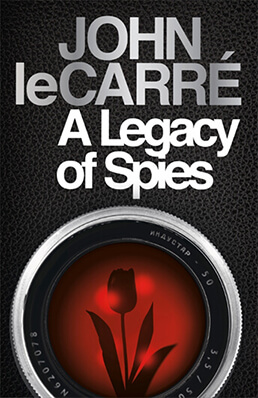
Brief Mention, John Le Carré, A LEGACY OF SPIES

British cover
Lovers of British espionage know about each new John Le Carré book long before publication. So this brief note, a few days after the American release of the newest from this master of character-focused revelation, is more or less a bookmark ... and a reminder that if you're a fan of the genre or this author, it's time to pick up your first printing.

Word on A LEGACY OF SPIES before publication tended to focus on either the "follows The Spy Who Came in from the Cold" or the presence as main protagonist of Peter Guillam, long-time loyal team member for British chief of the global espionage network George Smiley. Smiley's position as reluctant but ever-caring planner of spy take-downs and infiltrations has been so large in Le Carré's work that one of the titles in the series is Smiley's People. It is, in fact, George Smiley's grasp of human love and beliefs that makes him such an expert in planning operations. But that same affection and respect for the people he maneuvers makes George vulnerable and wounded, in ways that compel affection from his staff members -- and from many a reader.

In fact, A LEGACY OF SPIES is both a follow-up to the tragedy of Alec Leamas, and an exploration of Guillam's position in retirement, which he spends -- when possible -- on his family's old farmland in French Brittany. Most of all, it's a probing test of how Guillam functions without Smiley's presence. Has he been deserted, left alone to face accusations about Leamas's long-ago betrayal and death, and possibly a high-stakes trial? How does he judge his own actions of the past -- which include many a liaison of the heart?

US cover
Le Carré engages in a book-long probe of the family dynamics of his extended spy network, testing and revisiting its connections and emotional costs. Much of the first part of the book is slow going, especially because it's framed in Peter Guillam's first-person voice, which doesn't work quite as well as the haunting third-person novels earlier in this oeuvre. But for any fan of George Smiley's fictional life and career, the book is a must-read ... with the added reward of some final words on where "England" was and is, and a little bit of grounding for today's British choices. At least, as far as these characters may see.

Worth the time spent reading it, and worth keeping on the shelf.

PS:  Looking for more mystery reviews, from cozy to very dark? Browse the Kingdom Books mysteries review blog here.

Wednesday, August 23, 2017

Experimental Crime Fiction? Postmodern! CROSSING THE LINES, Sulari Gentill

Poisoned Pen Press just brought out a very new genre from long-time author Sulari Gentill, better known for her historical Australian crime fiction. This time she's gone "postmodern," letting her characters make up the author and the book -- and the crime -- as she goes along.

In CROSSING THE LINES, the "author" Madeleine becomes enamored of her creation, Edward, whose life soon includes a murder. When Madeleine begins to care more about Edward than about her own husband Hugh, secrets multiply in the stress fractures of their fictional and metafictional lives.

Poisoned Pen recommends this for fans of Paul Auster, Jesse Kellerman, Vera Caspary's Laura, and Haruki Murakami. What a combination! I certainly felt the parallel to Murakami, and the way that postmodern writing can turn a reader's thinking into odd new shapes.

I'd say this one isn't for "beginners" in this form of writing. If you're already drawn to some writing among this list of authors, though -- dip in. There's a lot of entertainment here, as well as some very clever and unusual twists.

PS:  Looking for more mystery reviews, from cozy to very dark? Browse the Kingdom Books mysteries review blog here.

Noir That Lingers, in A DARK AND BROKEN HEART, R. J. Ellory

British author R. J. Ellory wins long-term fans for his dark crime fiction through his characters -- mostly men, whose shadowed lives are twisted, bitter, yet somehow vulnerable. A DARK AND BROKEN HEART is already a classic of his work -- and it just arrived for American readers through Overlook Press.

What's with Detective Vincent Madigan, anyway? Doesn't he know crime won't pay, after being a cop for so long? Actually that seems to be the opposite of what he's learned with the NYPD and the corruption surrounding him. His own struggles have put him deep into debt to both a bookie and drug lord and to his lawyer (it all makes bitter sense). Not to mention alimony. And underneath all of Madigan's horror at the tangled mess of his life is a small, persistent hope: that somehow, some day, he can do something that will delight his teenage daughter and hear her speak his name with happiness and excitement.

That's the dreamy and tender kernel to the man that can make this worth reading, through violent scenes of desperate efforts gone wrong. Even Madigan knows his plan of using three career criminals to help him steal that drug lord's cash delivery is way too risky. He can picture what Sandia, the crime boss, would say after catching Madigan in the act:
You killed my people and you stole my money to pay your debt to me. You paid me back with my own money. And don't insult me by telling me you didn't. Tell me the truth and I'll kill you quickly. Lie to me and I will have someone torture you for a month.
As Madigan assessed the situation, "This was what he had. It didn't get much worse than this."

But it can indeed get worse, and does. Buckle up for more than 300 pages of bad decisions and bloody consequences. If you stick with it -- and readers who already like Dave Zeltserman's crime fiction and the deep gritty noir that Overlook is so skilled at finding will indeed be hooked -- don't count on a happy ending. Madigan may expect it (that's why readers hang with him), but he's been wrong so often that the finale is bittersweet, but not exactly unexpected -- unless, of course, you are the often high, always scheming, ever hoping Madigan himself.

PS:  Looking for more mystery reviews, from cozy to very dark? Browse the Kingdom Books mysteries review blog here.

Thursday, August 17, 2017

Humor, Paranormal, but Solid Investigation, with Dr. Siri Paiboun in Colin Cotterill's THE RAT CATCHERS' OLYMPICS

A new mystery in the Laotian Dr. Siri Paiboun series from Colin Cotterill (Soho Crime) is always worth celebrating -- and THE RAT CATCHERS' OLYMPICS is worth stopping all work and just plain enjoying the ride.

Actually Dr. Siri, who's been a coroner for his country in the frustrating 1970s, is now retired. But in this 12th in the series, Siri and his wife Daeng figure out how to join their politically connected friend Civilai on an exciting trip to Moscow with the athletes from Laos who are competing in the 1980 Olympics. That's the year that the United States and 64 other countries boycotted the summer games (a protest of Russian's presence in Afghanistan at the time). So Cotterill cleverly sets up the competition as a smaller-than-usual set of games that can let even the poorly trained and mostly unfinanced Lao team still show up well and have a great time.

But before the athletes -- and Siri, Daeng, Civilai, and their friend and nurse Dtui -- have left the ground in their rickety airplane, an unusual change in the passengers takes place, and Civilai realizes there's been a last-minute, unacknowledged substitution among the competing sharpshooters. Soon the friend decides they've witnessed the start of a major crime, to take place in Moscow. The fifth of their usual group, Inspector Phosy, left behind in Laos, tackles the groundwork to figure out what's planned. When Phosy's hoped-for informant is immediately murdered, the team knows they are all in danger. And the planned international crime is deadly serious.

But that's really the only serious part of this delicious and enjoyable romp through Moscow's hospitality in THE RAT CATCHERS' OLYMPICS. From Dr. Siri's own tendency to abruptly vanish into a land of spirits, to his wife's wagging tail (a long story!), to the love affairs of the athletes, and at last to the rat-catching competition impulsively added to the games, this is a page-turner of the best sort: full of characters worth caring about, a plot with just enough twists, and lots of joy. But it's also crammed with investigative efforts and speculation. For example, when the Moscow-placed suspect disappears:
"He might have gone for a jog," said Dtui.

"Or a walk on the roof," said Daeng. "Insomnia."

"Or he might be out casing the scene of the shooting," said Siri.

"Or actually committing the crime," said Civilai, still feeling guilty for his failure.

The four were seated in the B block cafeteria with stodgy Soviet breakfasts in front of them. Two tables away sat the shooting team with Sompoo in the middle telling jokes.

"This really is a fine time for an assassination, you have to admit," said Siri. "The local TV stations have nothing but Olympic news and smiling citizen interviews. I can't even imagine a murder report finding its way into the newspapers for the next three weeks."
Whether you're fitting in a bit more summer reading, or adding to your admirable shelf of Soho Crime international mysteries, THE RAT CATCHERS' OLYMPICS will reward your purchase. Might as well get one for a friend, too ... I'm already listing the people in my life who deserve this sweet reward.

PS:  Looking for more mystery reviews, from cozy to very dark? Browse the Kingdom Books mysteries review blog here.
Tuesday, August 08, 2017

Second NYC Historical Crime Fiction from Cuyler Overholt, A PROMISE OF RUIN

Ah, the delight of discovering in the first chapter that a book's been written by a gifted storyteller!

From the moment Dr. Genevieve Summerford -- Genna to her friends -- steps onto the scene in A PROMISE OF RUIN, the suspense and surprises of this 1907 amateur sleuth novel are both entrancing and intriguing. Entrancing, because Genna and her would-be beloved, Simon Shaw, share a passion for life and romance that can't be defeated. And intriguing, because there are so many aspects of criminal conspiracy that we've forgotten from this era ... and author Cuyler Overholt, in her second in this series, tugs them seamlessly into a neatly turned plot with just the right amount of risk and rescue for summer reading.

A young Italian bride-to-be has disappeared from New York's arrival area, where huge ships bring a flood of immigrants. When the disappearance comes to Genna's attention, she's sure the police will follow up -- and when she realizes they won't, she tries to do what's reasonable and kind in letting others know about the missing young woman. Harsh realities that she hasn't confronted before, like the overworked police force and the power of criminal elements, result in Gemma committing herself to the very risky process of trying to locate who is running a prostitution ring with a kidnap operation on the side, and how to locate the most recently captured group of girls. In other words, Genna is seeking out a "white slaver" ring, at the risk of her own comfort, safety, and perhaps the relationship that's already at the core of her life.

Overholt introduces early 20th-century Manhattan life skillfully and with flair. Her deft portrayals of city gang life and the cost of poverty are so lively and complex that I paused a couple of times to check the facts, wondering whether this author had created her own aspects to support the plot -- but indeed, she has rounded up and dealt back out again the most fascinating aspects of the immigrant gangs and local resistance, as well as the complications of the Tammany political machine. Then she adds resonance to the action with insight that Genna gains from early understandings of mental illness, applying her healing skills to both the boys at a community center, and the damaged women rescued from the forced sex trade.

To do all this and wrap it briskly around a neatly turned plot with clever twists and heart-warming interactions is quite an achievement! A PROMISE OF RUIN was such a pleasure to read that I'll soon be looking for more of Overholt's writing. And I am delighted that Sourcebooks has clearly scheduled this to be a continuing series of crime-solving adventure. If you can't fit the book into what's left of summer, give it to your bedside TBR stack, to warm the chilly evenings ahead.

PS:  Looking for more mystery reviews, from cozy to very dark? Browse the Kingdom Books mysteries review blog here.

Sunday, August 06, 2017

New from Jon Land, Paranormal Series Debut, DARK LIGHT: DAWN

Graphic violence alert!

With his second book this summer, Jon Land opens a testosterone-filled series of adventure and saving a threatened world, in DARK LIGHT: DAWN. The book opens the "Maximillian Chronicles," jumping sideways into the life of Navy SEAL Max Youngner, who stumbles across details that shed light on his father's mysterious death.

Max loves his career -- nothing like a life-and-death battle to make him feel alive:
"Take that, you f***er!!"

Did he say that or only think it? Impossible to say amid the firestorm raging around him. But he did know he felt buoyant, even joyful, strangely at home in this conflagration of violence he found himself embracing. The blood soaking him smelled sweet and coppery, suddenly not altogether unpleasant, even welcome, as he twisted away from the fighter's still convulsing form, finally slamming another fresh magazine home.
Fear not -- Max has doubts, and the very creepy revelations he confronts about a meteor, underground currents of darkness, and how his father's life became forfeit, well, those are just what he needs to shake his own life off one set of rails and direct it into deeper, more deliberate efforts.

Meanwhile, there's an epidemic possible, and Dr. Victoria Tanoury needs to deal with it. She's grateful for any and all help coming her way -- including the apparent messages from her dead fiancé, still taking care of her. When her dangerous situation and Max's crisis overlap, the two head into an equally risky re-lighting of a long-ago passion they once shared.

Rattled off in short chapters of just a few pages, this End of Days epic continues for more than 400 pages, bouncing between plot threads and crises. It's a great summer adventure for those who especially enjoy military combat novels and Dan Brown-style epic battles, including for the soul and the heart. Land, with Maximillian "brand" originator Fabrizio Boccardi, keeps the action explosive. It's quite a shift from his Caitlin Strong series, but very close to the Tyrant books he's crafted.

This is genre fiction with a specific tilt, both military and paranormal. If that's the combo you're ready for, settle in for a page-turning week of mind-blowing twists and classic characters.

PS:  Looking for more mystery reviews, from cozy to very dark? Browse the Kingdom Books mysteries review blog here.

Sunday, July 30, 2017

Crime Fiction in Venice, from Christine Evelyn Volker, VENETIAN BLOOD

You love the Venice crime fiction from Donna Leon? I do. Not only do her books carefully compose clues, stresses, red herrings, and police procedure (plus Italian and Venetian culture and cuisine), but the interactions among the characters -- especially Commissario Guido Brunetti and his family -- deepen the books and their impact. I often pre-order my copies of each new title.

That said, there's generally just one new Donna Leon per year. So to get an extra dash of Venice, one may indulge in less skilled authors who still have a good mystery to offer. And that's the case for Christine Evelyn Volker, whose VENETIAN BLOOD is released in August from She Writes Press.

Volker's mystery shows the signs of an early-career author, especially in the first few chapters. But it gets better, and I enjoyed the final twists, which involve financial dirty dealings and affaires of the heart and body. Plus, the book helped meet that Venice appetite. But don't count on cuisine, or depth of relationships -- Volker's catalyst for relationships tends to be romantic attraction, versus the lines of faith, loyalty, and compassion that Leon lays out so strongly.

Also, for a collector, there are some questions about books from She Writes Press, which occupies the murky middle ground between standard publishers and what used to be called vanity presses. The press president, Brooke Warner, is a regular writer for Huffington Post; see her explanation there, of her press's new arrangement, where established authors mentor new ones, included in the fee. 

In the case of VENETIAN BLOOD were Nina Schuyler and David Corbett. Yes, that's enough to make me sit up and notice.

So should you collect this and/or, more pertinently, pick up a copy to read? My opinion: Yes, if you specifically collect Italian crime fiction. No, if you're going to measure the book against Donna Leon and others at the top of the field. Hope that's enough to help you make a decision. I ended up pleased with the book's plot by the end, but it was rough to get to the middle.

PS:  Looking for more mystery reviews, from cozy to very dark? Browse the Kingdom Books mysteries review blog here.

Wednesday, July 26, 2017

Gibraltar Crime Fiction, A THOUSAND CUTS, Thomas Mogford

One of the heady pleasures of international crime fiction is exploring a culture from the inside -- including the lingering effects, often dark, of a region's history. So the newest crime novel from British author Thomas Mogford, A THOUSAND CUTS, fascinated me with its setting: Gibraltar, that rocky headland off Spain's southern coast. Not only is the "Rock" a sentry location for the Mediterranean: It provides the remains of a 14th-century Moorish castle and the 18th century Great Siege Tunnels, which were expanded in World War II.

 We readers realize from Chapter 1's placement in 1940 that a deadly wartime explosion at Gibraltar's shipyard could be more complicated than the investigators would realize. But we're swiftly back in the present time with lawyer Spike Sanguinetti (this is the fifth in his series), abruptly taking on a new client. Is the angry and booze-addicted old man just a typical confused remnant from Gibraltar's underclasses, former sailors and soldiers who collapsed in place and never left? Or is there a more pointed reason that this client has harassed a wealthy resident?

Spike Sanguinetti is a fascinating character, not least for his sympathy for his mostly unlikeable new client. He's tangled in the case in more directions than he at first realizes -- understandable that he's a bit distracted, since he and his financée are expecting a baby very soon, their adopted child is having "issues," and the close friends on Gibraltar who usually support him have a stake in seeing the client's past hushed up, and the series of crimes on the headland closed quickly.

From the tunnels to the action to the emotions, not to mention the wartime suspicions that emerge during Spike's efforts, this book is a classic page-turner, rich with atmosphere and urgent with action and risk. It's my first read in the series and I found gaps in understanding some of the terrain, so given the option, I'd explore the earlier books first, before reaching this one. But even as a cold read, stepping onto Gilbraltar in Mogford's series, it's a marvelous addition to the summer reading stack -- recommended, for sure! (Note that Mogford is getting great critical attention in Britain, where he made a CWA short list for the debut of this series.) Glad that Bloomsbury brought the book across the Atlantic, released this week in the US.

PS:  Looking for more mystery reviews, from cozy to very dark? Browse the Kingdom Books mysteries review blog here.

Tuesday, July 18, 2017

Gritty Alternative to Sherlock Holmes, in ARROWOOD by Mick Finlay

Today's the release day for ARROWOOD, a debut crime novel from Mick Finlay. The publisher (Mira) captured the book's premise in this tag line: "London Society takes its problems to Sherlock Holmes. Everyone else goes to Arrowood."

It's a great way to enter the Holmes world without trying to craft yet another pastiche. Consider William Arrowood a rough character himself, a former newspaper man whose scorn for the chronicled super-deductive high-society sleuth peppers his conversations -- and determines his attitude toward people in his South London slum who seek his help. If they reveal they wish they could afford Holmes instead, they're in trouble!

The opening of the book, described as "South London, 1895," sets the scene perfectly, from the point of view of Arrowood's assistant, Mr. Barnett:
The very moment I walked in that morning I could see the guvnor was in one of his tempers. His face was livid, his eyes puffy, his hair, least what remained on that scarred knuckle of a head, stuck out over one ear and lay flat with grease on the other side. He was an ugly sight, all right. I lingered by the door in case he threw his kettle at me again. Even from there I could smell the overnight stink of gin on his foul breath.

"Sherlock blooming Holmes!" he bellowed, slamming his fist down on the side-table. "Everywhere I look they're talking about that charlatan!"
When a young French lady in a bonnet and billowing skirt arrives to see Arrowood's help, it takes all of Barnett's skill to keep her case attractive to his "guvnor." She risks losing the sleuth by her admiration for Holmes, of course, and also be being French ... and female. But Barnett has the bottom line in mind, and negotiates a case.

When it becomes obvious that Arrowood and Barnett will have to spy on and probably confront members of a dangerous criminal gang that's already threatened their lives, the crime novel turns into a Victorian thriller, hot with action and risk.

The book's well written, with just a hint of "debut" novel in its pacing. Most appealing is actually the character of Arrowood's sidekick Barnett (a more emotionally complicated person than Doyle's Dr. Watson). Details of gritty and sometimes grotesque Victorian poverty come through, along with a finely honed edge of violence.

Mick Finlay has an unusual background for this field, one that may bear significant importance as the promised series continues:
Mick Finlay was born in Glasgow and grew up in Canada and England. He now divides his time between Brighton and Cambridge. He teaches in a Psychology Department, and has published social psychological research on political violence, persuasion, and verbal and non-verbal behaviour. He reads widely in history, psychology, and enjoys a variety of fiction genres (including crime, of course!)
Holmes fanatics are safe in picking up ARROWOOD because it steers neatly around the established sleuth's famous cases, keeping the focus in this down-and-dirty world instead.  The feel is very similar to the series by M.R.C. Kasasian, and I enjoyed the dark humor. Well done, Mick Finlay!

PS:  Looking for more mystery reviews, from cozy to very dark? Browse the Kingdom Books mysteries review blog here.