Showing posts with label England. Show all posts

Saturday, November 30, 2019

Naughty and Nice: Three Diverse Crime Novels for Your December List

Three crime fiction treats for your reading pleasure, now that the evenings are so long:
  • Barbara Cleverly, INVITATION TO DIE.
  • Martin Edwards, GALLOWS COURT.
  • Gerry Boyle, RANDOM ACT.
Crime fiction fans are fortunate readers: They can dip deeply into a series, or explore a wide range, and either way, there's some great reading among the 2019 titles!

Let's start close to this reviewer's Vermont location with Gerry Boyle's 2019 title, RANDOM ACT. The 12th in Boyle's highly enjoyable dark crime series featuring Maine journalist Jack McMorrow, this is a gem of action, risk, and vicious crime. Most dangerous in this title is the romantic passion that Jack's Special Forces neighbor Louis drops into ... with a mysterious blond who brings Russian crime attention to the neighborhood. The only risk on this one is that you may need two copies, so you can give one to a friend as a holiday gift and keep the other for your own shelf. Well worth it! (We've been fans of all Boyle's work, always a good read. And Islandport Press does a nice job.)

Can't figure out why I haven't reviewed more of the crime fiction by Martin Edwards. GALLOWS COURT comes via Poisoned Pen Press, which is now a Sourcebooks imprint. Set in London, 1930, it's an astonishing classic sleuth novel featuring a woman detective clearly operating outside the law, Rachel Savernake. Double points of view keep the twists spinning, and the finale meets the quintessential criterion for a good novel: a perfect fit with what's happened, and yet an intense surprise. Reading Jacqueline Winspear, Charles Todd, Barbara Cleverly? Try Martin Edwards and put a pillow over the phone for the duration.

Classic English detective (inspector) fiction, Roaring Twenties, Cambridge, and romance: What a divine mix! This second in Barbara Cleverly's John Redfyre series (the first was Fall of Angels last year) has a delightful set of treats, along with a series of mysterious crimes that involve multiple murders and insight into a "dark and bloody war." A gem of a comment to Detective Inspector Redfyre from a medical examiner in here:
"They say death's a leveller," the doctor murmured, "but I don't know. It's hardly a scientific view, but it always seems to my jaundiced eye to accentuate differences. And sometimes it distorts. Subjects take on a deceptively saintly aspect—and the reverse. Looking at our bloke, I'd say 'saintly,' wouldn't you? He may have been an utter blackguard in life, of course. That's up to you to discover, my friend."
You don't need to read the first in the series, but Cleverly, published by Soho Crime/Soho Press, is a consistently agile and entertaining storyteller; grab this one, and the odds suggest you'll want some or all of the others. (The Joe Sandilands series, her earlier one, is highly satisfying.)

Good luck with your list ... hope this gives you a boost into the season, whether for gifts or for self-spoiling stress relief and delight.

PS:  Looking for more mystery reviews, from cozy to very dark? Browse the Kingdom Books mysteries review blog here.

Monday, October 22, 2018

British Traditional Mystery with Magic, THE VANISHING BOX, Elly Griffiths

[Originally published in the New York Review of Books]


In the English seaside town of Brighton, there’s an active murderer again—one whose theatrical death scene creation immediately binds together the amazing (if aging) Max Mephisto, stage magician, and his former wartime colleague, Detective Inspector Edgar Stephens.

The Vanishing Box is the fourth in the “Magic Men Mystery” series from British authorElly Griffiths, and it’s set in 1953, when the deep echoes and wounds of The War still shiver in England. But it’s also a time when the future is coming brilliantly to life, as the landlady where the variety stage player lodge appreciates her wireless (radio) but the stage players themselves are eager for the huge audiences that television promises to give them. Max Mephisto’s daughter Ruby, also a magician, is ready to play to that enormous crowd. Max, maybe not so much.

The “Vanishing Box” is, of course, a famous trick of stage magic. Max and Ruby create a father-daughter performance where one after the other disappears, only to return to applause. Behind the scenes, each struggles with romance (an enduring thread in Griffiths’s mysteries): Ruby, in love and engaged to DI Stephens (but always second in line behind his investigations); Max, feeling over the hill (was 44 so old, back then?), and suddenly open to a new and younger lover. How cruel that murder could threaten these possible happy diversions!

At first, it seems the murderer might just have madly posed one beautiful young woman to resemble something from the local stage show, a historic scene from a painting. But when the murder rate escalates, even the police investigators suffer trauma:
 ’Holy Mary Mother of God.’ This was the porter becoming religious with shock.

‘Don’t come any closer,’ said Emma.

Bob was leaning over the body. ‘He’s dead all right.’ …

‘Have you got a telephone?’ [Emma] asked the porter. … She was very grateful to Bob for offering to stay with the effigy that had been [a man] but didn’t quite know how to say so. She followed the porter, whose name she learnt was Norman, to his basement apartment. There she rang the DI and refused Norman’s offer of a whisky ‘for the shock.’ 
Despite the foregrounding of Max and Ruby, the magicians at center stage of the murder scenes, it’s the police investigators that Griffiths places into best perspective. Murder still horrifies them; death wounds them; investigating a killing, whether it’s purely evil or somehow a necessary twist to a shattered mind nearby, shatters their everyday interactions and relationships. How many losses will the Brighton murderer create, as he or she continues to stage death with theatrical trappings and terrible effectiveness?

Griffiths is one of the few suspense authors who can successfully summon the reality of the awkward 1950s, with its uncertainty, its breathtaking possibilities, and its rapid changes that build up a heap of dead customs, vanished family structures, safety wiped away. Staging The Vanishing Box in the last of the old-time variety shows adds to the sense of regarding a vanished era, along with lives lost.

The plot is neatly pinned together, and if the red herrings are not as noticeable as the kisses and courting, well, that’s how Griffiths spins this series. (Her other one features forensic archaeologist Ruth Galloway.  And Griffiths has been a winner of the prestigious CWA Dagger in the Library Award.) Pick this one up as a good traditional mystery that won’t keep you up at night, but will keep you pleasantly engaged, page to page, like the ones from G. M. Malliet, Ellery Adams, or Barb Ross.

Once everything’s sorted out at the end of The Vanishing Box, quite a few things have vanished, but not returned. Will the series continue? It’s not clear what will come next, but DI Edgar Stephens has new possibilities in front of him—and so does Max Mephisto.

PS:  Looking for more mystery reviews, from cozy to very dark? Browse the Kingdom Books mysteries review blog here.
-->

Tuesday, November 21, 2017

Entertaining British Crime Fiction from Peter Lovesey, BEAU DEATH

American Thanksgiving is becoming a very long sort of holiday -- schools close early in the week or don't open at all, and turkey consumption only occupies one day of the break. On the other days, a good mystery is a worthwhile diversion. In the case of BEAU DEATH, now is the time to order for the December 5 release via Soho Crime; local stores and online ones can handle your order and make sure you get a first-day-of-release copy of this charming British mystery.

Fans of Peter Lovesey's "Peter Diamond Investigations" know they'll get more than plot, and more than the performance of Diamond and his police team in Bath -- they find a rich and satisfying feast of eccentric and sometimes sweet, sometimes dangerous, quintessential British figures. In BEAU DEATH, the discovery of a skeleton in a building being demolished leads Diamond into the small city's elegant past, when the flashy Beau Nash ruled the stylish crowd.

In fact, if Diamond's difficult supervisor Georgina Dallymore gets her highly political way, Diamond may need to don the traditional garb that members of the Beau Nash Society wear, in order to investigate possible victims as well as murderers. (And he won't exactly be armed.) As in so many others in this series, Diamond also faces all-in-the-arts pressure from his lover Paloma, and urgency from his rising investigator Ingeborg, each pushing him in another direction.

The first 75 pages is admittedly a bit slow and tame, as Diamond is "schooled" by the three women. But when Ingeborg lands the best blow, it brings both Diamond and the book back to traditional fast-paced and risky crimesolving. Diamond tunes in as Ingeborg points him back toward the scene of the murder they've uncovered:
"Under the rubble. Who knows what may be buried there? Is is still cordoned off?"

A chill of guilt went through him. He couldn't answer. He hadn't been back. He stood still, lost for words.

Ingeborg wasn't sparing him. "We don't have any idea who the killer of the man in the loft was except he used the place to hide the body. Chances are he lived there as a tenant. You can't live in a place without leaving traces of yourself. Who knows what might turn up if we do a dig? ... Aren't you listening, guv? I'm talking about the stuff he might have discarded. An empty cigarette packet, a lottery ticket, a teaspoon, a glove, a hairclip, a foreign coin. It helps build a picture of who was living there. I don't need to tell you this."

She was right. His mindset was all wrong. He'd given so much mental energy to learning about Beau bloody Nash that basic procedures had been neglected.
Murders multiply, but for potent reasons of his own, Diamond doesn't dare allow his boss to call in other officers. He'll have to push his team to new roles and new results.

Once the crimesolving got active, I had lots of fun with BEAU DEATH, chuckling at Peter Lovesey's dry humor and guessing ahead on what might be revealed in the next few pages. No nightmares from this one, no gruesome scenes, just a cheerful level of suspense and discovery. Some of it. of course, about Diamond himself.

Insulate your holiday season with books like this one, and things can stay in proportion. Some joy, some humor, and some long evenings visiting a classic British location in the hands of a master storyteller with more than 30 mysteries under his belt. Too many awards to Lovesey to even list them, but one of the more recent was a Lifetime Achievement award at Malice Domestic. BEAU DEATH arrives across the Atlantic thanks to Soho Crime, the international and exhilarating imprint of Soho Press.

PS:  Looking for more mystery reviews, from cozy to very dark? Browse the Kingdom Books mysteries review blog here.


Saturday, September 09, 2017

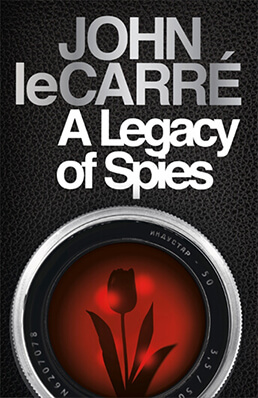
Brief Mention, John Le Carré, A LEGACY OF SPIES

British cover
Lovers of British espionage know about each new John Le Carré book long before publication. So this brief note, a few days after the American release of the newest from this master of character-focused revelation, is more or less a bookmark ... and a reminder that if you're a fan of the genre or this author, it's time to pick up your first printing.

Word on A LEGACY OF SPIES before publication tended to focus on either the "follows The Spy Who Came in from the Cold" or the presence as main protagonist of Peter Guillam, long-time loyal team member for British chief of the global espionage network George Smiley. Smiley's position as reluctant but ever-caring planner of spy take-downs and infiltrations has been so large in Le Carré's work that one of the titles in the series is Smiley's People. It is, in fact, George Smiley's grasp of human love and beliefs that makes him such an expert in planning operations. But that same affection and respect for the people he maneuvers makes George vulnerable and wounded, in ways that compel affection from his staff members -- and from many a reader.

In fact, A LEGACY OF SPIES is both a follow-up to the tragedy of Alec Leamas, and an exploration of Guillam's position in retirement, which he spends -- when possible -- on his family's old farmland in French Brittany. Most of all, it's a probing test of how Guillam functions without Smiley's presence. Has he been deserted, left alone to face accusations about Leamas's long-ago betrayal and death, and possibly a high-stakes trial? How does he judge his own actions of the past -- which include many a liaison of the heart?

US cover
Le Carré engages in a book-long probe of the family dynamics of his extended spy network, testing and revisiting its connections and emotional costs. Much of the first part of the book is slow going, especially because it's framed in Peter Guillam's first-person voice, which doesn't work quite as well as the haunting third-person novels earlier in this oeuvre. But for any fan of George Smiley's fictional life and career, the book is a must-read ... with the added reward of some final words on where "England" was and is, and a little bit of grounding for today's British choices. At least, as far as these characters may see.

Worth the time spent reading it, and worth keeping on the shelf.

PS:  Looking for more mystery reviews, from cozy to very dark? Browse the Kingdom Books mysteries review blog here.

Tuesday, July 18, 2017

Gritty Alternative to Sherlock Holmes, in ARROWOOD by Mick Finlay

Today's the release day for ARROWOOD, a debut crime novel from Mick Finlay. The publisher (Mira) captured the book's premise in this tag line: "London Society takes its problems to Sherlock Holmes. Everyone else goes to Arrowood."

It's a great way to enter the Holmes world without trying to craft yet another pastiche. Consider William Arrowood a rough character himself, a former newspaper man whose scorn for the chronicled super-deductive high-society sleuth peppers his conversations -- and determines his attitude toward people in his South London slum who seek his help. If they reveal they wish they could afford Holmes instead, they're in trouble!

The opening of the book, described as "South London, 1895," sets the scene perfectly, from the point of view of Arrowood's assistant, Mr. Barnett:
The very moment I walked in that morning I could see the guvnor was in one of his tempers. His face was livid, his eyes puffy, his hair, least what remained on that scarred knuckle of a head, stuck out over one ear and lay flat with grease on the other side. He was an ugly sight, all right. I lingered by the door in case he threw his kettle at me again. Even from there I could smell the overnight stink of gin on his foul breath.

"Sherlock blooming Holmes!" he bellowed, slamming his fist down on the side-table. "Everywhere I look they're talking about that charlatan!"
When a young French lady in a bonnet and billowing skirt arrives to see Arrowood's help, it takes all of Barnett's skill to keep her case attractive to his "guvnor." She risks losing the sleuth by her admiration for Holmes, of course, and also be being French ... and female. But Barnett has the bottom line in mind, and negotiates a case.

When it becomes obvious that Arrowood and Barnett will have to spy on and probably confront members of a dangerous criminal gang that's already threatened their lives, the crime novel turns into a Victorian thriller, hot with action and risk.

The book's well written, with just a hint of "debut" novel in its pacing. Most appealing is actually the character of Arrowood's sidekick Barnett (a more emotionally complicated person than Doyle's Dr. Watson). Details of gritty and sometimes grotesque Victorian poverty come through, along with a finely honed edge of violence.

Mick Finlay has an unusual background for this field, one that may bear significant importance as the promised series continues:
Mick Finlay was born in Glasgow and grew up in Canada and England. He now divides his time between Brighton and Cambridge. He teaches in a Psychology Department, and has published social psychological research on political violence, persuasion, and verbal and non-verbal behaviour. He reads widely in history, psychology, and enjoys a variety of fiction genres (including crime, of course!)
Holmes fanatics are safe in picking up ARROWOOD because it steers neatly around the established sleuth's famous cases, keeping the focus in this down-and-dirty world instead.  The feel is very similar to the series by M.R.C. Kasasian, and I enjoyed the dark humor. Well done, Mick Finlay!

PS:  Looking for more mystery reviews, from cozy to very dark? Browse the Kingdom Books mysteries review blog here.
Thursday, June 01, 2017

More Summer Reading, British "Traditional" Mystery with Archaeology, THE CHALK PIT, Elly Griffiths

British author Elly Griffiths writes two distinctive mystery series, one set "today" in and around Norwich, England, rich with archaeology and very British themes, and the other involving stage magic and illusion plus murder, circa 1950. I'm a fan of both.

Just released this week in the US is the newest in her Ruth Galloway mystery series, featuring a forensic archaeologist who's also a single parent in a very complicated network of university politics, local police, and the remnants of England's past -- which in Ruth's case includes a significant friendship with a modern-day Druid. No fancy paranormal side effects in here, unless you count the occasional strong intuition that Ruth and her friends may experience. Instead, THE CHALK PIT provides the perfect summer read: a strong traditional mystery with powerful motives (money and power!), and heart-stirring secondary plotting among the homeless in Norwich.

This time Ruth's investigating some human bones that turned up in an old tunnel, part of an excavation for a future restaurant-and-event locale, where the money at stake pushed the agenda. Hurry up and declare the bones insignificant remains of some medieval resident (definitely not royal) and get them out of the way. Ruth's willing ... but, as she settles to discussing them with DCI Nelson, head of the Norwich police team and a mostly former flame of Ruth's, her doubts take shape:
"Anyway, it's likely that the bones are medieval or even older. There's no flesh on them and they look very clean. It's just ..."

"What is it, Ruth? I know there's something you're not telling me."

"It might be nothing. But one of the long bones was broken in the middle and there were cut marks on it. And the bones were so clean, almost shiny. It reminded me of something that I've read about. Pot polish."

"Pot polish? Sounds like something my granny would do."

"I doubt it. It's when bones are boiled soon after death. The polish comes from the contact with a roughly made cooking vessel."

"Jesus wept." Nelson chokes on his last crumb of cake. "Are you saying these bones were in a cooking pot?"
While Ruth keeps that aspect as quiet as possible, she's getting crowded by fellow academics who want to push into the underground labyrinth with her, and some have motives that worry her. Meanwhile, Nelson's team, especially DS Judy Johnson, has another reason for interest in those old tunnels that were once part of the region's chalk-mining industry: Could homeless people in the area become crime victims of someone living "underground" and kidnapping them, or worse?

Griffiths keeps the twists spinning, enlivened by Ruth Galloway's confused "love life" that tugs her in as many directions as her work does. Lively storytelling, quick surprises, and a lot at stake make the book a very good vacation from ordinary daily life -- and from the lawnmower and garden!

This is the ninth in the series, and it lacks the tang of some of the earlier titles when Ruth's Druid friend Cathbad saw more action. There's no need to read the others first -- Griffiths is a pro in terms of setting the scene in a sequel by now -- but for the best enjoyment, I'd recommend splurging for the summer reading pile and picking up the earlier titles in softcover (The Crossing Places, The Janus Stone, The House at Sea's End, A Room Full of Bones, A Dying Fall, The Outcast Dead, The Ghost Fields, The Woman in Blue). FYI, the earlier titles veer a bit more toward the dark and dangerous side than THE CHALK PIT does. (It's all about taste, isn't it?)

Great that Houghton Mifflin Harcourt has brought this series across the Atlantic.

PS:  Looking for more mystery reviews, from cozy to very dark? Browse the Kingdom Books mysteries review blog here.

Monday, February 01, 2016

New Jane Austen Mystery -- THE WATERLOO MAP, Stephanie Barron

Have you ever enjoyed a Sherlock Holmes appearance in a TV program or film? If so, you already know the most important part about Stephanie Barron's Jane Austen mysteries: This Jane can't be the same as the one you know from reading Austen's own writing in Pride and Prejudice and Emma. But the parallels are close enough for pleasure. And by unbinding the character into an amateur sleuth who's also an early feminist and eager author, Barron's created a lively protagonist for her thoroughly enjoyable British period mysteries.

There are already 12 others in this series, which is good news in two directions -- you have plenty of other titles to gather later on if (like me) you find you're delighted by THE WATERLOO MAP.  (I liked the title before this one, too. A lot.) And if you've been reading the series already, here's a delicious adventure to plunge into, keeping in mind Jane's trials and tribulations from the earlier books. Among those -- and deftly reviewed by the author to bring new readers up to speed -- are Jane's obnoxious and pompous brother who can't stand her writing or her independence, the women friends and relatives who admire and support what she's doing, and a guilty romantic attachment to the painter Raphael West (a real historic personage worth knowing about), who keeps crossing Jane's path.

This time, her journey takes her reluctantly into the London home of His Royal Highness the Prince Regent, who keeps a full set of Jane's works, handsomely bound, in each of his residences. And the royal personage wants Jane to visit his library at Carleton House ... maybe even to write something while there! ... and add to his prestige. Jane's not a fan: "There are few people of whom I think less than the Prince Regent. His entire history is either foolish or despicable." But the invitation can't be declined, and with a sigh, Jane concedes her calendar to the Regent's pleasure. At least, for one day!

That visit turns out to plunge her into crime-solving, as a hero of the recently concluded battle at Waterloo dies in the library, at her feet. Thanks to her insight, the "natural" (if unexpected) death is quickly and quietly recognized as murder. One mustn't offend the Regent, of course! But Colonel MacFarland of the Scots Greys cavalry is also too important to have his death overlooked. Jane's evidence is crucial to the court doctor:
"I will be forced to anatomise MacFarland now," the doctor mused ... "if it is a matter of murder..."

There. He had uttered the word aloud.

"Suicide is not to be thought of?" Raphael West asked.

"I should have said the Colonel had everything to live for," Baillie replied simply. "He was a Hero, recollect."

I met West's eyes. How had he earned that honor?  And might one man's reputation, be another man's shame?
Jane's probing into the heroics of the battle that everyone in England admires is far from welcome, and the Hero's widow has every reason to be furious with any assault on her husband's career. Should Jane back away from it all? Friendship and honor pull her forward instead.

This well-spun, entertaining "traditional" mystery is costumed in an era of ritual, class, and significant moments. In Stephanie Barron's hands, the setting is an added delight, forcing Jane to tackle the social forces that prevent women from taking bold action. Secrets, revelations, and further crimes unfurl.

If February's a tough time for you, great news -- the book's release date is February 2, and it's much more fun than watching for that funny old groundhog! If you can't make time for a midwinter reading binge, you can still scoop up a first edition from Soho Crime and let the pleasure of reading it wait for the right moment. Barron's website doesn't give her tour dates, but there are plentiful resources on Jane Austen, and maybe the best part of the site is discovering how this former CIA intelligence analyst tumbled into, shall we say, channeling one of the wittiest women of the Regency period.

A bit more modern than a Georgette Heyer mystery, but very close in flavor to Alan Bradley's Flavia de Luce series, and to Laurie R. King's Mary Russell/Sherlock Holmes adventures, THE WATERLOO MAP makes it onto my shelf for "keep and re-read." We deserve to enjoy this much fun!

Friday, December 04, 2015

Brief Mention, Charles Todd, A FINE SUMMER'S DAY

The title may be a bit out of season, but this 2015 title from Charles Todd is ideal for relaxing winter reading! A FINE SUMMER'S DAY is actually the prequel to the 16 other Inspector Ian Rutledge books. Instead of being set after World War I, it tackles the run-up to the war, including Rutledge's engagement to marry Jean Gordon. At the same time, it unfurls a mystery and a series of killings that reshape Rutledge's life, as well as testing his commitment to a police career. And it's available in paperback, to tote with you during holiday tasks and travels.

If you're a fan of this fiercely haunted mystery series, with its powerful insights into British life and class structure, this book is a must. I enjoyed all of it. On the other hand, if you're not yet a Charles Todd reader, I recommend that you wait on this one until you've read a few others -- here's the list in order, on the author's website: http://www.charlestodd.com/the-history-of-inspector-ian-rutledge. A FINE SUMMER'S DAY is all the better for having bonded first with Rutledge through his work, as the authors themselves did -- and the suspense will do you good.


Monday, October 12, 2015

Brief Mention of KEEPER'S REACH, Carla Neggers

There are so many subgenres of "mysteries" now -- with the most familiar being the endpoints of "cozy" (a traditional amateur-sleuth version with most violence taking place offstage and little specific description of any injuries or deaths), and hard-boiled (drenched in grim determination to solve the crime and bring the perpetrator to justice -- which may or may not involve actual court proceedings, and is likely to include a sturdy dose of depression and substance abuse).

I enjoy and appreciate the full spectrum, including its modern international versions and the related but differently paced espionage and "young adult" sleuth fiction.

One area I don't read a lot of, though, is romantic mysteries. Still, I read at least one every year, because I so much enjoy the New England and Ireland settings and complex, maturing characters provided by Carla Neggers. Her newest in the Sharpe and Donovan series came out in August: KEEPER'S REACH, set in Maine, and in the Cotwolds of England. I saved my copy for relaxing, and enjoyed it earlier this weekend.

Emma Sharpe, an art crimes expert, is happily moving toward her scheduled marriage to Colin Donovan, and the couple are learning how to share some secrets and protect others in their dual roles as FBI agents. The art thief they've pursued through the four earlier books is very much at the center of KEEPER'S REACH -- and so are the Donovan brothers, especially Mike this time. Add in winter, transatlantic investigations, and a shadow from Mike's military past, and the plot quickly grows complex. Watch for plenty of appearances by Father Finian Bracken, too.

St. Brigid's cross plays a role in KEEPER'S REACH.
I enjoyed all the interactions in the book, particularly the way Neggers handles gender differences in people committed to fast-paced and dangerous work. I didn't see the final twist coming -- maybe I missed a clue or two? -- but I'm satisfied that the complications of modern crime-solving, seasoned with romance, could indeed work out to the situations in this book. It's a good read, easy to enjoy, and full of memorable scenes -- and that, of course, forms the ultimate combination of a book well worth recommending. I'll be putting this title onto the gift list for a couple of my friends at the end of the year!

PS - For extra fun, check out the author blog for Carla Neggers, here.

Thursday, September 24, 2015

Magic and Murder, in THE ZIG ZAG GIRL, Elly Griffiths

I've become a devoted reader of the Ruth Galloway series from British author Elly Griffiths. Just released in the US this month is the start of her newest Magic Men series, THE ZIG ZAG GIRL -- and while I missed the abrasive and oddly vulnerable Galloway at first, the premise of this new series is fiercely exciting, and I enjoyed the book very much.

Consider the British seaside town of Brighton in 1950, a mere five years or so after the end of World War II -- bombed-out buildings, struggling economy, and a bare-bones police force, in which Detective Inspector Edgar Stephens is trying to ignore his wartime losses and move forward. But when the body of a young woman is sent in three pieces, to his specific attention -- under the rank he had during the war -- he's got to take this one personally.

Edgar's war wasn't something he took pride in afterward. Recruited (after the Norway disaster) into a small corps of specialists in magic, sleight of hand, and psychology, swiftly labeled the Magic Men, he'd helped create false armaments along the English coast to trick the German pilots overhead. But things happened that cost lives, and he's ashamed and in an odd sort of mourning, as well.

Now it's all got to be exhumed, so to speak, along with his connection with the clever stage magician Max Mephisto. Yet Edgar and his friends appear to be reliably one or two steps behind the murderous person stalking them. What's it about? Who's to blame? How can he protect his friends (and incidentally not lose his job)? It's clear almost immediately that the mutilated body is meant to suggest a faulty magic trick called "the zig zag girl," and when the victim is identified, the links to the wartime crew are inescapable.

Soon Edgar's having to show a murdered Magic Men friend, Tony, to the man's aging parents:
"Anthony had a very important job in the war," said Mrs Mulholland. "He was with the Secret Service."

"I know," said Edgar, thinking, as he had thought at the time, that the Magic Men was the least secret secret mission that he had ever encountered. Everyone in Inverness knew all about them. Tony kept himself in free drinks -- and worse -- by telling the locals that he was part of a crack commando team.
The nimble way that Griffiths paints the war, the resulting friends-with-friction, and the challenges of chasing a killer without knowing the motive -- well, it adds up to a rattling good story and plenty of genial jests among the crimes.

I didn't bond quite as tightly here as I did with the earlier Griffiths series; there's so much going on, and there are so many red herrings and twists of plot, that I think the characters aren't shown as deeply in THE ZIG ZAG GIRL. But I trust Griffiths as an author, and I'll ride along with the series, hoping that this enjoyable but fairly light introductory title will lead me into emotionally more complex and compelling waters.

In fact, since Griffiths admits her own family connection to the characters, I'm positive this is going to be a very good direction for her, and I am eager for the next book. This is one of those moments when the book in hand isn't quite as powerful as the ones that have already flown ... but there's good reason to trust that it's an opening act for an upcoming winner.
**
PS -- The author's website is not up to date, but still gives a good look at the earlier series: http://ellygriffiths.co.uk

Monday, April 27, 2015

Policing During World War II: THE LANGUAGE OF THE DEAD, Stephen Kelly

Maryland author Stephen Kelly, swooping into a new career after some 30 years as a journalist, gives us a debut crime novel of intricacy and depth. Detective Chief Inspector Thomas Lamb, struggling with small wartime deprivations of coffee, jam, and eggs in the rural Hampshire area of England in 1940, is well aware that he's fortunate to be too old -- and too "essentially employed" -- for the armed forces. Lamb shields his wife Marjorie as much as possible from the daily horrors of his job. So when he's called to investigate the murder of Will Blackstone in the nearby village of Quimby, and learns the victim was rumored to be a witch, he merely tells his wife he has to go out because someone has killed an old man. To her question on what's happened, he summarizes quietly: "The usual thing, I'm afraid," he said. "He probably quarreled with somebody."

But Blackstone's death is only the first of a stunning sequence around the village, all somehow related: by method, and sometimes by small drawings contributed by a young local man whose skill in art is equaled by his silence and shyness, perhaps due to something like autism spectrum disorder.

And the wartime stresses, the constant stream of able men into the army and navy, has left Lamb short of investigative manpower. Still, the last thing he expects or wants is the arrival of DI Harry Rivers to assist. Rivers, it turns out, has an enduring resentment toward Lamb, left over from their service together in the preceding war. It's a dark, bitter anger that's likely to poison the work they'll have to do together.

Early reviews compared THE LANGUAGE OF THE DEAD to Charles Todd's books, but a better match (across gender but accurate to the themes) would be to those of Jacqueline Winspear. Lamb isn't mentally out of adjustment in any sense, but rather is both kind and direct, with a drive to do his work well and lead his team adeptly. He has none of the deep psychic wounds of Todd's Scotland Yard detective Ian Rutledge. Even his earlier war service -- although his new team member won't admit it -- was straightforward, necessary, and courageous. He has nothing to be ashamed of, unless it's his own shock at how terrible the world can be. Even his newly grown daughter Vera seems less naive at times than he is, which Lamb himself realizes.

The setting is rich with farms, traditions, and folklore. But the darkness propelling the sequence of deaths, as Lamb probes the crimes, gradually comes into focus, and with it, so does the level of risk to Lamb and his associates (even his family).

If there's any sign of "first book" here, it could be the way the tangles of the plot call for Lamb himself to explain the twists to his men near the end of the book. But an astute reader will have followed his reasoning and be most of the way to the investigation's solution and the book's resolution. A highly satisfying conclusion wraps up THE LANGUAGE OF THE DEAD, and there's good reason to hope that Pegasus Crime will follow up with a sequel from Stephen Kelly.  Since this one's a debut, collectors will want to catch a copy in first printing -- take action now, as the book was released on April 15.

Monday, March 09, 2015

Billy Boyle #9, THE REST IS SILENCE, James R. Benn (World War II)

The ninth "Billy Boyle World War II Mystery" from James R. Benn came out last fall -- and, knowing it would be an exceptional read, I tucked away a copy of THE REST IS SILENCE for later enjoyment. The reviews that came out at publication were terrific, and I now can add my "yes!" to the others.

Benn's series began with Billy Boyle in 2006, as Soho Press brought the first book out within its Soho Crime label. On his author website, Benn describes the books as a historical mystery series set within the Allied High Command during World War II. That means the first book opens in 1942, as Billy Boyle, a young police detective in a Boston Irish family, discovers that his parents' attempt to keep him home for the war has failed -- "Uncle Ike," General Eisenhower, is headed out to the battlefields, and Boyle, an investigator for the general's most private quandaries, is also on his way to war.

Each volume has moved the war along to another locale, another crisis point, and at the start of THE REST IS SILENCE, it's April 1944 and Billy's assignment takes him to the southwest coast of England, where Allied Forces are preparing to invade Europe -- preparing, that is, for D-Day. The discovery of a murdered man in a very sensitive location means Boyle and his investigating partner Kaz (Lieutenant and Baron Piotr Kazimierz) need to nail the crime and criminal swiftly, to make sure nothing in the D-Day plans has been compromised.

But the family in the gracious home they visit nearby, where a wounded colleague who's been Kaz's friend is recovering, turns out to be much stranger than the first assignment, and soon Billy and Kaz are probing cautiously in an explosive mix of British antagonisms that range from class prejudice to sibling rivalry. When another death takes place, among a much larger disaster nearby, the Allied High Command detective unit expands in number, focus -- and risk.

In spite of its setting and timing, THE REST IS SILENCE is a classic police procedural, in which Billy Boyle's well-nurtured habits of appraisal and inquiry are explored deftly in Benn's polished and often evocative storytelling. I'm sure I should have put the book down more often, to tackle other tasks ... but I didn't want to, and eventually I fixed a final massive mug of tea (in sympathy with the Brits on scene) and charged through the final and engrossing chapters. I found just the right number of plot twists, and the hardest part about finishing the book was keeping them quiet -- because my husband (and partner in crime fiction) is reading this next.

No pressing need to read the earlier books in the series before this one, but if you do, some small comments  that Billy makes, as well as the book's final scene, will have extra resonance. And besides, why would you want to miss out on such good (and historically well-tuned) entertainment?

(PS: The next Billy Boyle mystery comes out in Sept 2015; start now and you have time to read, or re-read, the entire series before then.)

Sunday, December 28, 2014

THE CURSE OF THE HOUSE OF FOSKETT, M. R. C. Kasasian: Victorian Dark Humor and Crime

THE CURSE OF THE HOUSE OF FOSKETT is the second in the Victorian England crime-solving series of detective Sidney Grice and his ward -- and although reading the first book, Murder in Mangle Street, isn't actually necessary, it would save you from the errors that dogged my reading of the first few chapters. Grasping right away that the novel resembled a grim Sherlock Holmes reality show (dirt, spoiled food, discomfort), I assumed Grice's ward was male, like Watson. It wasn't until the third chapter that I realized this "March Middleton" narrator was female. As you can tell, it shook the universe my "reader's eye" had been constructing.

But I kept thinking I was in the midst of a Sherlock Holmes pastiche -- recognizing phrases like the "engineer's thumb" for example -- for a few more chapters. In fact, I felt as though I were on the far side of a train window, trying to make sense out of lip-reading half of a conversation. The stunningly nasty comments that detective Sidney Grice makes, his often-described infected eye socket with glass eye, the grotesque conditions and bluntly described dirt and stench of this "world," and March Middleton's unfortunate slowness to catch on to the plot twists (Grice isn't a lot faster) kept me dog-paddling in a lake of misunderstanding for a long time.

And yet ... I couldn't stop reading. A reviewer of the first book said it hadn't appealed much to the heart, and that's probably just as true for this one -- trust me, you don't want to identify with anyone in these pages! -- yet March Middleton has a stubborn persistent courage, even though she has little other choice, and I liked her gradual assertion of her own worth and her outreach for some kindness in her gray, grim life. She rarely pauses to feel sorry for herself -- there is too much going on. Grice is being paid to step into a "death club" where he cannot stop the deaths from taking place, and he quickly decides the whole disaster is actually all an attack on him -- which March can clearly see fits his vanity.

Kasasian's writing is fluid and his images and plot twists are vivid and surprising. Once I'd managed to let go of all Holmesian expectations, I found the rather shocking scenes to be freshly surprising:
The moment we appeared our visitor jumped up and grasped my guardian's hand.

"Mr Grice. It is such a thrill to meet you. I have read so much about you in the newspapers."

"You will have been hard pressed to find an accurate fact then," Sidney Grice told him.

"And you must be Miss Middleton." Mr. Green compressed my hand in his. "I believe you helped Mr. Grice solve the Ashby stabbing case."

My guardian adjusted his eye. "She may have accompanied me on that case," he said, "but I can assure you she was nothing but a hindrance. Ring for tea, Miss Middleton."

"I shall try my idiotic best." I pulled the bell rope twice as the two of them sat facing each other, then got myself an upright chair. ... "I can smell something," I said, but both men ignored me.
The further I read, the more parallels I found to having fallen down a rabbit hole, or having met a very dark version of Jasper Fforde -- literary allusions, outrageous metaphors, symbols and clues that mean something far different from first impression. If you've read the original Alice's Adventures in Wonderland, you know it's far more vicious than the cartoon visions. So is the gruesome Victorian England in which Grice and March Middleton investigate.

And that, finally, makes this one of the more original and surprising mysteries I've read recently! Recommended for those who want to move beyond the Holmes we've known, to the brute necessities of his time and place -- but not for the faint of heart, and definitely not (despite the attractive cover) for any young impressionable readers who might carry the book's nightmare qualities into their sleep.

[No author website at present, but an insightful interview with the author here.]

Saturday, December 06, 2014

ENTER PALE DEATH, Barbara Cleverly: Marvelous Addition to the Joe Sandilands Series

A quick count suggests that ENTER PALE DEATH is number 12 in the Joe Sandilands Investigations. I'm an enthusiastic reader of this series from Barbara Cleverly, which opened in colonial India with Joe turning to detection after the horrors of his World War I service, and soon moved "home" to England. ENTER PALE DEATH begins in spring of 1933 with the death of Lady Lavinia Truelove, presumably by horse-related accident, at her country estate. And that means that for Joe, any contact with investigating this death -- and others, some quite a while ago, in the neighborhood -- is fraught with career danger. For Lady Truelove's politically limber husband is moving toward becoming Joe's boss.

Which only goes to show that even as an Assistant Commissioner, Joe's police role is rarely secure. Nor is his romantic life, which involves a much younger woman determined to bring him into committed bliss. (He's only half averse.) And she too, as it happens, is connected with Sir James Truelove.

This is a scrumptious traditional mystery, involving country knowledge, local wisdom, Joe's ability to suss out who's naughty and nice, and a pervasive strand of long-term evil and manipulation in an otherwise charming locale.
"Someone in the village knows, evidently," said Adelaide. "The knowledge was passed to -- sold to -- Lady Truelove, with awful consequences. Lure swapped for bate? Now that's malice aforethought."

"I'd call it murder," Hunneyton said.

"But murder that's almost impossible to prove," Joe warned. "I hardly like to think why we're even bothering to attempt an inquiry."

He was shot down by two focussed glares.
Some of the best of English folklore and tradition is threaded through this lively mystery, with even an appearance of the powerful and dangerous Green Man of old. Satisfying sorting of a pleasantly complex plot and a set of side characters that come with layers of their own make this one of Cleverly's best. Highly recommended for enjoyable mystery reading -- and, considering the season, it's also a winner on a gift list. Great timing, from Soho Crime.

Tuesday, February 18, 2014

Charles Todd, HUNTING SHADOWS: Newest Insp. Ian Rutledge Mystery

This week's news from England included lowland flooding that's wiping out a small town -- with the promise of more of the same, thanks to global climate change. It's a sobering prediction. And it takes me back into HUNTING SHADOWS, which I read with pleasure a couple of weeks ago. This time the Todds -- son and mother writing team, under a single nom de plume -- take Inspector Ian Rutledge to England's Fen country, a lowland that's similar in some ways to Holland, and to the New Jersey Meadows: Human-made channels crisscross the landscape to drain the land and make it crop-worthy. Adding another "Dutch" touch is the presence of windmills, though they may no longer be needed or functioning; they pumped water, it seems. And they are the speechless giants of the terrain, the remnants of another time that pull Rutledge into the uneasy time warp of World War I that continues to affect his thinking and his everyday functioning.

For Rutledge is a "shell-shocked" survivor of the Battle of the Somme in World War I, and as series fans know, his particular mental disorder takes the form of an active and often cruel voice in the back of his mind, that of his close friend Hamish, whom Rutledge had ordered shot during the critical moment before the bombs fell. Hamish is protective of Rutledge -- he's likely to snap "Ware!" (Beware!) at him when danger approaches. In the Fen country, Hamish seems as overwhelmed at Rutledge himself by the fraught silences of the landscape and its people.

Rutledge is here because two murders have taken place, clearly by the same assassin, perhaps a sharpshooter torn loose of inner moorings by the war and its aftermath. And the victims are part of the upper middle class, even the upper class, so the pressure on Rutledge's Acting Chief Superintendent at Scotland Yard goes directly onto the inspector: Solve the crimes, and for heaven's sake, find the shooter before another killing takes place.

Yet in a rural community where nobody seems quite willing to tell him all he needs to know, Rutledge is doubly handicapped. Moreover, what a witness seems to have seen -- a monstrous face just before the rifle fired -- ties into whispers of a legendary assassin that the inspector recalls from his own wartime service. And the fear and anxiety linked with that tie are enough to rouse his inner guardian, Hamish, to an edgy anger that punishes Rutledge once again, even as he struggles to solve the crimes, mostly solo.

Although this mystery has less tangles with that angry Scottish voice in Rutledge's mind, and less to do with the expiation that it demands of him, HUNTING SHADOWS takes Rutledge to the edge of new possibilities in his life: Could it be that his own losses and mourning have lost their sharp edge, so that he can perhaps admit some affection for others in his life? Series readers will enjoy the slow metamorphosis of this compelling figure of Scotland Yard detection; those new to the Todd series will find enough guideposts to make the book read well, but are also likely to come away from this title with a determination to read all of the series from the beginning, in A Test of Wills. It's a great fit with the Jacqueline Winspear books, or with Pat Barker's Regeneration series, as well as an intriguing way to dig into World War I history and the English aftermath -- especially appropriate in 2014, as we mark 100 years since the start of the "War to End All Wars."

The Charles Todd books alternate between Rutledge and another series, the Bess Crawford mysteries. I like both -- but it's the Rutledge ones that take root in my mind, much as Hamish continues to accompany this Scotland Yard inspector. For more of our Charles Todd reviews, click here; and to search our holdings, click here instead.

Saturday, March 30, 2013

Good Mysteries for Keeping or Giving: 2 -- Sara J. Henry, Charles Todd

This weekend the snow is vanishing rapidly, quite a feat considering how long it's been in place on this northern ridge. Where the sunshine heats the ground, mud lingers -- because under it is a still-frozen boundary. But this too shall pass; no regrets about seeing the end of winter.

Still, I was glad it was snowing while I read Sara J. Henry's 2013 mystery, A COLD AND LONELY PLACE. Set in the Adirondacks in midwinter -- at the time of the Winter Carnival, when an ice palace is erected and athletic competions and merry parties enliven the area around Saranac Lake.

Here, freelance writer Troy Chance, reporting for the local paper, is on the scene when a body is found in the ice of the lake. It's a man she knows, and the quick conclusion is that he must have fallen through the ice when it was still fragile, and drowned in the muscle-numbing water just under the surface. That's a grim and gruesome way to die, and of course, it could have been an accident, perhaps with some malice setting it into motion.

Yet Troy keeps discovering puzzles about prep-school grad Troy Winslow, and his death becomes an increasing obsession for her. Fortunately, her editor at the paper gives her leeway to dig into the life story of this elegant young man. Not so good, though, is the tangle of relationships and attitudes that first drags one of her housemates into police attention, then opens up the social fractures in the town, and finally takes Troy herself into danger.

This is Henry's second mystery, a sequel to Learning to Swim. Although the emotions that enmesh Troy are less compelling than in the first book, they come across as realistic and deeply felt -- and position this unwilling but skillful sleuth for further adventures. I'll be reading more.

Another winter treat I gave to myself was the time to snuggle up around hot tea and buttered biscuits with the 2011 offering from "Charles Todd," A BITTER TRUTH. Todd, which is the pen name of a son-and-mother writing team, provides two engrossing series -- one set after World War I yet rooted in its disasters and pain, and the other, this series, set during the war and featuring battlefield nurse  Bess Crawford. A BITTER TRUTH is, I think, the best yet in this series (it's the third): The authors have escaped from the sometimes stilted feminine voice they started with, and Bess's reactions now are savvy, shrewd, and courageous. Yes, her life is shaped by being a woman at a time when even nursing could be seen as a betrayal of the role of the upper-class young woman. But her reactions to discovering a stranded and perhaps abused young woman huddled on the London doorstep of the house where Bess rents a room, and her determination in straightening out the woman's convoluted family drama tinged with wartime paranoia, are crisply courageous. Bess doesn't fumble or flinch; she probes, prods, and processes the information and actions around her. A top-notch sleuth, she is compelled to investigate by the same urge that takes her back to the battlefield: People need her insight, her skills, and her decisiveness.

The Todds endow the book with solid research and a multilayered, rich view of both the English social structure and the forces at play in the Great War. A great read, and worth keeping on the shelf for next winter as well.

Monday, October 01, 2012

A Sense of Place: Donna Fletcher Crow Discovers Her Sleuthing Settings

Donna Fletcher Crow, author of the Monastery Murders, visits the Kingdom Books blog today to demonstrate how place -- whether New England or England -- can evoke the twists of a mystery novel. It's a pleasure to welcome her as guest author here today. We share authorship in Stacy Juba's amazing authors' anthology 25 Years in the Rear View Mirror -- and I was excited to discover the strong connections to "place" as well as history in the books Donna writes. Thanks, Donna, for bringing us into your "sense of place."
We lived in New England for three years long ago when my husband was in graduate school. Although I was happy to return to family and friends in the West, I found myself crying every autumn. I wanted to drive down those little country lanes overhung with blazing red and gold maple trees. I wanted to stop at little roadside stands to buy pumpkins and little jars of homemade jam. I wanted to eat at some historic, 200-year-old inn. I was homesick. Nothing else looked, smelled, or felt right.

That experience played a large part in developing my sense of place and I have found over the years that it is a sense that has served me well as both a reader and a writer. A well-developed background is still one of the most important — maybe even the most important— aspect of any book for me. I know— I’m a mystery writer— it should be all about plot. But plots have to happen somewhere, and that somewhere can be all-important in how effective the things that happen there are.

Author at Work! Research ...
So it probably comes as no surprise that research is an important— and one of my favorite— parts of writing. I try never to write about a place I haven’t visited, and since I live in Idaho and most of my books are set in England, this can pose a considerable challenge. I make a research trip across the water every year or so and try to make each trip count for more than one book. This means I have to have my book or books planned before I go so that I can arrange to visit the exact sites I need.

I have found through the years, though, that too careful planning can work against me. If I focus too sharply on what I think I need to know I might very well miss what that location really has to offer.

As you would expect, since atmosphere is so important to me, I choose evocative places to set my books. Most often these are the remote sites of a crumbling monastery or a desart where an ancient Celtic saint withdrew for inspiration. Staying open to the ambiance and how it might affect my story is one of the most important parts of being there.

Let me give you two examples of how place produced plot from A DARKLY HIDDEN TRUTH, book 2 in my Monastery Murders series which is set largely in the Norfolk Broads, a choice I made because I had heard how evocative the whole area is.

The Broads, Father Antony, explains to  Felicity, my American heroine, are, “A very unique corner of our little island.  A vast area of wetlands that were used for peat excavation from Roman times.  Sometime in the late middle ages or so the sea levels rose and the pits filled with water.  It formed seven rivers and sixty-some wide, shallow broads that were used for transportation for centuries and recreation now.”

I couldn’t wait to get there. I could already see the mist rising from the flat, green land, hear sea birds cry and long-departed monks chanting their office.

St. Benet's Abbey
My first stop was St. Benet's Abbey. I had been told the ground was so wet that the ruins simply sank into the ooze after the Dissolution. That didn't turn out to be exactly true, but it was wet enough that one could imagine it happening. And, oddly, the Victorians had built a drainage mill in the center of the ruins of the monastery gatehouse. When I entered that conical brick structure with its round roof open to a leaden grey sky I looked down at the muddy floor beneath my feet and thought, "What a place to bury a body!"

Then I visited the beautiful St. Helen's, Ranworth, known as "The Cathedral of the Broads."  I chose it for accounts of the bogs and mists being so heavy that Cromwell’s vandals couldn’t get to it to destroy it. And, indeed, the exquisite medieval paintings are still there (Yes— they serve as clues). And then I turned to the most distinctive feature of St. Helen’s— the tower. In the midst of the process of negotiating the 89 uneven steps, 2 ladders and a trap door the visitor is warned of before starting the upward climb I knew I’d found the perfect spot for a chase scene. But can Felicity manage it fast enough to save Antony's life— and her own?

Donna Fletcher Crow is the author of 40 books, mostly novels dealing with British history.  The award-winning Glastonbury, A Novel of the Holy Grail, an Arthurian grail search epic covering 15 centuries of English history, is her best-known work.  She is also the author of The Monastery Murders: A Very Private Grave  and A Darkly Hidden Truth, as well as the Lord Danvers series of Victorian true-crime novels and the romantic suspense series The Elizabeth & Richard Mysteries. Donna and her husband live in Boise, Idaho.  They have 4 adult children and 11 grandchildren. She is an enthusiastic gardener. 
To read more about all of Donna’s books and see pictures from her garden and research trips go to: http://www.donnafletchercrow.com/ 
You can follow her on Facebook at: http://ning.it/OHi0MY