Monday, July 27, 2015

Missouri Mystery: A DECEPTIVE HOMECOMING, Anna Loan-Wilsey

The fourth in the Hattie Davish mystery series, A DECEPTIVE HOMECOMING, is scheduled for release July 28 -- just in time to slip it into the summer reading stack. Here's a well-written "traditional" mystery with intriguing setting, likeable amateur sleuth, and neatly chosen plot twists that keep the solution to Hattie's murderous puzzle out of reach until the final chapters.

Hattie Davish is a professional private secretary -- her typewriter and her shorthand skills are less important in the long run than her discretion and absolute loyalty to her employer. In the first three books of this series (A Lack of Temperance, Anything But Civil, A Sense of Entitlement), Hattie's embrace of this profession has set her aside as an unusual woman in the 1890s: one who is confident in her value and willing to take risks to protect her employer's life or reputation. Thus, Anna Loan-Wilsey brings us an "amateur sleuth" whose motives for investigating crimes (or even just extreme social disgrace!) are strong and compelling on behalf of the wealthy persons who pay for her services.

In this fourth book in the series, though, Hattie is on her own -- her employer is away, and she's abruptly responded to a request to return to her own hometown of St. Joseph, Missouri, where she attended Mrs. Chaplin's School for Women and developed her self-reliance and skills. She believes she's been asked (discreetly) to support her old schoolmate and friend Ginny, whose father has died. But things feel "off" somehow":
Ginny didn't show any visible signs [of sorrow] that I recognized: red-rimmed, puffy sad eyes, and bowed, trembling shoulders. [Instead,] Her countenance bore deep-seated dismay or displeasure and not grief. She hadn't even been holding a handkerchief. The Ginny I knew would've been inconsolable, not simply put out.

Had she changed that much in the time that I was gone?
For Hattie, being on hand for her friend was reasonable, despite the trip of halfway across the country from home. "When I'd learned of her father's sudden death, I didn't hesitate to attend the funeral and do whatever I could to ease her pain." But chapter 1 ends with Hattie's remarkable statement: "Now, after seeing the wrong body in the coffin, I wish I had never come."

There's much more wrong that a misidentified death in St. Joseph. Hattie's former teachers recruit her to visit the students and set an example for them -- everyone knows something about her recent investigative adventures! -- and almost immediately, she learns the school is in chaos: financial troubles that may involve fraudulent bookkeeping, damaged textbooks, distressed staff members and overexcited students.

The unanticipated reappearance of Hattie's suitor from her student years unsettles things further, but Hattie isn't just independent: indomitable and determined are traits she embraces. Even insisting that the rather frightening staff of the local State Lunatic Asylum allow her to look inside is something Hattie can handle, though her own past makes the experience doubly frightening for her.

Loan-Wilsey threads gentle humor into the suspense, without ever diminishing Hattie's dedication to truth and justice. Like her earlier books, this one is an enjoyable, satisfying read, meeting all the best expectations for a traditional mystery: red herrings, mixed motives, characters who have secrets (and what about Hattie's own?). No need to read the others first, though -- the books are nicely independent (like Hattie!), and although they are clearly well researched, the history never gets in the way of Loan-Wilsey's best skill: spinning a good story with ample rewards in the reading.

Saturday, July 25, 2015

Amish Country Mystery, AFTER THE STORM, Linda Castillo

AFTER THE STORM is the seventh investigation featuring Kate Burkholder, chief of police in the part-Amish community of Painters Mill. Linda Castillo's writing is so strong, her books so compelling, that I was startled last month to discover that many people don't yet know the series.

I posted a review of the third one (click here) a few  years ago; at this point in the series, Kate is secure in her job and cautiously enjoying a steady (if somewhat undefined) romantic and very loving relationship with State Agent John Tomasetti. Castillo has led Kate through the frictions and losses of her own Amish past, her departure from her culture and family (although she still has some connections, which become important here), and her choices in how to police a community where many people think they "know her" -- and don't.

Into this settled situation comes chaos: in the form of a tornado, a personal issue that threatens what Kate and Tomasetti have been building, and the discovery of a body ... an Mennonite death with Amish connections that will take Kate back onto challenging turf with various segments of the community.
I squat beside [the coroner]. "Doc, it looks like pieces of a garbage bag."

He tosses me a knowing look. "That doesn't bode well for whatever happened to this individual."

Uneasy questions pry into my brain. Did this person suffer some kind of fall and die? Was he crawling around under the old barn and got stuck? Was he working down here and suffered a heart attack? Or did someone murder him, place his body in a garbage bag, and dump it?

I think about the scarcity of bones, and something dark nudges my brain.
Castillo's writing is rich with imagery and character, along with affection. Losses in Kate Burkholder's life and community come with full emotional depth; gains are hard-earned and worthwhile. In other words, once again, Castillo provides a deeply satisfying book, framed in well-turned mystery traditions and made meaningful by the power of the lives revealed.

You don't need to read the others first -- and in fact, Castillo's books are so strong and vivid that I'd recommend NOT reading one after another. Space them out, if you haven't yet tried them. And let me know what you think of this latest. I'd say it's a keeper.

Quintessential Vermont: SHAPE OF THE SKY, Shelagh Connor Shapiro

Summer has settled around us, warm and humid, with lush gardens and the hum of lawnmowers, sometimes a tractor. The pond on the ridge is quiet. The blackbird babies have left the nest and their parents no longer shriek when I walk toward the willow thicket along the shore. Even the frogs have turned lazy and replete -- the peepfrogs don't need to issue mating calls any longer, and the fat green frogs with their hoarse banjo-string croaks only sound off once an hour or so.

But along with all that lazy contentment are patches of exhilaration and eager preparation, a few towns from here, as the much-photographed hill town of Peacham prepares for its annual "Peacham Acoustic Music Festival." I visited the café at the "four-corners" at the center of the village last week, and half the conversations touched on the festival ... it's coming soon, along with all those musicians.

Yet how different this celebration of traditional music is from some other summer festivals that have taken place in the Green Mountains in the past decades: the Grateful Dead in concert; Farm Aid mini versions; years of the Bread & Puppet Domestic Resurrection Circus.

And those are the events and times that Vermont author Shelagh Connor Shapiro captures in her 2014 novel SHAPE OF THE SKY, a gentle mystery in multiple voices. As the book opens, it's late winter, and farmers Georgia and Bill Farnham share impressions during the annual meeting of the tiny Vermont town of Resolute, population 613. When the proposal for the town to host a concert of the state's most famous band (now internationally famous) passes by vote, the Farnhams have their own way of deciding whether to plant the cornfield as usual in the coming spring -- or prepare to grid their field into campsites for the band's devoted followers and thousands in the audience.

Two weeks before the festival, there will be a death of a young woman -- a plot twist that's soon revealed -- and Rita Frederick, who's told everyone all along that the festival would be a mistake, will have her satisfaction. But the loss and sorrow of the death resonated more with other characters in the many-voiced tale, in the best of ways: through the love they have for each other and the tenderness with which they view even the visiting band followers, dreadlocks and all.

Love, it turns out, is what Shapiro portrays best of all. There's the trusting, solid affection of the long-married Farnhams; the twisted but reliable love of Rita Frederick for her aging father, and his for her; the possibility of romance for wheelchair-bound Becca Akyn and the shifting form of love she has for her son Carter; and in a sense, even the death that takes place involves a young woman uncertain of what her dream of marriage will involve. And, ironically, the long-term affection of the members of the band Perilous Between for each other.

Delicately threaded through the book is Shapiro's image of what village life offers for choices, as the band's concert tour arrives under the name "Shape of the Sky" -- a reference to the way the mountains and trees create the edges of the Vermont sky, but also to each person's separate idea of what the phrase might mean.

Don't choose this one for a "mystery" (it's hard to even say whether there's a sleuth here, just a quiet police presence) -- choose it instead for a garden of gentle storytelling that blesses the landscape. The sweetness of the story will linger, long after the plot twists are all neatly resolved and the characters, memorable and unusual, have become part of the good dream of a book well read and well resolved. Published by Wind Ridge Books of Vermont, and available at the usual outlets, especially independent bookstores.

Sunday, July 19, 2015

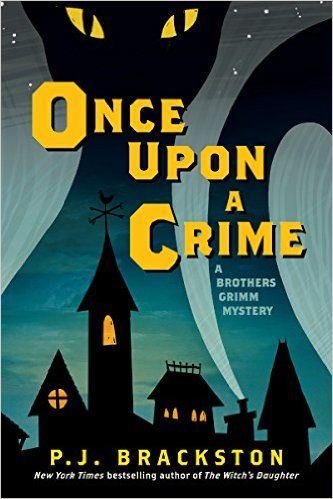
Crime Is Serious - But Not So Much, in Gesternstadt, Bavaria: P. J. Brackston

Humorous mysteries come in wildly diverse shapes. There are the capers that Donald Westlake gave us, burglars and other petty criminals dashing around cities, slipping on figurative banana peels as they struggle to complete their crimes. There are the very dangerous Stephanie Plum investigations from Janet Evanovich, with the threat of pulling a muscle from laughing too hard at this Jersey Girl's detective work and allies. Not yet well known, but wonderful, are the "Junior Bender" books written by Timothy Hallinan, a cross between a Westlake caper and a heartbreak (no, I won't explain now -- but click here to know more).

But there is nothing, absolutely nothing, that compares to P. J. Brackston's marvelous "Brothers Grimm Mysteries" featuring, in 18th-century Bavaria, the amazing Gretel (yes, that Gretel) and her eating-disordered but charming brother Hans, still sorting out their PTSD from that disastrous episode with the witch and the gingerbread house. Gretel is a very successful private investigator herself, weaving deftly among the political realities of kings, princesses, and "Kingsmen" (the police) -- but even with her local background in Jack (the one who planted the beans and climbed the beanstalk) and his family, she's had no preparation for coping with what this particular investigation demands, in ONCE UPON A CRIME.

It sounds simple enough at first -- Frau Hapsburg swears three of her cats (among more than two dozen) have been kidnapped and she has plenty of money to pay Gretel to take the case of tracking them down, even rescuing them. But after accepting a hefty deposit, Gretel checks in with a fortune-telling friend who's pretty accurate with a Tarot deck. The mention of a tall handsome stranger in the reading is something she figures is a put-on; it's the mention of a troll that has her worried. Good thinking.

I delayed several serious chores, in order to stick with Gretel in her perils. Is the king's executioner really going to take off her head? What was that about torture on the rack? Is that tall, dark stranger really interested in her? And how on earth did Hans come up with some real skills to assist Gretel in her work?

Come on, let go of any prejudice against a fairy-tale environment -- if you've read Jasper Fforde, you already know it's great grounds for crime and crimesolving, and Brackston's writing won't demand the literary background of Fforde's; those half-remembered stories will do you just fine for case background. I promise the plot makes sense, the characters (when not covered with mud) are endearing, and the insights into Gretel's thinking are good detective work, no matter how the costumes appear. Consider this moment as Gretel gets a good massage to make up for a trying visit to said troll:
She now knew someone was snatching the cats, or, more accurately, having the cats snatched. She knew also that this person lived over the mountains one day hence. Furthermore, she knew that the troll knew who this person was. In addition, she had a rare insight into the life, habits, and singular desires of trolls, but she decided against counting this as a plus of any sort. She had also deduced that the troll was more involved than he was letting on, given the missing finger on the corpse ... the only way to discover the identity of the cat collector was to obtain a human finger and take it to said troll.

"Argh!" she cried, as the masseur found a particularly sensitive spot.

"Fraulein, you have been overworking these muscles. It is important to build up stamina before attempting any serious activity."

Gretel groaned. "Needs must. Besides, I'm not sure what the recommended training would be before encountering trolls."
 Oh, I know, you're still skeptical. I can't blame you -- if Pegasus Books hadn't started me on Brackston's series with Gretel and the Missing Frog Prints (not a typo) last winter,  I might have missed out. This series sounds more than a little crazy, right?

But Brackston's books are fun, lively, well-written, inventive -- and they honor all the expectations for a well-knitted mystery, with a great balance of red herrings (or capes, or shoes) and useful clues and entertaining distractions. Didn't you promise yourself that you wouldn't take life so seriously? Here's a great way to start!


Saturday, July 18, 2015

Humor, History, and Very Very Human: DEATH EX MACHINA, Gary Corby

Sure, I was skeptical at the start -- this is the fifth Athenian mystery set by Australian Gary Corby in "Classical Athens" and it involves a group of actors, as well as the husband-and-wife investigative team of Nicolaos and Diotima. And a ghost!

But it didn't even take a chapter for Corby's breezy and quick-paced style to draw me into this 459 BC mystery. And although each chapter brings more revelations about "real life" in Athens and its surroundings, the information is deftly tucked (with smiles) into what Nico and his wife discover. There are some notes at the end of the book, and it turned out that the quirks that most raised my eyebrows came directly from Corby's research (yes, I peeked), so I relaxed and went with this very entertaining and just-complicated-enough romp through murder and mayhem.

Anyone who's heard of the way Shakespeare performers refer to Macbeth  as "the Scottish Play" already knows actors tend to be superstitious. So it's no big stretch to assume the ones in Ancient Athens would refuse to work if convinced that their performance space is haunted -- especially if accidents keep happening. When Nico and Diotima accept the task of exorcising the ghost in the city's grand theater, Nico at least is matter-of-face enough to rephrase the assignment to himself as "catch the killer," and figure out who's working to sabotage the show before the grand Dionysius festival begins.

The motives for murder turn out to hinge on employment and immigration, issues I never would have guessed were crucial in Athens "back then." As Nico and Diotima interview the newly promoted second lead actor for the show, Romanos, it's clear the actor is an eager and imperiled immigrant, and Nico assesses the situation and the actor:
I tried to estimate the age of Romanos, but it wasn't easy. He was one of those men who could be an old-looking twenty-five or a young-looking thirty-five. There were lines of experience about his eyes, but I guessed that he'd had a hard life and he could have acquired those at an early age.

Romanos looked out from our shelter, into the pouring rain.

He said, "I would like to be a citizen of Athens one day." ...

I asked, "Would it help you?"

Romanos looked surprised. "Of course it would. Citizens get all the best parts."
But what seems to be theater-motivated crime takes a new twist when Nico follows some leads into the surrounding countryside, and sniffs the trail of both beer and wine, as well as scandal.

I had a great time reading DEATH EX MACHINA and I'll be scooping up Corby's earlier work, as well. It''s a great treat for summer vacation, and reading the series will fit any time there's good reason to take a break -- for a challenge to preconceptions, a good plot, enjoyable characters, and a sense of fresh discovery. No need to read the earlier books before this one, but I'm sure I won't be the only reader who decides to invest in the whole series! From Soho Crime, and a dandy mix of caper crime fiction and amateur sleuth.

Sunday, July 12, 2015

Food, Fun, and Crime Solving in FATAL RESERVATIONS, Lucy Burdette

On the cover of the new paperback mystery from Lucy Burdette, number six in her Key West Food Critic series, are many of the enticing elements of this enjoyable summer "cozy" -- Tarot cards, yummy meals, a cat (there are three on the houseboat this time!), and a fabulous Key West (Florida) sunset.

What you don't see in this image though (and by the way, Lucy Burdette, have you thought of producing it as a jigsaw puzzle? the details are darling!) is the tangled situation Hayley Snow confronts as the action opens: her new boss's uncomfortable expectations at the local newspaper (not just urban-level writing style but also classier outfits!), the prolonged absence and odd reactions of her boyfriend (and old boss), and her uneasy relationship with members of the local police force. In FATAL RESERVATIONS, that relationship is strained by the usual problems facing an amateur sleuth -- the police aren't thrilled to have Hayley snooping into a sudden death that they're labeling murder. Why can't she just step back and let them arrest her fortune-telling friend Lorenzo?

But there's another ongoing issue for Hayley as she pulls on her crime-solving heels once again: She's drawn to those smart and decisive characters on the local police force, even when they're trying to evict her from the scene. And having at least one of them decide to be protective of her is making it tough for her to hide Lorenzo in her houseboat home, even with the willing help of her octagenarian housemate Miss Gloria.
"I'm sorry we were a bother, Officers," I said. "I'm a friend of Officer Torrence, and he's always telling me, 'Call the police even if you're not sure you need help.' I have a little reputation for trying to do things myself." I pasted on a silly grin and bobbled my head.

"You may very well have had an intruder in here," said the big cop, his face looking fierce. "You ladies need to be more careful about locking your door."

"We need to get the latch fixed," said Miss Gloria, fibbing so quickly my head was spinning. "It just gave out this week."
Miss Gloria also adds great expressions to the conversations, from "case the joint" to "Sheesh" and "Coast is clear." She's a marvelous houseboat roommate, even with her current passion for exploring and talking about burials at the cemetery. But that too may come in helpful.

Burdette is clearly on a roll here -- like her most recent two books in the series, Death With All the Trimmings  and Murder With Ganache, FATAL RESERVATIONS is tightly plotted, quick-paced, and full of unforgettable characters, dead and alive. Don't wait to get the other books in the series before reading this one. Hayley's interactions and quick recaps fill in what you need to know from her past, and there's so much going on that you might as well leap right into the bay ... err, book.

Of course, a big part of the pleasure of this series is the foodie chat, from the meals Hayley is preparing or reviewing, to the recipes packed into the back of the book. This time, the one I want to taste-test is "Once in a Blue Moon Blue Cornmeal Blueberry Pancakes with Cinnamon Butter"; I've just adjusted my shopping list accordingly! Strain lines for Hayley this time around include how to review a less-than-great meal at a new floating restaurant, and whether her printed words could be responsible for the owner's loss of control.

I had a lot of fun reading my copy -- which I was delighted to "win" by a drawing that the author provided (thanks, Lucy! aka Roberta Isleib). I won't be able to lend it around the neighborhood, though ... I am still considering another of the recipes in the back!

PS - Visiting the Lucy Burdette website is always fun (click here), but I also enjoy keeping up with this author's food chat on Facebook and at the Mystery Lovers Kitchen blog. Hope you'll have a chance to check them out.

British Police Procedural: Peter Diamond #14, DOWN AMONG THE DEAD MEN, Peter Lovesey

In the various series of British police investigation novels spinning now, a generous proportion draw their appeal from the team aspect: an investigator we focus on, and a second detective who helps outline the proportions of character and plot. Consider Reginal Hill's Dalziel and Pascoe; you can think of more (and are invited to comment on them here!).

Peter Lovesey's reliably intriguing Peter Diamond series, in which DOWN AMONG THE DEAD MEN is the 14th, now leaves behind Superintendent Diamond's pairing with DS Ingeborg Smith, and send Diamond out on a politically risky investigation with his own boss -- Georgina Dallymore, Assistant Chief Constable of Bath, always able to overlook a genuine clue in favor of her own suppositions and her imagined potential fame as a crimesolver. Her obvious certainty that Peter and others find her fatally alluring adds more complication to her insistence that Peter must assist on this hush-hush assignment. (And share a room at their lodgings?!!) And it's soon clear that Peter's not the only one who realizes Georgina is a stunningly poor pick for figuring out whether another city's police force is corrupt.

Lovesey's multiple plot lines here are a delight, and he's back to the strong, forward-moving crime fiction that's won him so many steady readers. Consider Danny, the petty criminal whose car thefts involved him with a murder, years ago; or the gutsy but rash teenage girls at a local prep school whose art teacher has gone missing, with nobody paying attention, and whose new art teacher is not only a "hot" young man but also willing to lead the girls into the Bohemian lifestyle he and his friends can afford. Readers from earlier in the series will perk up when one of the suspected investigators turns out to be Peter's former colleague, Henrietta "Hen" Mallin -- quite a contrast to powerful and clueless Georgina! And floundering in the loss of her own command, Hen's still not able to resist clashing with Peter's boss:
"I don't know about pride," Hen said. ... "I said at the beginning I messed up. You've got your views about policing,  I've got mine. What else do you want to hear from me?"

"I haven's heard a single 'ma'am,'" Georgina said. "That would be a start."

Diamond's flesh prickled.

Hen rose to it, as he knew she would. "God help us. Is that what you mean by respect? There I was thinking you were a fellow human being come to listen to my grubby little story when the truth is that you only came to hear me call you ma'am, and I missed all those opportunities. Well, I can put that right, ma'am, ma'am, ma'am, ma'am, ma'am--"

"Hen!"

She stopped.

Diamond couldn't let her destroy herself in front of him. "Get a grip."
As usual, Diamond's ability to solve the crime -- at first a matter of a body in a trash bag, but soon revealed as much larger and more sinister -- depends on his "read" of the people around him, and in this case it's also a matter of whether he can keep Hen and Georgina far enough apart to prevent open warfare within the force.

As Diamond deftly turns the investigation and takes over the lead in spite of Georgina's repeated moves of subterfuge and manipulation, it turns out he is indeed the right person for this one.

Lovesey and Soho Crime have given us a great summer read, one that will stay on my shelf for midwinter refreshment as well. If you're a British crime reader, this book's a great addition to the collection. In 2000 Lovesey won the Cartier Diamond Dagger for excellence in crime writing -- it's clear he has a long career still ahead.

Saturday, July 04, 2015

Perfect for Beach Reading: THE LONGEST YARD SALE, Sherry Harris

The second tag sale/yard sale mystery from Sherry Harris just came out, and it's a terrific summer read! THE LONGEST YARD SALE follows up on Sarah Winston's debut crime-solving effort in Tagged for Death. Glad to say right away that you don't need to read these in sequence -- because Sherry Harris is a gifted storyteller, with plenty of twists and adventures for her smart and stubborn protagonist.

Sarah Winston has one of those jobs that could provide access to things people wish you didn't know -- she's a newspaper columnist. But instead of investigating crimes in her Massachusetts neighborhood, she gives advice on organizing yard sales, and her column's popular enough to run in both the local paper and some of the others around. Of course she checks out plenty of sales herself. Her eagle eyes catch some great bargains, as well as solid fixer-uppers; she's been a cash-strapped military wife, and now she's cash-strapped and divorced, so she's well motivated to make the most of her expertise, even consulting for a fee for those who want the best sales.

As THE LONGEST YARD SALE opens, Sarah's donning an earpiece and microphone to keep her in touch with her boss-for-the-day, town manager Nancy Elder. Sarah's own casual suggestion about a way to draw tourist attention to the town of Ellington, Mass., by throwing a record-breaking "New England's Longest Yard Sale," not only caught on with Nancy and the town leaders -- it got Sarah the job of coaching the sale into existence. Now it's time to see how the town's already narrow roads will handle the influx of shoppers for the day!

And that's raising the tension for Sarah too, because the police force struggling to manage the surge of traffic and tourists is headed by her ex, now the police chief -- and he's willing to blame her for problems, while at the same time expecting her to get back together with him, since in the previous book (no, I won't spoil it!) she's had to admit he's not as bad as she thought. And she clearly still cares about him.  Still, she's got other possibilities, very pleasant ones, if also confusing!

If you're a fan of "cozy" mysteries -- the traditional small-town ones where the characters usually have known each other for a while, and life's frictions begin to add up to "I wish that person were dead" -- the quick piling up of suspicious circumstances in the first few chapters here will be like a candy store of goodies to choose from: the demanding and sometimes missing-in-action town manager Nancy Elder; Sarah's two suitors; the wealthy town resident who asks Sarah to appraise her things for an estate-type sale but also is clearly hiding things and circumstances; and the small but dangerous crimes that arrive during the yard sale itself, from arson to theft to threat.

Turn off the phone, make a tall cold pitcher of iced tea, put your feet up -- or if you indeed pack this one for the beach, take a good swim BEFORE you open the book. It's lively, quickly paced, tense and twisty enough to keep the pages turning eagerly, while being very much about women, their friendships and life paths, and how they work out problems that are scary and intense. There wasn't a single point in the book where I felt like putting it down!

Harris proves that her first good book was the start of a strong series, by adding THE LONGEST YARD SALE. Sarah Winston is starting to feel like a friend "from away" who just can't stay away from investigating for her neighbors and trying to find justice for them. I can hardly wait for the next book -- Sherry Harris (with Kensington Publishing) clearly will give us more good reads for summer and other vacations to come!

***
A little local note: Last summer my neighbor Marsha and I collaborated with some of Marsha's friends to hold a fund-raising yard sale for her dog Abby, who needed help to resume walking after an accident. This year Abby's doing well -- thank you all! -- but Marsha's loyal laying hens are in trouble for liberating themselves into the garden, and a couple hundred dollars of more secure fencing are needed, to prevent "the girls" from being turned into Sunday supper. So ... you guessed it ... we're prepping for another yard sale. I'm keeping track of the tips that Harris's books offer in the text and at the end. Onward!

Tuesday, June 02, 2015

New World War I Thriller Series from Robert Goddard: THE WAYS OF THE WORLD

US cover
How have I missed out on Robert Goddard's British thrillers until now? His website proclaims him "master of the clever twist," and Grove Atlantic released today his 24th book -- and the first in a World War I-era trilogy: THE WAYS OF THE WORLD. Max Maxted -- well, his family calls him James, but everyone else uses Max -- was a flying ace during the Great War, and finished the conflict as a prisoner of war. He's still very reactive to enclosed spaces, especially damp, dark ones. But with the enthusiastic partnership of his former sergeant Sam, who still refers to him as the lieutenant, Max is about to put his Flying Ace skills to glorious work: starting his own flying school in green and peaceful England.

Or he was. Because at the start of THE WAYS OF THE WORLD, Max's cleverer-than-she-looks mother has just tracked him to a hangar of aircraft he plans to purchase. And with one blunt announcement, she turns his priorities her way: "It's your father, James," said Lady Maxted. "He's been killed, I'm afraid."

There's no reason to think the death is anything other than an unfortunate -- perhaps embarrassing -- accident. After all, Sir Henry Maxted, 2nd Baronet, had a long diplomatic career most definitely on the wane after the war, and his "work" in Paris was probably just a formality, a chance to put an old man out on display for something not very important. Max and, especially, his older brother Ashley know that; so does Lady Maxted.

But Max's newly widowed mother is placing her confidence in her younger son, not in the new Baronet, as the brothers pack for a rapid journey to Paris, the scene of Sir Henry's death. She takes Max aside and says Ashley is obedient and reliable, but:
"I know I can rely on him to protect your father's memory at all costs. Whereas you ..."

"Whereas I?"

"Will go in search of the truth . . . wherever it is to be found. ... All I ask is this: if you discover your father was the victim of something other than an accident and if you discover what that something was ..."

"Yes?"

"I should like to hear of it before you proclaim it to the world."

Max felt the full force of his mother's gaze as he stood before her.
What Max would never have guessed was that his mother didn't just suspect her husband of a routine French affaire. She's the one who senses that he's been up to more than a routine diplomatic mission, too.

But as Max begins to peel back the layers of his complicated father's life abroad, first he gets in trouble with the French police himself. Then he finds the deep waters of espionage, intrigue, and criminal enterprise. The old diplomat was doing all this? Max doesn't have time to marvel much -- he's running too hard to catch up, in terms of expertise, daring, investigation skills, and a quickly rising awareness of danger and risk that makes him very glad his sergeant Sam turns up in time to help out.

It's hard not to race into this book as a reader, too: Goddard's clearly at the top of his form, writing swift action scenes and intense character-changing conflicts. THE WAYS OF THE WORLD is a prime page-turner. Released in the United Kingdom in 2013, it's a new release today for American readers. I'm hoping Globe Atlantic will provide the second book of the trilogy quickly, as The Corners of the Globe is already in print across the ocean. Good reading!

And for me, good to know there are also 23 other Robert Goddard thrillers to track down while I'm waiting for the next installment of Max Maxted's death-defying investigation!

Hugo Marston Investigation #5: THE RELUCTANT MATADOR, Mark Pryor

Mark Pryor's French mystery series, featuring U.S. Embassy security pro Hugo Marston, tackles the worst nightmare of any parent of a teen or young adult who heads for Europe: When your child stops answering the cell phone, how soon should you panic, who should you call, and how will you convince the police in another country (and language) that you know your grown child has not taken a vacation from being in touch with you -- something dangerous and frightening has happened to him ... or, in THE RELUCTANT MATADOR, to her. This time it's young Amy Dreiss who should be meeting Hugo for an American-style breakfast in Paris, Hugo's rare chance to catch up on real pancakes. But the young woman doesn't turn up, doesn't even call. Hugo's not inclined to panic -- his job in Embassy security in Paris has shown him the many ways a young tourist can forget to stay in touch with her parents' friends, even for a meal.

Besides, Hugo has his hands full, acting "in loco parentis" to his good friend Tom, an American "spook" who stays with Hugo in Paris when possible. Looks like Tom's been on another bender, and this time he's hit a policewoman. How far should Hugo go, to bail him out? Will any of his scolding actually get Tom to stay sober long enough to partner in security and investigations?

There's no time to test this, because a panicked call from young Amy's dad sends Hugo racing for to track down Amy. And the only way to keep an eye on Tom and keep him off the bottle is to take him along: first to Amy's empty apartment, then to search for the Spanish man who might have offered Amy a "modeling" job. Uh-oh.
"Field trip?" Tom said hopefully.

"We don't know she's there for sure, or where in Spain if she is. ... We can take a local field trip."

"Where to?"

"The club where Amy met this Spanish dude."

"What kind of club?"

"No idea, but it's in Pigalle."

"I don't know if that's a good idea," Tom said. They both knew that Pigalle had two faces, the saucy, playful one that showed in the day, and the darker, raunchier one that emerged at night. Any club out there was likely to dangle temptations in front of Tom that he didn't need. "You know the name of the place, I assume?" Tom asked.

"Club Caterina. Familiar with it?"

"No. But I can't remember half the places I've gotten wasted in."

"Well then," said Hugo. "We'll just have to behave ourselves and hope they don't remember you."
Turns out that's not the problem -- the real complication is, Amy didn't just visit that bar, with its brass dance poles and sleazy ambience, trolling for modeling work. Umm ... she danced there. Taking her clothes off for every work shift.

Soon enough, Hugo and Tom figure out that Amy must be in Spain with "that dude." Of her own free will? Or absconded and pressed into prostitution or other sleazy efforts? As the risks pile up -- maybe a ring of kidnappers serving the hot market in young American flesh, or worse -- the investigators race to Barcelona and immediately rub the Spanish police the wrong way, slowing their race to save Amy and turning up a dead young woman. Is it Amy? If not, where is she, and how fast can they find her, before terrible things happen?

Mark Pryor's series featuring Hugo Marston is a great way to armchair-explore Europe; his earlier four titles have covered a lot of ground in France, both urban and rural, as well as some diversions elsewhere. This plunge into Spanish policing and culture adds fresh spice to the series -- this is the fifth book, and no, you don't need to read the others before this one. But I've enjoyed them all. Pryor walks the fine line of a traditional crime investigation without extremes of gore, adding just enough reality of the evil and losses that deadly crimes bring with them. And Marston is in some ways an "amateur sleuth" because his U.S. Embassy work isn't supposed to put him into a police role -- but in other ways he's a seasoned pro with an FBI past and a grasp of how to work with other police forces.

Pryor's own background -- he grew up in Europe, worked as a crime and police reporter, and moved to the US in 1994, adding a law degree and becoming an assistant district attorney in Austin, Texas --
keeps the details well grounded, and the pace and twists of THE RELUCTANT MATADOR are tight and engaging. Best of all, he provides memorable investigators worth following: not just Tom's efforts to get sober and do the dark work around Hugo's careful diplomacy, but also Hugo's own personality, determined to save, rescue, coordinate ... but also very worried about his love life, uncertain of how to woo or win the smart and elegant woman who's captured his attention. Add a fiercely competent Barcelona investigator to the blend, and the action never stops. Risk, danger, and fast thinking -- and oh yes, that diplomacy that Hugo is supposed to have mastered, they all are needed if Amy is to have a chance at surviving her mistakes.

From Seventh Street Books, which has developed a really good line of crime fiction: check it out. And here's Mark Pryor's website, also worth a visit.

Monday, June 01, 2015

The Shadow World of 1952: INNOCENCE, Heda Margolius Kovály

Thirty-somethings today hold 9-11-2001 as their mark in time: the date the world changed. And it did for an older generation too, but it wasn't the first time. There was President Kennedy's murder - a date when the romance of Camelot fled from the image of American politics. Later would come the violent deaths of Robert Kennedy and Martin Luther King. Marks on the timeline in terms of saving the world came, too -- like the date the Berlin Wall finally stopped dividing the two halves of Germany, and the Iron Curtain that hung across all of Europe finally seemed destined to fall.

June 2 marks the American release of INNOCENCE, OR MURDER ON STEEP STREET, a 1985 crime novel written by Czech memoirist and translator Heda Margolius Kovály. At the time it was first published (in Czech), the book was considered so subversive -- set in 1952 Czechoslovakia and baring the gray horrors of Soviet-style life in that nation trapped behind the "Iron Curtain" -- that its publication took place in Germany instead. The author didn't want it to create extra trouble for her friends still living in Prague at the time, and she kept the book's profile so low that it was considered obscure.

Flash forward to today, as Soho Crime publisher Juliet Grames and Kovály's son Ivan Margolius -- with translator Alex Zucker -- finally release, with great satisfaction, INNOCENCE to American readers. What if Raymond Chandler's earliest work had hidden all this time? Would mystery writing be the same? How would the noir genre have risen without it? Step through the looking-glass as a woman, with a finger on the pulse of Europe, and you have the effect of Kovály's novel: Here is where we begin to face the world as it is, the the fierce appetite of crime and murder, which devour goodness and crack open the polite, the gentle, the kind. The innocent.

Helena Nováková is working as an usher at a movie palace, the Horizon. Her life's stripped of all graces: Through her own offhand suggestion of a kindness to a friend, she tumbled her husband into a political black hole, and he's serving probable life in jail. She's numb, impoverished. Barely scraping by in a Czech culture of comrades and corruption. And almost without a will of her own.

Slowly, around her, the facade of civilization crumbles, one person at a time. As INNOCENCE opens, Helena is doing an errand for the absent "manager" of the Horizon: telling the projectionist that his error of the day before won't be tolerated if it ever happens again. Soon afterward, the projectionist is arrested, and the investigation that uncovers his victim also begins to push Helena toward taking action that she hopes will restore her husband's freedom, or at least his culture.

But instead, like the supposed dominoes of Communist occupation that once pushed America into the Vietnam war, Helena's fellow employees and even the Horizon patrons turn out to be involved in crime and corruption themselves. And -- what added trouble is Helena bringing upon herself?

The translation by Alex Zucker catches exactly the trembling grim aura that I recall from the 1960s in junior high school, learning about the fervent passion of the Communist promise while also sampling Russian literature and its despair. At some moments I almost felt the red paper covers of the first Communist propaganda booklet I ever read; at others, I could have been rediscovering the madness and menace of Bulgakov's crime novel The Master and Margarita, without any redeeming magic. Here are the roots of Eastern Europe's turmoil - the same ones that Alan Furst entwines in his Eastern European crime fiction that takes place in the 1930s. There was a world war between the 1930s and the 1952 scenes of INNOCENCE -- but in some ways it only justified the bitter changes that continued to twist once-civil, once-cultured nations into a mockery of Marx's own promises.

Helena's unthinking efforts to improve her situation lead into a compelling sequence of memorable scenes and taut suspense. No car chases, no gunfights, but the grit and betrayal of espionage are here, along with its pained consequences.

I didn't always appreciate Zucker's choice of slang for the Czech characters -- Helena and her husband had been "hitched" for two years when their lives imploded, and Helena reflects on her own actions, "If only I'd kept my trap shut." It's jarring at first. But the match to both Chandler and the American radio shows of the 1950s eventually won over, and I felt like an investigator myself, seeking the truth behind the performances at the unfortunate Horizon. Does Helena deserve the consequences she reaps?

Pick up a copy of this unusual and engrossing mystery, the only one that Kovály wrote. Let me know if you feel the same way about it, after reading it and stepping away far enough to look again: I'm shelving my copy next to Chandler.

Fly-Fishing, Ice Fishing, and Murder: DEAD RAPUNZEL, Victoria Houston

The 15th Loon Lake, Wisconsin, mystery from Victoria Houston is a satisfying traditional mystery with the flair of Houston's now well-developed characters: Police Chief Lew (Lewellyn) Ferris, who enjoys the community collaboration of her job; Lew's close (yes, very close) friend and fellow fly-fisherman Doc Osborne, a retired dentist who fills in as a death examiner for Lew's team; and the inimitable Ray Pradt, angler and, despite his fish-shaped hat and endless jokes, a magnet for smart savvy women visiting the region (and he's an excellent tracker, too). As in many of the other books in this series, solving the crime draws on the skills of each of these investigators.

Look especially for fishing aspects in DEAD RAPUNZEL, because the title has nothing to do with the long-haired girl in the tower -- the Wilcox Rapunzel Olive is the rather unusual name of an elegant hand-tied fishing fly, pictured below, and the victim who's murdered in the first chapter is herself an angler and ties flies. She's Rudd Tomlinson, a wealthy widow about to open a prestigious museum as a gift to her part of rural Wisconsin. When she's pushed under a logging truck (eww!), the icy weather can't keep Lew and Doc from tracking the killer. The main problem is, so many people have motives for this one! And although the investigation quickly eliminates Rudd's dear friend Judith (also a fly-fisher), plenty of family malice, financial gain, and a lust for power and control mean that half a dozen others are "on the hook," so to speak.

Houston's writing is direct, a good storyteller on a roll. She alternates mostly between Lew's point of view and Doc's, and in this case Doc Osborne is an acute observer of the suspects, including the dead woman's stepdaughter, Sloane, caught trying to take a valuable painting from the victim's home:
Like a muskie fisherman with a lunker on the line, he couldn't help being interested in how this scenario would play out. Sloane, however confident she might be in her attempt to sneak something out of her stepmother's home, had two formidable foes: Lew had the authority of the law while Judith was angered by the attempted theft, which she was not hesitant to block.

"Sloane," said Judith, her voice even, "I don't think you are aware that Rudd was killed in a traffic accident this morning. I'm sorry you have to hear it this way, but I hope that explains why Chief Ferris and Dr. Osborne are here.

"Thing is, her death may not have been an accident. The driver of the truck that hit her has sworn that he saw someone -- a man -- push her. If that's true, she was murdered."
Winter in Wisconsin is no time for fly-fishing, despite the book's title (which in this case refers to some flies in a display case at the victim's home), but Ray Pradt's willing moves, taking Judith ice-fishing, will break open the investigation as the pair of anglers discovers a new range of motives.
the Wilcox Rapunzel fly

There's plenty of Wisconsin in here, along with a healthy dose of fishing, but best of all there's a nicely braided murder investigation that gradually ramps up the tension, until even Chief Ferris herself is in danger.

Houston's 15th is an enjoyable traditional-form mystery; the ice and snow imagery may transport you this summer to a very different season, and the human longings and well-played friendships in DEAD RAPUNZEL can fit quite nicely into the summer reading stack. Pick this one up especially if you enjoy regional mysteries like those of Archer Mayor and Craig Johnson, and for any collection that's covering a range of American states. Fun reading, and it will stand up nicely to a second reading as well.

Monday, May 25, 2015

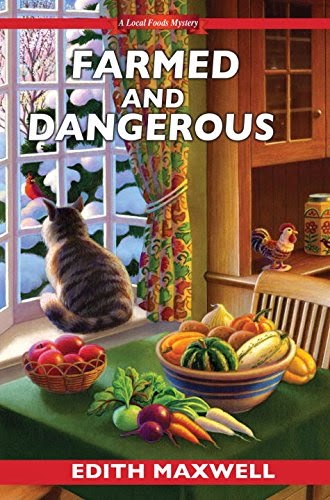
FARMED AND DANGEROUS, Edith Maxwell: Third "Local Foods Mystery"

Packing and stacking: that's the way to enter summer. Packing a beach bag with books you've waited for months to have time to open ... and stacking more of them next to the deck chair, hammock, or (fan above it, of course) summery lounging spot inside, for those buggy or rainy moments best endured with iced tea and a good mystery.

FARMED AND DANGEROUS could go into the bag or onto the stack -- but since it's being released May 26 as a hardcover (yay, Kensington Books!), I suggest the stack. Then put the two earlier titles in Edith Maxwell's Massachusetts adventure series into the beach bag, as a compromise. You can catch up on 'Til Dirt Do Us Part and A Tine to Live, a Tine to Die in between plunges into the water, right?

But it's not necessary -- or even important -- to read these in order. Market garden farmer Cameron Flaherty took over her farm recently from her great-uncle, Albert St. Pierre. She's built up steady clients in spite of the crimes that have struck her acreage (ah, these "amateur sleuths" always have a problem justifying the way murder seems to follow them around!). And the customers for her year-round veggie subscription, in the mode called CSA (community-supported agriculture), have also become friends, sometimes assistants, and most importantly her advisors on what to grow and sell. As this third book opens, Cam's hoping she can enlist the assisted living home where her great-uncle now lives, to purchase her produce on a regular basis. And because it's "New England spring" -- the kind where snow keeps coming back at you -- she's resorting to padding out her CSA baskets for customers with other locally grown and harvested treats, like heritage apple varieties and cheeses.

Maxwell's made a clever choice in bringing along, from the earlier two books, some startling characters. One of them, the very unfriendly Bev Montgomery, is a recent addition to Great-Uncle Albert's assisted living home at Moran Manor. And Bev is still accusing Cam of stealing chickens, and more. "I'm going to kill that woman," one of the staff aides declares, and Cam knows just what he means.

Still, it's a shock when actual death stalks the halls of the assisted living facility. Did it arrive because Cam's spending time here? What's the threat level to her great-uncle ... and is it her fault? What if something were to happen to trap her within the residence with the seniors and, most likely, a killer? Cam already knows enough to be scared. Very scared.

Maxwell proves again that a "cozy mystery" with an amateur sleuth can have edge and taut suspense, and a highly believable set of plot twists (although up here in Vermont, we're less likely to allow a snowstorm to keep us in one place, hmm?). Deft touches of potential romance and stress between the local police investigator and the hard-working farmer add to the fun of the book, and make it an even better "beach read." Cam urges her boyfriend to let her help solve the case:
"Tell me what you found at Moran." Cam reached a hand across the table to him. When he kept his arms folded, she pulled hers back, stung.

"She was murdered," he said.

"That's awful. How?"

The expression on his face changed from fatigue to steel. "I'm afraid you've become a person of interest."
And that, of course, nails it -- now Cam's got to step in and solve this crime, if only to prove that her boyfriend has the wrong direction in his sleuthing. Not to mention protecting Great-Uncle Albert. And oh yes, to keep her local farm in business!


With Secrets and Revelation: DREAMING SPIES, Laurie R. King

If you're a Laurie R. King fan -- and I am -- you probably had DREAMING SPIES on your list earlier this year, and purchased it soon after its release in mid February. I did, too, but I knew there was no rush to review it, so I tucked it away to enjoy later.

So, a few reasons to read (and collect) this 13th "novel of suspense featuring Mary Russell and Sherlock Holmes":

* For anyone who's followed Laurie R. King's writing, from the Kate Martinelli (San Francisco) homicide series to the eerie and compelling Stuyvesant & Grey books to the very popular Mary Russell/Sherlock Holmes sequence, reading DREAMING SPIES is the best way to discover which direction King's creativity has taken this time, and how she's tying together her many interests. Plus, is her storytelling changing with time? My own answer to this: Yes, she's separating the thread of violent crime from the thread of puzzle solving. Although her 2006 release, The Art of Detection, was a deliberate (and entertaining) effort to tie the Martinelli series to the Russell/Holmes books, it left out some of the dark threat of the early Martinelli books. That darkness now prowls in the Stuyvesant & Gray books instead (so far, just two of them: Touchstone in 2007 and The Bones of Paris in 2013).

* Holmes fans who are not deadly serious in their passions can enjoy the notion of Holmes as a much older man, married to his young student Mary Russell -- and in DREAMING SPIES, Russell asserts her equality to Holmes in terms of deftness with disguise, quick planning, even martial arts. In fact, the premise of the story, which takes the pair into Japan in 1924 to assist a ninja (or more than one ninja!) and other politically significant Japanese figures, is that neither Russell nor Holmes speaks Japanese or has expertise in the "customs of the country." Hence their decision to explore, and then assist, puts them on a level playing field. Actually that means Russell will dominate a bit more than usual, since she's younger and by gender better adapted to the schemes involved this time.

*King is such a good storyteller that this, like her earlier books, is an entertaining diversion with page-turner appeal. She's also a top-notch researcher, so don't let the unexpected appearance of, say, a woman who is a ninja turn up any doubts: Sure enough, there's history to back the concept, with an early Japanese woman becoming an espionage-oriented ninja in the 16th century, running her own network. Russell is a bit too much of a loner to adapt to a network, but she's not going to let a spy who's younger than herself take over the scene! (Or is she?)

*If you've been reading any of the half dozen intriguing series of English mysteries racing into print on the World War I years and the years between the wars -- or even James Benn's World War II series with Billy Boyle -- this 1924/1925 setup will enhance what you're already consuming, adding details of Europe, the United States, and Asia, particularly Japan. It's a time-honored way to enjoy adding history to your plate.

These Russell/Holmes books don't feel like the original Sherlock Holmes tales -- they leave a very different taste in the mind -- and that's the drawback to reading them. The depressed genius of the Conan Doyle character wouldn't balance all that well with Russell's animation and enthusiasms, I think. So, as with the earlier books in the series, enter lightly, for the fun of it. (My one regret for DREAMING SPIES was the near-absence of Holmes's usual remarkable insights ... and with it, I thought, a bit less insight on Russell's part, too. But perhaps they were both overwhelmed with learning that new language, and all that comes with it.)

Best of all, I came away from the book relaxed, taking joy in the twists and resolution of the story, and more attentive to the history and cultures on display. Fun! I recommend reading it -- provided the "reasons" above fit your state of mind as you open the book.

Monday, May 18, 2015

Forensic Archaeology and World War II Betrayal, in THE GHOST FIELDS, by Elly Griffiths (Ruth Galloway #7)

US cover
The long shadows of old crimes are familiar phenomena for Ruth Galloway, a forensic archaeologist whose home turf is Norfolk, England: rich with dark history, which Ruth has already found dangerous to her career and her life in the previous six books in Elly Griffiths's strong and exciting series. In THE GHOST FIELDS, a body from the Second World War emerges where it shouldn't be -- in a buried airplane (the wrong kind!) in a field where a development is scheduled for construction. And when Ruth begins to probe the life and death of the quickly identified corpse, Fred Blackstock, threats from the locally significant Blackstock family multiply. But the dangers, though real, are amorphous and the killer or killers are hard to identify, in the midst of a tightly closed family full of secrets.

Griffiths braids far more tension into the mystery, through the stresses Ruth and her friends undergo in the meantime. Fans of the series already know the complicated situation Ruth's in, as a (mostly) single parent raising a precocious daughter whose father keeps stepping back into the picture; as an academic struggling against a thoughtless and periodically malicious department head; and as an undecided lover of an American whose visits to the region destabilize her heart, her routines, her hopes.

Then there is the druid component: Ruth's close friend Cathbad "just knows things" and sometimes they are relevant to untimely deaths.  Not to mention the advent of DNA testing to the region -- suddenly tying together people and differentiating others, causing shocks to family structures, old beliefs, and the current policing force where Ruth's on call.

A large part of the pleasure of this series is Ruth herself, sharp and knowledgeable in her field, but quickly insecure in crowds and among people who don't seem quite sane. With the entire Blackstock family meeting that criterion, one way or another, Ruth's in trouble until she can resolve the journey of Fred Blackstock's corpse. Griffiths alternates points of view, and when we're "inside" Ruth, we're on an all-too-human roller-coaster of determination, discovery, and dismay.
Ruth watches as Fred's coffin is lowered into the grave. It's a moment that never ceases to shock, no matter how long ago the death. The crowd begins to disperse and, conspicuous amongst the sea of black, she sees Cathbad and Hazel, both wearing purple cloaks, standing to one side of the grave. The TV cameraman is filming them surreptitiously. And there's Nelson, accompanied by Tim Heathfield and Clough, moving forward to talk to Sally Blackstock. The cameraman, who has, up until now, been the soul of discretion, allows himself a few shots of the grave and of Nell Blackstock walking away, clutching the folded flag to her chest.

Ruth stays back. She doesn't much want to talk to the TV people or to the family. She is still wondering whether to attend the 'celebration' at Blackstock Hall. ... When she thinks of the scene last night, she is struck by a slight but real jolt of fear. She remembers Old George howling in the pets' burial ground and standing at the head of the table proposing a toast.
Madness, menace, and the constant mayhem that defines managing a challenging career and parenting -- that's what Ruth is in for, and THE GHOST FIELDS (a term for the old airfields in the region) provides suspense and intrigue and quick, sharp jabs of dry British humor as well.

Elly Griffiths is on a good roll here, tossing Ruth's often chaotic life with generous helpings of crime, sleuthing, and suspense. It's a great series -- halfway between amateur sleuth and professional investigator -- and although there are advantages to reading all the books in order (start with The Crossing Places), THE GHOST FIELDS is very readable on its own. Of course, it's likely that if you read this one without the others, you'll soon be sleuthing the shop and online shelves, looking for the other six. But there's nothing wrong with that adventure! At least you are not going to have to face dinner with the Blackstocks on your own.

[PS: Published in Great Britain by Quercus; brought across "the Pond" by Houghton Mifflin Harcourt. And released for publication in the United States on May 19, 2015.]


Sunday, May 17, 2015

New Setting, New Characters, but a Classic Bethany Maines Mystery! AN UNSEEN CURRENT (San Juan Islands)

I've never held back on blunt truth about the mysteries that Bethany Maines framed in her multilayered "Carrie Mae" cosmetics and espionage corporation: They are funny to the point of getting a stitch in your side, or interrupting the quiet evening of anyone else in the house by chuckling, giggling, guffawing, and (unladylike) snorting at the situations and reactions in these "caper"-style mysteries with an indelible "just us girls" twist to them.

With AN UNSEEN CURRENT, set in the San Juan Islands off the coast of Washington State, Maines dials down the creative confusion and hilarity a bit, to spin a more traditional mystery featuring out-of-work actress Tish Yearly. Evicted from her apartment at the same time that she loses her (non-acting) job, Tish takes the last and least appealing choice open to her: She drives onto the ferry and heads for her grandfather's home, desperate enough for a place to stay (and lick her wounds) that she's willing to barter cleaning out the elderly man's sheds and home in exchange.

But Tobias Yearly isn't quite the cutesy grandpa Tish thinks she's running to -- even though the two of them are walking with shared grief about the untimely death of Tish's dad, they don't know much about each other. Tobias's close friend Reginald, serving up a welcoming dinner for Tish, is only too ready to tell at least one secret: Tobias used to be a CIA agent.

Tish hasn't had enough time to process this by the next morning, and at that point, it's too late for that sweet across-the-generations helpfulness she thought she'd bought into -- because Reginald's been murdered, and both Tish and Tobias are "persons of interest."

Maines keeps the plot bouncing, with well-applied risk and tension, plenty of humorous moments (they're just not quite as extreme as in her first two books!), and even a strand of romance or, as Tish is willing to name it, lust -- but does it have to focus on the officer of the law determined to investigate her? Ouch!

Amateur sleuth though she is, Tish quickly learns from her grandfather that pro acting skills apply very well to analyzing whether suspects are lying, and of course to infiltrating and investigating.
"Too bad he's lying," said Tish and Tobias at the same time.

"You can't know that!" exclaimed [the waitress] Amber, clearly a romantic.

"I was not with Shelley last night," quoted Tobias. "Used her words to construct his denial, and no contractions, that's a very bad sign."

"He practically built a wall between them with the condiments," said Tish, "And he kept turning his body away from her."

"Not to mention the off-timing on the emphatic finger poke," said Tobias.

"Yeah, that was way off," she agreed, nodding.

"What are you two? The lie detecting duo of Orcas?" demanded Amber.
Matter of fact, Tish and Tobias make a great team, one of the few investigating granddaughter-grandfather setups around! Tish is smart, quick on the uptake, and soon is way too close to the probable perpetrators of the crime.

AN UNSEEN CURRENT gives a lively, good read, in traditional mystery format, with good twists and the right amount of danger and deception. I enjoyed it -- actually, I couldn't put it down! Available as an e-book, and also by "print on demand." Ignore the typos (I did, for the most part) and zip into the fun. Oh, and by the way -- if you're taking it on vacation with you ... make sure nobody's going to give you a hard time if you get an occasional urge to read the funniest parts out loud. It is, after all, a Bethany Maines caper!

Colin Cotterill's 10th Dr. Siri Paibun Mystery, SIX AND A HALF DEADLY SINS

Ever notice how hard it can be to relax, as summer arrives? In theory, it's playtime, and vacation time, and let's-go-the-beach time ... but in practice, it's also yard-care season, clean-out-the-closet time, give rides to family members no longer in school time, and time to learn new recipes for the grill.

That's why it is entirely necessary to grab the newest Colin Cotterill mystery, the tenth in the Laos-based series featuring the aging Dr Siri Paibun and his wise and tough wife, Madame Daeng. Dr. Siri is officially retired now, and the office where he's exhibited his government-mandated coroner's skills is closed. But a package has arrived, and he's puzzling over its contents with his friend Comrade Civilai Songsawat -- also retired, at least in theory. In fact, the pair should be just "two old men sitting on a log" beside the Mekhong River, taking things easy. But the package contained a traditional Lao skirt, or pha sin, with a severed finger sewn into the hem, which really can't be ignored easily.
"Do you suppose it might have belonged to the weaver?" asked Civilai. "Some loom accident?"

"What?" said Siri. "You mean she was so engrossed in her skirt-making that she didn't notice she'd sewn her own finger into the hem? Got home that evening, and her husband says, 'Hey, where's your finger?' And she looks down to find it gone and says, 'Hm. I must have inadvertently sewn it into one of the skirts'?"
Well, no. Obviously. And as Civilai reminds to his friend, "Sarcasm is like throwing a stick at your enemy when you've run out of bullets."

Fortunately, Dr. Siri's wife, Madame Daeng, along with her sometimes mysterious past and her esteemed skills in noodles, knows something about these traditional weavings, and can point the two men north. In fact, she even decides to travel with her husband, which turns out to be a very wise choice.

The journey to investigate the sin, however, is at least as complicated as the puzzle of the finger in the skirt hem. In fact, a map at the front of the mystery, before the tale begins, gives fair warning. Siri -- and who knows who else, at this point? -- is headed for a scenic and politically uncomfortable tour of northern Laos. Expect trouble ahead, because Cotterill has already said bluntly in the first paragraph that this season (December 1978) is also the time when Vietnam invaded Cambodia, a neighbor of Laos. If you're good at geography, or lived through the Vietnam war, you know China is involved in all these tilting power struggles, too. And Dr. Siri has never become a model citizen under the Chinese-led rule of his little nation anyway. Even with Madame Daeng at his side, he's sure to get into trouble.

I should have guessed from the chapter titles, but it took me a while to connect the book title with the goings-on (after all, I was watching for why it wasn't "seven deadly sins," a true red herring). To be honest, for a while, I wasn't trying to figure out things -- Cotterill's storytelling is so fluid and his characters' interactions are so entertaining that I just gave in, following the story and not trying to solve the crime, eager for the next twist of the plot.

Now look back at the start of this review -- the part about not managing to relax in the season that's supposed to be all about relaxing. This is the reason it's essential to pick up a copy of Cotterill's SIX AND A HALF DEADLY SINS. It's the fun part of the season, and it will remind you of why you wanted to read an enjoyable book (instead of just a challenging one, or one on the list of cultural must-reads, or any of that). This is the book that makes reading into a summer pleasure again!

It's from Soho Crime (of course!) and feels like a true sibling to Tim Hallinan's modern-day Thailand series (warmth and humor), a cousin to Martin LimĂłn's Korean ones (friends facing risks together), and an uncle to Barbara Cleverly's Joe Sandilands investigations (paying attention to the politics will help you solve the case at about the same time that the protagonist) -- all of them Soho series.

But if you can only pick one to start your vacation (or pretend you can have one!), this is the one. For extra fun, visit Cotterill's website, too, and jump through the hoops of his graphic jests, en route to a pithy description of his newest book here.

Sunday, May 10, 2015

Maine Crime Fiction from Gerry Boyle, ONCE BURNED

In the 10th title in his Jack McMorrow series, ONCE BURNED, Gerry Boyle evokes primal terror: the sum of those consuming and compelling emotions when someone threatens the life of your family, especially your child. Piling on plot threads and sharp twists, this page-turner is both a powerful work of crime fiction, and a fine New England example of what trouble a job with high stakes, some deep friendships, and determination to "do the right thing" can get a person into.

Jack McMorrow is a news writer, a journalist, living in Maine. At home, he's an active dad of Sophie, the preschool daughter he and his wife Roxanne are raising. But every now and then, and this is one of those months, he's got to step back into his work shoes and develop a long story that the New York Times will pay big bucks for, complete with sidebars and insight. His wife Roxanne's newly done with her career slot -- or at least she's supposed to be -- but one of her last actions as a social worker for the State of Maine has just turned into a blame-fest of a child's death and a furious mom, and there are newspaper reporters -- not Jack -- calling the house for comment.

One of my favorite things about reading Gerry Boyle's mysteries is that even when his protagonist is an "amateur sleuth" like Jack McMorrow, stepping over the line into pursuing the truth about a crime himself instead of just watching and recording it, the decisions up front are smart, not stupid. Jack's not the kind of person to neglect to lock a door when he knows there's a criminal around, and he's a loyal more-than-friend to his neighbor and ex-military operator Clair and Clair's wife Mary. Strong and savvy in the ways of violent criminals -- from his Vietnam war past -- Clair is even more protective of Jack's family than Jack is.

Which makes ONCE BURNED an extra scary book, because there are three people -- at least -- trying to force Jack and Roxanne to back away from their work and integrity, and all are threatening not just Jack, not just Roxanne, but little Sophie. And even Clair is getting challenged, trying to keep up the defense.

The book races into action from the start: There's an arsonist tearing apart the magazine-glow image of the little town of Sanctuary, Maine, far enough from Jack's home to make him out of reach if he's on the story, but close enough for him to keep racing over there as tragedies multiply. Meanwhile, Roxanne's former client, mom of a child who's died in foster care --- in a home that Roxane provided -- is clearly "off her meds" and setting records in stalking and threatening. And even the "good guys" out in Sanctuary and looking pretty strange by now.
"Jack," Tory said. "Somebody is threatening your property, even our family. What do you do?"

"Call the police?" I said.

"Sure, but what if the police are a half-hour away? What if by the time you see the fire, it's been burning for at least that long? What if the person doing this has free run of the town because at three a.m., everyone is asleep?"

"I don't know," I said. "You tell me."

"In a situation like this you have to take back the night, Jack," Tory said.
Jack will have to use all his skills, investigative, writing, and parental, to keep his family safe this time, and to get the massive story that will provide the paycheck his family needs.

Boyle proves once again that a really good mystery must be much more than an intricate and believable plot: It requires characters who speak to us, and echo our own loves and doubts. With Jack McMorrow and his extended family, Boyle has constructed a powerful frame of love and struggle where his storytelling consistently lays out the memorable, the involved, the must-read caring for people "like us" who rely on each other in tough and frightening situations. Jack and Roxanne -- and Sophie -- may not come through this one unscathed. But they will come through it with us, the readers, increasingly committed to their journey.

Tuesday, April 28, 2015

World War II Policing in Detroit: DETROIT IS OUR BEAT, Loren D. Estleman

This is a hot time for World War I and  World War II mysteries set in Europe, especially England and France -- and Italy, come to think of it. And there are also some series set between the wars. It's a great time to probe the complications of two terrible conflicts, through crime fiction.

But what about on the home front? Yes, the U S of A, where in the 1940s there was rationing of gasoline and tires, changes of car manufacturing lines to build tanks instead, and a certain patriotism in women pretending they wore stockings, while actually giving them up, for the war effort.

By zeroing in on this era in Detroit, the Motor City (yes, that's where Motown came from, too), prolific author Loren D. Estleman takes a walk on the dark side -- because this was a period of stunningly brutal policing, where the criminal enterprises and the cops stayed connected, and brass knuckles were as much a tool of law enforcement as they were of crime and bar fights.

Estleman's Amos Walker series (1980-2014 and continuing) is set here; so is his "Detroit series" (published from 1990 to 1999), which sets out to tell a significant part of the American story through the history  of crime, gently fictionalized, in a quintessential American city. In addition to his novels, though, Estleman has steadily provided short stories set in Detroit, especially for Alfred Hitchcock's Mystery Magazine, edited by Linda Landrigan.

For his new release from Tyrus Books, DETROIT IS OUR BEAT, Estleman rounds up nine of these tales of his "Racket Squad" -- a plainclothes detective squad of four, showing what it means to be tough on crime under wartime conditions (not enough men, not enough gasoline, and so on). Lieutenant Zagreb, Sergeant Canal, and Officers McReary and Burke are loyal to each other and to getting the job done. But don't count on rules being followed in the process.

For instance, take their arrival at Frankie Orr's suite, on a mission to protect Frank Sinatra, The Voice, from a threat. The Four Horsemen aren't much impressed with Orr's on-the-spot protection team:
The bodyguard tried to roll with the blow and reached under the sagging side of his coat. McReary, stationed on that side, slid the blackjack out of his sleeve and flicked it at the back of the man's hand as it emerged. The big semiautomatic pistol thumped to the carpet. Burke kicked it away.

"Just like Busby Berkeley," Zagren said. "Show some manners. Knock on the door."

The bodyguard, bleeding from the temple, ungripped his injured hand and complied.
Right, so this isn't sweet stuff (and it's from those classic years, too) ... but there's plenty of squad loyalty, lots of dark humor, and a heaping helping of city police life from the wild days of wartime.

So if you'd like to round out your "wartime" crime fiction reading, grab a copy of DETROIT IS OUR BEAT. Hard to tell what the release dates are for the various versions of the book (hardcover and paperback are both listed for May 2 at one online site, but Tyrus released at least one version last October). But if you like American noir with a lot of style from the glory days of the gangsters, tuck this one into your beach bag or briefcase and, as Estleman suggests, "It's the 1940s, gate. Don't be a moldy fig. Get hep, jump to the jive, ring your favorite Jane up on the Ameche, and don't spare the horses."

Monday, April 27, 2015

Policing During World War II: THE LANGUAGE OF THE DEAD, Stephen Kelly

Maryland author Stephen Kelly, swooping into a new career after some 30 years as a journalist, gives us a debut crime novel of intricacy and depth. Detective Chief Inspector Thomas Lamb, struggling with small wartime deprivations of coffee, jam, and eggs in the rural Hampshire area of England in 1940, is well aware that he's fortunate to be too old -- and too "essentially employed" -- for the armed forces. Lamb shields his wife Marjorie as much as possible from the daily horrors of his job. So when he's called to investigate the murder of Will Blackstone in the nearby village of Quimby, and learns the victim was rumored to be a witch, he merely tells his wife he has to go out because someone has killed an old man. To her question on what's happened, he summarizes quietly: "The usual thing, I'm afraid," he said. "He probably quarreled with somebody."

But Blackstone's death is only the first of a stunning sequence around the village, all somehow related: by method, and sometimes by small drawings contributed by a young local man whose skill in art is equaled by his silence and shyness, perhaps due to something like autism spectrum disorder.

And the wartime stresses, the constant stream of able men into the army and navy, has left Lamb short of investigative manpower. Still, the last thing he expects or wants is the arrival of DI Harry Rivers to assist. Rivers, it turns out, has an enduring resentment toward Lamb, left over from their service together in the preceding war. It's a dark, bitter anger that's likely to poison the work they'll have to do together.

Early reviews compared THE LANGUAGE OF THE DEAD to Charles Todd's books, but a better match (across gender but accurate to the themes) would be to those of Jacqueline Winspear. Lamb isn't mentally out of adjustment in any sense, but rather is both kind and direct, with a drive to do his work well and lead his team adeptly. He has none of the deep psychic wounds of Todd's Scotland Yard detective Ian Rutledge. Even his earlier war service -- although his new team member won't admit it -- was straightforward, necessary, and courageous. He has nothing to be ashamed of, unless it's his own shock at how terrible the world can be. Even his newly grown daughter Vera seems less naive at times than he is, which Lamb himself realizes.

The setting is rich with farms, traditions, and folklore. But the darkness propelling the sequence of deaths, as Lamb probes the crimes, gradually comes into focus, and with it, so does the level of risk to Lamb and his associates (even his family).

If there's any sign of "first book" here, it could be the way the tangles of the plot call for Lamb himself to explain the twists to his men near the end of the book. But an astute reader will have followed his reasoning and be most of the way to the investigation's solution and the book's resolution. A highly satisfying conclusion wraps up THE LANGUAGE OF THE DEAD, and there's good reason to hope that Pegasus Crime will follow up with a sequel from Stephen Kelly.  Since this one's a debut, collectors will want to catch a copy in first printing -- take action now, as the book was released on April 15.