Friday, February 11, 2011

Stop Shoveling Snow, Take Time to Chuckle: Barbara Allan, ANTIQUES KNOCK-OFF

Dave and I were in New York City about ten days ago and marveled at how tough it's been for city dwellers to deal with snow. The main problem is, there's no place to push it there ... and who keeps snow shovels in their high-rise condo apartments, anyway? We saw heaps of bagged trash lingering on mounds of soiled snow, too. And it was more than a little shivery to read an AP news story yesterday about what's showing up now that the snow is melting: yes, at least three bodies were under it.

With that in mind, the new mystery from "Barbara Allan" -- the husband-and-wife team of Max Allan Collins and Barbara Collins -- is a fitting antidote to any seasonal blues, putting life into perspective as more than a little crazy, and worth laughing about. ANTIQUES KNOCK-OFF, the fifth in the madcap series featuring Brandy Borne, self-described as "thirty-one, bottle blonde, divorced, who came running home last year to live with her bipolar mother," poses one quandary after another. Brandy reveals all, with layers of parenthetical remarks (should we call this meta-fiction?), and plenty of understandable resentments of her unexpected family situation. Not only is she carrying a baby for a friend (yep, surrogate mom), but she has a newly discovered "birth mother" of her own, swimming in money and uninterested in having Brandy damage her social standing.

Add an antiques business to the mother-daughter antics, a bit of hanky-panky over some clocks, and reputations on the line, and the Barbara Allan team has a bubbling stew of mishaps, murders, and motherhood. Plan to shelve this one next to your string of Donald Westlake caper novels or just before Lawrence Block. Here's a short sample:
Mother and I exchanged sickened looks. This type of scam was one of the vilest, preying upon the sentiments of the bereaved at a vulnerable time. Usually, however, the merchandise -- often diamonds or other valuable jewelry -- was authentic, to keep the seller out of trouble. But the scam perpetrated on Mrs. Vancamp had taken another, nasty twist: the merchandise was fake. ...

Mother's manner softened. ... "Luckily, since her eyesight is so bad, I doubt she'll ever be the wiser."

"Unless she tries to sell it," I pointed out.
Uh-oh.

By the way, the book was scheduled for March release, but the big online retailer has it due out on February 22, and the authors say it's already available somehow. Visiting their website/blog is also a good way to lighten up in midwinter, whether you're watching the city snow melt, preparing to shovel more white wonder in the snowbelts, or thanking your lucky stars you only have a few weeks until it's time to plant your peas (that one's for you, Marsha). And what's the point of life without a generous splash of fun?

Wednesday, February 09, 2011

Get Thee to a Library: Catching up with Suzanne Arruda and Kerry Greenwood

Thank goodness, winter slows things down enough so I can duck into the library and survey the shelves. And here in northeastern Vermont, the library has a good assortment of mysteries. It's one of the great ways to check out an author's work when you don't yet know it -- and that's how I finally burrowed into books by Suzanne Arruda and Kerry Greenwood during the recent snowstorms.

Suzanne Arruda's series is in its sixth volume, THE CROCODILE'S LAST EMBRACE (2010). Set in 1920s Africa, it features adventurous Jade Del Cameron, whose family and close friends -- among them a cheeetah -- can't keep her out of trouble. After all, she's had nose for crime, and that, in turn, means she's on the revenge list for criminals from her past. In this smoothly written "good read," Jade worries she's going mad, literally: Apparitions, dreams, visions even when awake, haunt her and proclaim she'll never escape the claims of a dead lover. From basic aviation to the nasty habits of crocodiles, Jade has a lot to learn before she'll be able to turn her hunter into the hunted.

I picked up the 2010 Kerry Greenwood, DEAD MAN'S CHEST, when I noticed the cover blurb calling is "the best Australian import since Nicole Kidman." I've had so much pleasure in Australian mysteries by Garry Disher and the classics by Arthur Upfield that I couldn't resist trying another. Greenwood's "Phryne Fisher Mystery" series is in volume 16, polished, funny, poignant, and immaculately plotted. Although it's not especially scary, it gives another delicious take on the Roaring Twenties, with intriguing insight into class and social standing as well. Call it a sunnier version of the Dorothy Sayers series featuring Lord Peter Wimsey and Harriet Vane -- Phryne (pronounced to rhyme with "briny") has insight, tolerance, and an urge to see the silly side of neighbors, as well as their prejudices. I enjoyed it all, and will look for earlier volumes; the author's character website is also good fun.

Now, get thee to a library or bookshop. Why not?

Coming tomorrow: A look at the latest partner effort of Max Allan Collins and Barbara Collins under their joint writing name Barbara Collins: Antiques Knock-Off, a Trash 'n' Treasures mystery.
Yes, book lovers really do visit Kingdom Books in this season ... that's why we treasure the work of our "plow jockey" on that long driveway!

Tuesday, January 25, 2011

The Dilys Award: When Booksellers Vote Their Joy

IMBA, the Independent Mystery Booksellers Association, has a great annual award that lets booksellers speak up for the titles they've most enjoyed selling, recognizing the personal touch that mystery booksellers hold dear. This year's finalists have just been named; visit the IMBA site to see finalists and winners from recent years:

The DILYS AWARD

The Dilys Award has been given annually since 1992 by IMBA to the mystery titles of the year which the member booksellers have most enjoyed selling. The Dilys Award is named in honor of Dilys Winn, the founder of the first specialty bookseller of mystery books in the United States.
The nominees for the book we most enjoyed handselling in 2010, to be awarded at the 2011 Left Coast Crime Convention are:
Love Songs from a Shallow Grave, Colin Cotterill (Soho)
The Lock Artist, Steve Hamilton (Minotaur)
Moonlight Mile, Dennis Lehane (William Morrow)
Bury Your Dead, Louise Penny (Minotaur)
Once a Spy, Keith Thomson (Doubleday)
Savages, Don Winslow (Simon & Schuster)

Monday, January 24, 2011

Getting Competitive: Edgar Award Finalists and More ...

It was 27 degrees below zero when I crawled out from under two down-filled comforters this morning. Among the plusses of weather like this are clear blue sky and crisp air (very crisp).  Vision seems endless; light and energy crackle. Mittens get properly tested.

I caught up on a few books last week that I'll review over the next few days. While I was in "reading mode," some new lists of award finalists emerged. Dave's been scrambling to restore our holdings of some of them; we were both very pleased to see some of our favorites on the Edgar finalists list.

So, here are the finalists for the Edgar Awards, announced last week by the Mytery Writers of America. Winners are announced April 28.

BEST NOVEL
Caught by Harlan Coben (Penguin Group USA – Dutton)
Crooked Letter, Crooked Letter by Tom Franklin (HarperCollins – William Morrow)
Faithful Place by Tana French (Penguin Group USA – Viking)
The Queen of Patpong by Timothy Hallinan (HarperCollins – William Morrow)
The Lock Artist by Steve Hamilton (Minotaur/Thomas Dunne Books)
I’d Know You Anywhere by Laura Lippman (HarperCollins – William Morrow)

BEST FIRST NOVEL BY AN AMERICAN AUTHOR
Rogue Island by Bruce DeSilva (Tom Doherty Associates – Forge Books)
The Poacher’s Son by Paul Doiron (Minotaur Books)
The Serialist: A Novel by David Gordon (Simon & Schuster)
Galveston by Nic Pizzolatto (Simon & Schuster – Scribner)
Snow Angels by James Thompson (Penguin Group USA – G.P. Putnam’s Sons)
BEST PAPERBACK ORIGINAL
Long Time Coming by Robert Goddard (Random House – Bantam)
The News Where You Are by Catherine O’Flynn (Henry Holt)
Expiration Date by Duane Swierczynski (Minotaur Books)
Vienna Secrets by Frank Tallis (Random House Trade Paperbacks)
Ten Little Herrings by L.C. Tyler (Felony & Mayhem Press)
BEST FACT CRIME
Scoreboard, Baby: A Story of College Football, Crime and Complicity
by Ken Armstrong and Nick Perry (University of Nebraska Press – Bison Original)
The Eyes of Willie McGee: A Tragedy of Race, Sex, and Secrets in Jim Crow South by Alex Heard (HarperCollins)
Finding Chandra: A True Washington Murder Mystery by Scott Higham and Sari Horwitz (Simon & Schuster – Scribner)
Hellhound on his Trail: The Stalking of Martin Luther King, Jr and the International Hunt for his Assassin by Hampton Sides (Random House – Doubleday)
The Killer of Little Shepherds: A True Crime Story and the Birth of Forensic Science by Douglas Starr (Alfred A. Knopf)
BEST CRITICAL/BIOGRAPHICAL
The Wire: Truth Be Told by Rafael Alvarez (Grove Atlantic – Grove Press)
Agatha Christie’s Secret Notebooks: Fifty Years of Mysteries in the Making by John Curran (HarperCollins)
Sherlock Holmes for Dummies by Steven Doyle and David A. Crowder (Wiley)
Charlie Chan: The Untold Story of the Honorable Detective and his Rendevouz with American History by Yunte Huang (W.W. Norton)
Thrillers: 100 Must Reads edited by David Morrell and Hank Wagner (Oceanview Publishing)
BEST SHORT STORY
“The Scent of Lilacs” – Ellery Queen Mystery Magazine by Doug Allyn (Dell Magazines)
“The Plot” – First Thrills by Jeffery Deaver (Tom Doherty – Forge Books)
“A Good Safe Place” – Thin Ice by Judith Green (Level Best Books)
“Monsieur Alice is Absent” – Alfred Hitchcock Mystery Magazine
by Stephen Ross (Dell Magazines)
“The Creative Writing Murders” – Dark End of the Street by Edmund White (Bloomsbury)

***

Saturday night the National Book Critics Circle announced the finalists for its 2010 awards. Note that there aren't any (intentional) mysteries here:

Fiction:
A Visit From the Goon Squad by Jennifer Egan (Knopf)
Freedom by Jonathan Franzen (FSG)
To the End of the Land by David Grossman (Knopf)
Comedy in a Minor Key by Hans Keilson (FSG)
Skippy Dies by Paul Murray (Faber Faber)
Nonfiction:
Nothing to Envy by Barbara Demick (Random House)
Empire of the Summer Moon by S.C. Gwynne (Simon Schuster)
Apollo’s Angels by Jennifer Homans (Random House)
The Emperor of All Maladies by Siddhartha Mukharjee (Simon Schuster)
The Warmth of Other Suns by Isabel Wilkerson (Random House)
Autobiography:
Half A Life by Darin Strauss (McSweeneys)
Just Kids by Patti Smith (Ecco)
Crossing Mandelbaum Gate by Kai Bird (Simon Schuster)
Autobiography of An Execution by David Dow (Hachette)
Hitch-22 by Christopher Hitchens (Twelve)
Hiroshima in the Morning by Rahna Reiko Rizzuto (Feminist Press)
Biography:
How to Live: Or A Life of Montaigne in One Questions and Twenty Attempts at An Answer by Sarah Bakewell (Other Press)
The Secret Lives of Somerset Maugham: A Biography by Selina Hastings
Charlie Chan: The Untold Story of the Honorable Detective and His Rendezvous with American History by Yuente Huang
The Killing of Crazy Horse by Thomas Powers
Simon Wiesenthal: The Life and Legends by Tom Segev
Criticism:
The Posessed by Elif Batuman (FSG)
The Professor and Other Writings by Terry Castle (HarperCollins)
Lyric Poetry and Modern Politics: Russia, Poland, and the West by Clare Cavanagh (Yale)
The Cruel Radience by Susan Linfield (Univ. of Chicago)
Vanishing Point by Ander Monson (Graywolf)
Poetry:
One With Others by C.D. Wright (Copper Canyon)
Nox by Anne Carson (New Directions)
The Eternal City by Kathleen Graber (Princeton)
Lighthead by Terrance Hayes (Penguin)
The Best of It by Kay Ryan (Grove)

Sunday, January 16, 2011

David Downing, POTSDAM STATION: April 2011 (But UK Edition Now!)

UK edition
US edition
There's still a long season to wait until Soho Crime releases David Downing's fourth John Russell thriller, a piercing and multidimensional adventure through the final days of the Third Reich. So there are two actions available right this moment: (1) Reserve a copy of the US first edition hardcover through your indie bookseller or online. (2) Cruise the online sources and pick up the British version, which came out earlier -- but only in paperback -- in the UK. All things considered, and looking also at the very different cover designs for the two sides of the Atlantic, my best advice would be: Do both.

Because there's no question that POTSDAM STATION is a must if you're reading and/or collecting World War II thrillers. And Downing writes of both love and violence within this three-voiced narrative. John Russell, of British and American citizenship, has been forced to leave Germany at the peak of the war in order to survive. His son Paul (with mother and stepfather) has remained behind and enlisted in the German forces. His lover, the film star Effi Koenen, helped make Russell's escape possible and has hidden from the Nazi officers who would have forced her into propaganda (and a form of political prostitution). Effi is still in Berlin, which is now, in this fourth and final volume of the war adventure, caught in the pincer grip of the Allies: the Americans and British approaching from the west, and the Russian forces from the east. With General Eisenhower's decision that the Russians can "have" Berlin, John Russell takes a desperate chance to reach Berlin before the notoriously rapacious forces of the Russians arrive -- he flies to Russia and attempts to become an embedded journalist.

However, Russell lands directly into the mess of Russia's lust for the atomic bomb technology that the Germans presumably have discovered. And he's tangled up with men who've been labeled traitors by the Communists. He may spend the rest of the war -- maybe the rest of his life -- in jail. When an alternative arises, it's one that demands immense courage and physical risk.

And Effi's assistance to Jewish refugees desperate to leave Germany costs her both home and safety, so that she flees with a young Jewish orphan, Rosa, who rapidly becomes her adopted daughter of the heart.

Perhaps most poignant, young Paul, barely of adult age at all, has already lost fellow soldiers and friends to the brutal bombardment of the Eastern Front and is expected to donate his life to the final defense of Berlin against the Russians; should he run from this, he'd be shot as a deserter -- and besides, he has only his honor left.

In rapid rotations of narrative, these three people move toward each other as the Russians invade. But whether they can finally connect -- and how much they'll lose in the process -- is by no means certain. In Effi's words:
Well, if she had another birthday in May, it would be her thirty-ninth. Which might well be too late, though miracles happened. And then there was Rosa, or whatever her real name was. Effi had only known the girl for ten days, but already found life without her hard to imagine. And there was no one to send her back to. She wondered how John would feel about adopting a daughter. She wasn't sure why, but she felt fairly confident that he'd like the idea. And Paul, if he lived, could be the grown-up brother.

The thought brought tears to her eyes. She lay there in the dark, the sleeping girl enfolded in her arms, trying not to sob.
Downing keeps the suspense at fever pitch for more than three hundred pages of wartime anguish. He braids the plot movement skillfully and intensely. But most of all, he paints with delicate certainty the kinds of love that blossom under threat of war: love for comrades, for vulnerable onlookers, for distant loyalties that may never be rewarded in fact but that thrive in the heart and sustain hope.

Again, let me place Downing among some of the others who write this period: He catches the mixed feelings of Germany with more variation than LeCarré's narrative of British Empire's collapse; he weaves tenderness and sacrifice with more gentleness and quite a bit more (ironic) sunshine than Alan Furst; and he summons the forlorn hopes of the Russian Revolution and the early Communist era, embedding it deftly in the magnificence of Russia's mythic and literary past.


This period of history is very hard to write with suspense, because we know so much about "what's going to happen," from the end of the war and the death of Adolf Hitler, to the grief of all of Europe in the postwar years, to American renewal out of the ashes of war. Hats off to Downing for making it work. When you've read this one, let me know what you think of the finale, would you please?

Arnaldur Indridason: List of Titles

In December we put up a review of HYPOTHERMIA, the newest US edition from Arnaldur Indridason. Here's a list of the titles to catch up with in the Detective Erlendur series:
Synir duftsins (Sons of Dust, 1997)
Daudarósir (Silent Kill, 1998)
Myrin (Tainted Blood UK title, Jar City US title, 2000)
Grafarpögn (Silence of the Grave, 2001)
Röddin (Voices, 2003)
Kleifarvatin (The Draining Lake, 2004)
Vetrarborgin (Arctic Chill, 2005)
Hardskafi (Hypothermia, 2007; US, 2010)
Myrka (2008, not yet translated)
Svörtuloft (2009, not yet translated)
Furdustrandir (2010, not yet translated)

Saturday, January 15, 2011

New Hannah Swenson Mystery, DEVIL'S FOOD CAKE MURDER, by Joanne Fluke

When the investigator owns a bakery, recipes have a major role in her life -- so it makes perfect sense that Joanne Fluke's newest Hannah Swenson mystery (due out in March), DEVIL'S FOOD CAKE MURDER, is packed with sweet treats. In fact, my count from the review copy is 25 recipes, with their own index! And each one includes suggestions from the character who provides the recipe during the course of Hannah's investigation labors, and from Hannah, and often from her partners and friends who've experimented with it. Now, if that doesn't encourage you to take risks and do it your own way, what else could? Some of the recipes extend to four or five or even six pages, with tips on how to combine ingredients, how to substitute when you're out of something, and how to come up with new variations. It's a wonder!

That said, I'm glad to say that the murder mystery presenting all these goodies is also yummy. Readers of the series -- and you don't have to have read any of the others before this one, although it will add some color and some explanations to the quandaries -- already know that Hannah is an independent woman, a good businessperson, an adept creator and changer of recipes, and ... torn between two wonderful men in her life. DEVIL'S FOOD MURDER puts that problem front and center, when Hannah begins to realize that both of her swains are also dating the far too adorable "Dr. Bev," a former fiancée of one of the men (Norman). They're blunt about it: When Hannah isn't out with Norman, he's with Bev, and the same thing holds for her police-force date, Mike. It's an odd way for Hannah to finally have to make up her own mind about commitment.

And that would be my only criticism of this volume: that Hannah's predicament is more complex and challenging than the murder she's determined to solve, that of a substitute minister who's returned to the area as a favor for an old friend. Also challenging is the behavior of Hannah's cat, Moishe, who may be finding a way to get Hannah's rolled-up socks out of her drawer and up onto the refrigerator each morning! Or could it be that Hannah is so overstressed that she's sleepwalking?

All strands come together in the book's finale ... but not everything gets resolved, and it's clear there will be another Hannah Swenson investigation in the near future. It's a quirky way to add to your recipe collection ... but with gems like Death by Caffeine Mocha Trifle, Sally's Apricot Bread, and Chocolate-Covered Raisin Cookies, this book definitely belongs in the kitchen, among all the other tools and weapons available there. Last but not least, this is probably the only mystery author who dares to include a recipe for the cat to enjoy!

One caution: Pick up this book, and you'll want to check out the earlier ones, too. It's not just Hannah's complicated life, or her deft digging into criminal activities that affect her friends. It's those recipes! And just to make your stomach growl a little more, Fluke's website now includes an index to the recipes, indicating which ones are in which books. Special added announcement: A cookbook collection is coming out next October, which will sit next to the Nero Wolfe version on my shelf.

Tuesday, January 11, 2011

Ready for a Snow Day ...

Second Gunn Zoo Mystery from Betty Webb: THE KOALA OF DEATH

This morning's time spent browsing through picturebooks for my animal-loving grandson reminded me that I wanted to mention an animal-oriented mystery author: Betty Webb, and her second Gunn Zoo mystery, THE KOALA OF DEATH. If you avoid "animal mysteries" for fear of running into a talking cat, you can still keep this tight, enjoyable murder mystery on your list of books-to-catch-up-with. It was released in summer 2010, and it features Theodora "Teddy" Bentley, a zookeeper with a knack for confronting danger. Most of the time, that's not from the creatures in the zoo exhibits -- but from individuals whose greed and fear (those noted twin motivations) lead them to assume they have the right to kill people who are in their way. The first Teddy Bentley book was The Anteater of Death; Webb is a seasoned author with a wide body of work, and her skill shows right away in this fresh series.

Don't count on cute koalas, though, if cute means "like a cuddly person-baby"; the animals in this zoo act just the way real animals do, from occasional mooning for the camera (if there's a bona fide edible reward visible) to, umm, "making a mess" when upset or threatened. And Bentley, a realist, deals with such crises just fine; it's the human ones that she mistakenly assumes may somehow go away. A good read, with just the right amount of grim threat mingled with satisfying out-maneuvering and a hearty dash of self-awareness blending into a smile. Here's a very typical passage from early in the book:
Grayness swirled around me in a fog so thick that only the
outline of the boat next to mine was visible. A blue and white
CrisCraft twice the size of my Merilee, the Gutterball bobbed
gently in the harbor’s calm water. The night before, its owners,
Doris and Sam Grimaldi, had thrown a noisy party that lasted
far too late. I’d stayed until ten, then came back home to the
Merilee to get some sleep, but found myself still awake at one,
listening to a boat full of drunks guffaw at jokes so ancient they
should have died with the dinosaurs.
Quick perspective: Webb's zoo mysteries are less aimed for laughter than the ones that Donna Andrews writes (nice interview of Andrews here on the Sisters in Crime blog!), and they won't give you nightmares. On the other hand, if your experience of them is like mine, you'll have trouble holding onto these, because you'll keep thinking of good friends who'd enjoy them.

Sunday, January 09, 2011

Marcia Muller, COMING BACK: A Sharon McCone Mystery

I like especially the dedication to this latest by Marcia Muller, which was released in October: "For all those who came back, And those who waited for them." Surely it's a metaphor for a lot of areas of life beyond the suspense thriller  COMING BACK.

But for investigator Sharon McCone -- at a quick count on Muller's website, this is her 29th appearance -- coming back is about more than just showing up for work again. In the preceding volume, Locked In, a gunshot wound to the brain imprisoned McCone, without speech, in her own body, unable to control even the simplest movement. It's called Locked In Syndrome, a terrifying consequence of an unbearable attack to the brain and nervous system. And McCone's husband and partner Hy Ripinsky had to round up the team's colleagues to solve the case, without knowing whether his wife would, indeed, return to him in any meaningful way.

At the opening of COMING BACK, the couple is still in trouble. McCone's ability to speak and move is almost back to normal, although her stamina and confidence are far from healed. The same applied to the marriage, as well as to the investigating firm. Not only does McCone have reason to doubt her capacity -- her employees, in turn overprotective and despairing, aren't treating her like a teammate. Without the links that make this team function, it's vulnerable. More specifically, Sharon is vulnerable -- and through her, so is Hy.

The suspense level is intense, almost unbearable, by the time the first few chapters have sped by. Muller's decision to break the book into multiple character viewpoints, switching every few pages, adds to the rough experience -- this is a book that demands reading rapidly, because the risks and damages pile up, not just to Sharon and Hy, but all around them.

Muller's expertise is well-honed, and for pure suspense, this mystery will have readers -- dare I say it? -- coming back, and pounding on the door.

Saturday, January 08, 2011

Charles Todd, A LONELY DEATH: Post World War I British

Inspector Ian Rutledge, as a member of Scotland Yard and, equally importantly, a man who can mingle with the wealthy while empathizing with those trapped on the bottom rungs, is one of the few series detectives who moves from volume to volume without a close partner -- unless you count the voice of Hamish in his mind, as startling and sometimes deafening to him as sounds in the rooms around him, but acknowledged as part of his post-traumatic stress, known at the time as "shell shock."

In the newest volume of Rutledge's investigations, son-and-mother author team "Charles Todd" confronts the lonely investigator with a series of inescapable pressures: First there's the complex and brutal set of murders in a seaside town, where Rutledge is expected to handle crossed jurisdictions, social strains, and the usual keeping of secrets that delays identifying a serial murderer. Then there's the always present pain of England's Great War -- the one that crushed its people into poverty and destroyed the hopes and health of so many young men. Third is the imminent death of an old friend of his, a veteran whose lungs are failing from the poisonous gas exposures sustained in battle -- and whose death seems likely to follow, very quickly, the death of another former soldier who has clearly killed himself. Rutledge's pity for these men mingles with his own psychic anguish. And let's add nastiness among his colleagues, and a costly awakening of his own heart.

The Todd authors are expert at braiding these together into a smooth and often intense narrative. This time, Rutledge's anguish isn't as focused on the bitter voice of Hamish in his head. So perhaps it's easier for him to notice and "hear" the insights of the people around him this time -- like the doctor who examines the murder victims and posits that the killer may be seeking (and getting) intense personal satisfaction from the deaths:
A fascinating point. Rutledge looked at Thompson, reassessing this portly, backwater doctor who had such insight into a killer's mind.

Thompson, who must have guessed what Rutledge was thinking, smiled grimly. "I was in the war myself. I know what men are capable of doing to each other. I have no illusions on that score. I also discovered that some of them enjoyed it. That may be what you're facing here, someone who misses the thrill of stalking and killing. Someone who has discovered he can't live without it. Blood lust, Inspector, isn't something only the lower animals experience."
When the uneasy balance of stresses goes out of kilter on this case, the inspector must pay with a particularly painful dose of torture himself -- yet even here, Rutledge finds more information to help evaluate the possible roots of the deaths in wartime violence and loss.

Charles Todd presents an expertly polished crime novel here, showing that a series really can continue strongly. And if I missed a bit of the intensity of Rutledge's former internal battling with Hamish in A LONELY DEATH, perhaps it's because, in 1920, the war-maimed inspector is coming to grips with his inner demons. Or perhaps they will destroy him completely, as his defenses finally are lowered.

Tuesday, January 04, 2011

Mystery Tidbits ... More to Come

Remind me to tell you about Vermont's "Snowflake Bentley" some afternoon ...
Recovering from both the Dec. 27 blizzard and the days set aside to enjoy family visits means I've done way too much "day job" labor this week already. So I'm settling into the new Charles Todd mystery tonight and hope to have something sensible to say about it by tomorrow evening.

Meanwhile, a couple of tidbits of news:

First, from Dave Zeltserman, who's been redefining modern noir with his (mostly) Boston-area crime fiction: "Last year my novella, Julius Katz won several awards including the Shamus Award. I'm happy to be able to report that my second Julius Katz story, 'Archie's Been Framed', has won first place in Ellery Queen's 2010 Readers Choice Awards." Way to go, DZ!

Second, I mentioned Margaret Maron's book Christmas Mourning as an intriguing blend of domestic and threatening within one well-crafted mystery. Maron fans will enjoy this interview, provided by Sisters in Crime: http://sisters-in-crime-sinc.blogspot.com/2011/01/things-you-dont-know-about-margaret.html

If you're not tired of "best" lists yet, check this one, only five books long: Maureen Corrigan's list of best mysteries for 2010:
Faithful Place, by Tana French
The Rembrandt Affair, by Daniel Silva
The Sleepwalkers, by Paul Grossman
A Fierce Radiance, by Lauren Belfer
The Confession, by John Grisham
More details here.

And here's a good way to honor the new year: Stop by Louise Penny's website and sign up for her newsletter, so you'll know about her next book and other great news.

Saturday, January 01, 2011

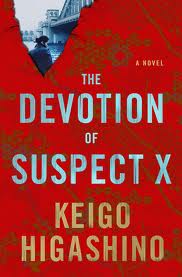
DEVIL-DEVIL: Engrossing New Mystery from Graeme Kent. And a New Translation: THE DEVOTION OF SUSPECT X by Keigo Higashino

Sergeant Ben Kella, a black man firmly rooted in the traditions of his native Solomon Islands (the archipelago northeast of Australia), is the area's senior "indigenous" police officer at a time when the British are considering letting go of their protectorate. That places DEVIL-DEVIL in 1960. Both the expatriates on hand and the Melanesians, the "natives" of the region, reckon time from World War II and the Japanese invasion -- along with the critical battle of Guadalcanal, one of the largest of their islands. And just as Kella is struggling to live down his own reputation for getting into trouble, he stumbles into a morass of "custom" crises around a corpse: the corpse of a white man who disappeared in 1942. It's the second dead body he's dealt with in his first day back on his home island, and sure to mean trouble.

Complicating the discovery of the white man's corpse is how Kella finds it: being re-buried by a newly arrived Catholic nun, Sister Conchita, who pays enough attention to native ways and traditions to realize that the chaos erupting locally might be partly calmed if the old bones were quickly re-buried. Unfortunately, the bullet hole in its skull means that Kella can't allow this to happen. And as soon as he intervenes, he and young Sister Conchita become targets of a murderous sharpshooter (with blessedly poor aim).

That's the start of a rattling good mystery that teams up these two likeable characters -- Kella with his divided loyalties (in addition to being a police officer, he's a native peacemaker with larger obligations), and Sister Conchita with her instant willingness to take a stand against any apparent injustice, no matter what the cost. And here's even better news: In bringing this book out for February 2011, Soho Crime has announced that it's the start of "the Sister Conchita and Sergeant Kella Series" -- yes!!! I love the way this publisher gathers up international crime fiction and brings it home to us!

I haven't found out a lot about Graeme Kent beyond the basics that the book blurb offers -- he's been a soldier, editor, headmaster, BBC producer, and was head of BBC Schools broadcasting in the Solomon Islands for eight years. A full-time writer since the mid 1990s, Kent is the author of more than sixty books. In fact, one online resource says he's written and edited more than 120! Whatever the final number, he's seasoned and deft with words and plot, providing polished writing with humor, interest, intrigue, and a dash of suspense. It's swiftly clear in this novel that Ben Kella's opposite number, the disturbing bush master of magic Pazabosi, is directing many of the complications, and Kella's hunt for the powerful leader of the island's highland people -- who has already publicly cursed Kella -- will require all his wisdom, knowledge, and luck. Even a sultry schoolteacher who greets him up on the mountain warns him right away about Pazabosi: "He is an evil man who sups with the devil-devils," she says bluntly.

Good thing she didn't say it that way to Sister Conchita. It would have been exactly the words the young and rebellious nun required to convince her to seek for Pazabosi herself.

This book gave me a lot of fun, as well as a hunger to know more about the Solomon Islands. And although Kent isn't a native of the region, he gives a convincing portrait of what local tradition entails, as well as of the compromises that the wisest leaders can craft. Mark this one as a keeper.

* * *

I'm not as convinced about THE DEVOTION OF SUSPECT X, a translation of a novel by Keigo Higashino that won the Naoki Prize for Best Novel -- Japan's equivalent of the National Book Award, says publisher Minotaur Books. The English-language version is scheduled for February 1 release (the original was copyrighted in 2005), and will have plenty of publicity behind it. The thing is, I can't tell whether the original writing is deliberately stiff, among multiple points of view, or whether that's an artifact of the translation. There are some appealing characters here -- a divorced mom named Yasuko who'll do nearly anything to protect her young daughter, and a persistent detective, Manibu Yukawa, who knows when he's being deceived, even if he can't immediately figure out what the real story is behind the death of Yasuko's abusive former husband.

But the stiff control exerted by Yasuko's neighbor Ishigami, who's besotted with her, makes it hard to find a comfortable position as reader. With whom should we identify? Detective Yukawa is the most likeable, but his role is so much smaller that Yasuko's and Ishigami's that there's no easy position here. Nor do the voices of the characters differ among each other significantly -- and here again, I suspect the translation of failing us.

There are some great plot twists in store, and a surprise ending that performs the twist of a final line of a good haiku. But is it great fiction? I'm not convinced.

Nonetheless, it's worth taking a look at this new arrival. As we all access more translations of crime fiction from multiple cultures and languages, each book adds to our experience, and our ability to form considered opinions about how our global interactions can best proceed.

Louise Penny Interview in Vancouver Sun

A nice piece, from an area of Canada where Louise Penny once worked: http://www.vancouversun.com/life/Louise+Penny+town+captures+world+notice/4047435/story.html

Friday, December 31, 2010

Exciting New Releases for 2011

It's the last night of the last week of the old year, and I've been cramming mysteries into my hours. Tomorrow, January 1, look for a splash on the new translation of THE DEVOTION OF SUSPECT X (Yogisha X No Kenshin), which won the Japanese equivalent of the National Book Award for author Keigo Higashino. Jan Burke's praise is on the front cover of the advance reading copy.

Plus I'm hugely enamored of DEVIL-DEVIL by Graeme Kent, a new entry for the Soho Crime list -- from a prolific author and BBC broadcasting officer and consultant. Set in the Solomon Islands, it introduces Sergeant Ben Kella and his friends (and among them, enemies). It's a winner!

Also coming in the new year, a fresh Paris mystery from Cara Black, espionage from David Downing, dark crime set Down East from Gerry Boyle, Clea Simon's delightful animal psychic mystery, and the new release from mother-and-son team Charles Todd. I can hardly wait!

If you've got a mystery title coming out in 2011 that you want to talk about, or have in mind one you're waiting to read, mention it here. Why not? We're all in this together ... for the fun of it, and for more.

Tuesday, December 28, 2010

The Blizzard of Dec. 27, 2010 ... and Briefly, Sara Paretsky

Dave managed things up on the mountain yesterday, while I drove our guests to the distant train station (60 miles). Today I shoveled, so the book deliveries (and book browsers!) will be able to make it to the door. Thank goodness that's done! It's a glorious blue-sky day here with fierce winds. Along the edges of the back roads, and through our yard, are this morning's deer tracks. I spotted the prints of an enormous buck, as well as tiny ones that seem way too small to manage the snowbanks. Their hungers draw them out of the cedar shelters.

And our hungers for good stories, good mysteries, powerful or funny or complex or daring: These draw us also out of our chairs, to the bookshelves and to investigating the latest work. I'm also on a Sara Paretsky binge, as she's been named Grandmaster of Mystery by the Mystery Writers of America; here's a good interview with her, on the Sisters in Crime blog. I am even more impressed with Paretsky, now that I realize she's a founder of SinC, as well as a steady writer whose Chicago detective, V.I. Warshawski, has pressed on through criminal and societal conflicts over the years. Anyone have a favorite to mention, among Paretsky's 14 books?

Monday, December 27, 2010

Behind the Scenes of PREY ON PATMOS: Jeffrey Siger, Guest Post


We welcome author Jeffrey Siger, as his third novel of crime fiction and detection is released here in the United States. His adventures in New York City have a lot to do with both his relocation to Mykonos, Greece, and his books featuring Greece's Chief Inspector Andreas Kaldis. A quick look at Jeff's website will assure you that he knows his subject in detail from the inside -- but sometimes a conversation takes place outside the usual location and turns out to bring a revelation for a book. Here's Jeff to tell you know it recently happened.

And Just When You Least Expect It…

If you’re open to it, there’s no telling when or where an idea might just sneak up and bite you on your inspiration.  Especially if your writing is situational rather than character driven.  Stephen King, for instance, points to chance encounters as the trigger for many of his ideas—such as one with an abandoned car that led to Christine.  The plot idea for my first Greece-based, Chief Inspector Andreas Kaldis novel, Murder in Mykonos, came at the funeral of a close friend in one of Mykonos’ more than a thousand churches, and the epiphany moment for my second, Assassins of Athens, was the passing mention of the ancient Greek practice of ostracism at an Athens theater’s virtual reality journey back in time to Classical Greece.

And for my soon to be released third book, PREY ON PATMOS, An Aegean Prophecy, inspiration came on a balmy early winter morning by the sea as I was having coffee in a harbor café at a table shared with three Mykonians.  The situation was not unusual, it was part of my daily routine, but the table wasn’t in Mykonos, nor by the Aegean Sea, or even in Europe, and I knew only one of the three men around it.  He was a friend on holiday in the U.S. and somehow learned that I was in Orlando visiting my son, so he called and said, “Come to Clearwater Beach for coffee with some Mykonians who moved to Florida.”  As Orlando is not within walking distance of the Gulf of Mexico, it took me a couple of hours to get there, but there I was, at the edge of the water, listening to my buddy bring a father and son pair of émigrés up to speed on all the news from “home.” 

At one point the father asked me what was my favorite island, aside from Mykonos.  I said Patmos, a place I’d been to many times and at one point knew almost as well as Mykonos. In fact, I’d been there for the 1900th anniversary of Saint John recording the Book of Revelation in a cave on Patmos.  When I mentioned the 1000-year-old monastery that dominated the mountain above Patmos’ harbor, the son said if monasteries were my interest there was no place on earth like Mount Athos, a rugged mountain wildness on a 130-square-mile peninsula about an eight-hour drive north of Athens.  Following a way of life virtually unchanged for 1500 years, hermits utterly withdrawn from secular life living in isolated huts and monks living within massive, fortified monastery walls shared a common commitment to God, prayer, contemplation, and protecting the cherished seclusion of their life in the world’s oldest surviving monastic community.  It was perhaps the last remaining place on earth still using the 2000-year-old Julian calendar.  In the 11th century, 180 monasteries existed there, but times had changed and today only twenty survived: seventeen Greek, one Russian, one Serbian, and one Bulgarian, each sovereign over their twenty respective self-governing territories.

The son spoke of his trips to a half-dozen of Mount Athos’ monasteries.  Access to the peninsula was only available by boat from one of two cities on the adjacent mainland.  He told of the “smelly, stinky bus” that took him from the port to the region’s little and only city.  To reach the monasteries he had to walk for hours along mountain paths.  He said it seemed strange to see so many construction cranes and trailers, but they were necessary.  Some of the monasteries were spending extraordinary sums on restorations; others were not.  All, though, had one thing in common: They were incredible, almost imaginary, castles overlooking the sea, embracing massive churches filled with extraordinary icons—some free-standing and others covering virtually every space on every wall.  There was no electricity, and those that did not have generators, lit their spaces by candlelight.

At each monastery he’d be greeted with mastiha liqueur, a sweet, and water by a monk assigned to that task.  Most monks would not speak to visitors.  There were two meals each day, generally at ten in the morning and six at night, served on stone tables for twenty to thirty people.  You ate from metal bowls and cups.  There was no meat and little dairy.  The staples of each meal were chick pea soup served in a large metal bowl for the table, olives, bread, apples, onions, red wine, and water, all from Mount Athos.  During dinner one priest would read stories on how life should be led, and another would preach.  The food was good, some exceptional, but the moment the head priest finished eating the room went eerily quiet; at that point dinner was over and it was time to return to prayer, the primary purpose for the lives of the 2000 men who lived on Mount Athos.  There were no women allowed on Mount Athos or men under eighteen years old, and, with rare exception, no female domestic animals.

Services could run for hours.  Mesmerizing chanting in candlelit spaces filled with gray-bearded men in black robes darting their eyes from icon to icon, crossing themselves as they did.  Then it was off to sleep for the visitors in tiny bedrooms filled with not much more than two single beds perpendicular to one another and a scent reminiscent of the bus ride.

Just about then, the father interrupted his son to make a point about a fraudulent land swap and money-laundering scandal growing out of the 2004 Olympics and involving Mount Athos.  It was the most talked-about subject in Greece and the focus of a nationwide media feeding frenzy dragging in high-ranking government ministers and the abbot of perhaps the most prominent of Mount Athos’ primary monasteries—this one, though, had accommodations equivalent to a five-star luxury hotel and played host to such prominent guests as Prince Charles and George H. W. Bush.

Bingo!  An inspirational fireworks moment, and I spent the next thirty minutes scribbling down ideas for what would become PREY ON PATMOS, An Aegean Prophecy.

And yes, I picked up the check for the coffee.

­— Jeffrey Siger

Sunday, December 26, 2010

Greek Crime Fiction: PREY ON PATMOS by Jeffrey Siger

What a delight to discover the strength, confidence, and intriguing plot of PREY ON PATMOS, the third Inspector Kaldis  detective novel from Jeffrey Siger -- this author, retired to Greece and now embracing crime fiction as his new career, has surged in exciting ways beyond his debut Murder in Mykonos and the action thriller Assassins of Athens, to craft a suspenseful and provocative new mystery.

Siger's "Author's Note" at the opening of the book gives fair warning: "To write about Greece and ignore the [Eastern Orthodox] church is as foolhardy as any surgeon who seeks to understand his patient without attending to the heart."

And Chief Inspector Andreas Kaldis is a man of the heart. With his assistant, detective Yianni Kouros, his previous investigations have linked him with a magnificent and courageous woman, the lovely Lila, a young, socially prominent widow who's captured Andreas' love. And now Lila is about to give birth to their child. But can Kaldis stay home with her? No chance -- the scandal and complications of a murdered monk on the holy island of Patmos demands the expertise that Kaldis has developed over the years. He is the "fixer" when crime strikes the politically prominent and powerful. And 200 miles from Athens, where the monk's throat was cut in the town square, the mess of such a murder on the Sunday before Easter qualifies as a political hot potato. Hopefully, Lila's muscles and the baby's urge toward air will hold off long enough to solve the crime.

Then again, this may not be one of those crimes that resolves quickly. The silences and secrets of the interlinked monasteries and their leaders begin to involve international intrigue. Old faces turn up with new names. And the Patmos police force, caught in its own net of power and privilege, has already cleaned up the crime scene, moved the body, and fallen into similar silences.

Siger conveys the weight and force of the church in the lives of Greeks, secular and religious alike, while leavening scenes with the gentle humor of these seasoned investigators, for when they arrive at the main church on the isle of Patmos:
Andreas wasn't sure if the monk was taking them the quickest way, or one intended to impress them with the majesty of the place. As they followed the man up a flight of stone steps to a second floor, Kouros whispered, "Do you think we should drop some bread crumbs?"

Andreas stifled a laugh.

The monk turned right, stopped by a heavy wooden door, opened it, and gestured for them to enter. It was a large room with two windows. At the far end there looked to be more than enough chairs to seat every monk in the monastery. The monk pointed to two unadorned wooden chairs in front of a massive wooden desk, then left, leaving Andreas and Kouros alone. They sat and waited.
When the abbot arrives -- and is persuaded to move beyond his usual boundaries in revealing something about the dead monk -- the crime begins to look like it's the means of permanently silencing a monk who has accused others of corruption. And the forcefully searched condition of the dead monk's cell (in spite of the abbot's seal on the door) suggests that dangerous people are making sure the accusations die with the man.

But there are more forces at work than the investigators realize, and soon Andreas Kaldis finds himself entangled on multiple levels, personal as well as police, with Greece's forces of crime and of political pressure. And when Russian mobsters appear to have a stake in how the monasteries are settling their affairs, Kaldis has to admit that his "boss" is right: As a dedicated fixer, he is indeed the only investigator in Greece who can and should be stepping into this territory.

Some great twists of plot and profound realizations about Greek life add to the progress of the book, and by the end, Siger has neatly captured his niche in establishing a detective and a landscape that beckon and bond. I'm looking forward to a long and enjoyable series from this author.

And oh, yes, about that baby on the way ... well, the women in Kaldis' life have their own sense of power and justice. Read on.

NOTE: We're excited to welcome Jeffrey Siger tomorrow, here on the Kingdom Books blog, to reveal some of the intriguing underpinnings of PREY ON PATMOS. Check back in a few hours -- I've got to go cope with the post-Christmas blizzard arriving later tonight.

Saturday, December 25, 2010

Adrian McKinty, FIFTY GRAND: Dark, Lush, Bittersweet

Here's a book that came out at the start of 2010, and I've missed it until this week -- and as a result, I kept dodging out of the kitchen to read a few more chapters. Thank goodness, turkey pretty much cooks itself, and the apple cake was done a few weeks ago and set aside in the freezer ... but I did sort of overcook the broccoli. (Sorry, family members!)

It was worth it. FIFTY GRAND by Adrian McKinty, his second crime novel, touches lots of areas that I enjoy: sorting out a father's apparent betrayal of his now grown daughter and son, crossing borders and wrestling with culture clashes, the role of a woman detective in a male-dominated culture.

And it's that woman detective, Detective Mercado, who enthralls in this book. Sneaking across the border from Mexico into the United States with a group of desperate immigrants, she's already at risk, and threatened with rape within hours. A respected detective in Fidel Castro's Cuba -- which is at the transition point as Fidel's brother waits in in the wings -- Mercado needs to know the truth about her father's disappearance and recently reported death. But whether she's a woman in Cuba, an "illegal" in Colorado, or a cop isolated from any team around her, the odds are stacked against her.

Her youth, her loneliness, her gut-level responses to the men who surround her, all are compelling, vivid, poignant, sometimes funny, often heartbreaking, and emphatically real. Here's a taste of her voice: "I'll lean into the confusion. The gray area. The dark. Embrace it. Sleep can wait and prayer can wait and into the comfort of the profane world I'll go."

McKinty's background is about as global as it gets: An Irish novelist born in Belfast and educated at Oxford, he lived in the US in Harlem (New York) and Denver, Colorado, where he taught high school English. Now he lives with his wife and children in Melbourne, Australia. How he mixed Cuban, Mexican, and female experiences in to all that is beyond me -- but the details of FIFTY GRAND ring true, and I'd read another of his crime books (this is his sixth novel but only his second crime one, after Dead I Well May Be) in a heartbeat.

By the way, his blog, called "The Psychopathology of Everyday Life," is well worth a visit.

Tuesday, December 21, 2010

Reminder: Gerry Boyle's Offer Ends at Midnight on Wednesday

Make three minutes to tune in to Maine crime fiction author Gerry Boyle, as he offers a signed copy of PORT CITY SHAKEDOWN -- check it out.

And coming soon: a swerve away from US mysteries, to a new one from Greece ... complete with guest author blog post. Check in during the next few evenings.

Patricia Cornwell, PORT MORTUARY: Taking Military R&D Seriously

What would you do differently from the start of your career, if you could do it over again?

Kay Scarpetta, speaking directly in "first person" in Patricia Cornwell's 2010 PORT MORTUARY, wishes she'd never tangled with her first politically pressured case, 20 years earlier. The pinch of power and control that caught her has embedded her in an unhealthy relationship with a powerful general for all these years -- and her latest six-month term at a "port mortuary," a location that receives dead soldiers from the distant fields of war as they are shipped home, has kept her away from controlling her own field offices in Cambridge, Massachusetts. More specifically, that same manipulative general has kept her away from home, from her own work, and from her ex-FBI husband, Benton Wesley.

In nearly five hundred pressured pages that resemble a never-ending conversation (poor Kay never even gets a nap for more than 30 hours), the forensic investigator peels back layers of murder and threat, while also peeling back the skin and muscle of her own professional life. Stopping her from cleaning up the gangrene that's crept into her workplace is a profound fear: the fear that her husband won't be able to respect and love her if he knows the truth of her first case.

Probably the hardest part of reading PORT MORTUARY is carving out time in one's life to keep the pages turning. This is not a book easily put down. Dr. Scarpetta's endless attentiveness and exhaustion compel a reader's attention, or at least they did for me. And I found the focus on Kay's self-autopsy to be far healthier and more interesting than many an earlier Cornwell volume that pits the death investigator against sickeningly warped criminals determined to torment her and damage her. In this case, she's not really the target, except for one short action scene that Benton quickly resolves; instead, she's confronting the damage that circled outward, into "her" people, from the evil she once allowed to pass unacknowledged, unconfronted.

A delight of the book is that along with a self-autopsy, Scarpetta applies her lens to her marriage, with its embedded and necessary secrets. After all, who expects to know what an FBI spouse really does, 24 hours a day? But what Scarpetta and Benton Wesley clearly do need is the capacity to trust each other in spite of their secrets, and the case in progress tests whether either or both of them can continue to give that trust -- and deserve it.

So although the plot twists depend on facing the nasty inventions that the military forces of the US and other nations are developing -- a plunge into research and development of technical spy devices, embedded hormones, war-mood chemicals -- the horrors that Scarpetta and niece Lucy perceive among those military secrets are less powerful than the rot and infection in Scarpetta's life. At long last, she's got to scrape away the fouled matter, cut down to where the tissue is healthy, give up some blood for the sake of a clean wound.

There's a shred of conversation between Benton and Kay near the end of the book that nails the causes of the pain here, as well as the source of risk:
"Christ." Benton takes a swallow of Scotch. "It's always the one thing you think doesn't matter, the one thing you think can wait."
"I know. That's almost always how it works out. The detail you don't want to bother with."
Kay is acknowledging that she and Benton still speak the same language, have the same drive toward truth at any cost, toward justice at personal price. And she's confirming that even though they can't always know each other's work-related secrets, they do know what forces are operating on each of them. There are good possibilities in this recognition.

Cornwell's written a forceful and effective capstone to Scarpetta's career. And if we readers can't really buy into Kay's fantasy life of cooking and walking the dog in Cambridge for the forseeable future, well, that's our problem. Kay and Benton have enough issues of their own. A resolution of some sort is going to have to happen, as the mastermind behind the latest losses is finally revealed.

A final aside: Despite the cruelty and politically driven dishonesty that Cornwell points out in Kay Scarpetta's experience of military "necessity," this author is clearly a supporter of American forces and the veterans of combat; check out her website for her latest efforts on their behalf.

Sunday, December 19, 2010

Win a Signed Copy of Gerry Boyle's PORT CITY SHAKEDOWN

Dave and I enjoyed a visit earlier this year from Gerry Boyle, who intrigued the crowd here at Kingdom Books as he talked about his latest book in his Jack McMorrow investigations series, set in Maine: Damaged Goods. Gerry also signed some copies of Port City Shakedown, his first in the Brandon Blake series, which takes a darker, more gritty route. Scheduled for 2011 release is the second one -- and to make sure we're ready, Gerry is making a great offer this week. Here's what he said:

Port City Giveaway

Hey there. We’re psyched about Brandon Blake No 2, AKA Port City Deathtrap. In fact, we’re so psyched that we want to make sure you’ve read Brandon Blake No. 1. Port City Shakedown, so you’re ready.
So you haven’t read Port City Shakedown? No problem. Do two things. Use the e-mail link below (and if you've got a moment, also leave a comment here on the Kingdom Books blog) --  and shoot me an e-mail before midnight (EST) at the end of Wednesday December 22. We’ll do the random-pick thing and send the winner a signed, personalized hardcover of Brandon Blake No. 1. Read it and be ready.
 
Blake as a young rookie cop. Blake bringing his baggage, hard-earned in PC No. 1. Blake knowing he’s going to do the right thing, no matter what, no matter who stands in his way. Blake up against some hard guys, and some not-so-hard guys who may be even badder.
 
Comment. E-mail. Brandon’s waiting.

Gerry Boyle
gerry@gerryboyle.com
Read the blog @ gerryboyle.com

HYPOTHERMIA: the 2010 Inspector Erlendur Novel from Arnaldur Indridason

Arnaldur Indridason
What a year for exposure to Scandinavian thrillers and crime fiction, as the hunger for these novels pushes them into translation ... This year, the sixth Inspector Erlendur police novel arrived in the US, HYPOTHERMIA, written by Arnaldur Indridason and translated by Victoria Cribb. And here's an important aspect to the book: Although it's moody and sad at times, it is beautifully written, plotted with an impeccable urge toward justice, and ends with a relieved sense of possibility.

First, a quick side-note about Icelandic names. They don't operate the way American and British ones do -- "Indridason" is a patronymic, that is, a name that specifies who one's father is; it's not a "family" name. So the correct way to talk about this author is to say "Arnaldur." The same applies to the police inspector in the books, Erlendur.

When HYPOTHERMIA opens, it's not clear there's been a crime at all. In fact, every detail reinforces that in spite of the absence of any note, the death of a young woman named María, by hanging, at her country cottage, is clearly suicide.  It appears that Erlendur's involvement in the case will be limited to simply informing the woman's husband in Reykjavík. Yet perhaps it's the enduring sorrow that Erlendur carries with him that induced María's friend Karen to turn over to him a disturbing recording of a session that María experienced with a spiritualist, in her search to connect with her recently dead mother -- a session in which the woman may have heard the voice of her long-dead father speak to her.

Any other police officer probably would have filed the tape in a drawer and left the matter alone. There's no hint of crime there, either. But Elendur is himself haunted by a death that was never resolved: the disappearance in childhood of his brother. And there are two long-ago missing-person cases that also obsess him, well beyond what his co-workers think appropriate. Tying all of these together is a sense of cold: not of climate, but of disastrous danger and death.

Step by step, one interview at a time, Erlendur approaches the braided truths of all of these losses. When clarity finally comes, its price is exacted in grief, loss, and an inability to correct the past.

Although the writing is spare and unpressured, clues pile up like snowflakes adding up to drifts. At page 129 -- out of 314 -- I realized the who and how of the one crime involved. But the langorous unfurling of detail and quietly settling certainty of the rest of the story was well worth the time invested, and I expect to re-read this volume in another winter.

Here's the paragraph that continues to haunt me from the book:
Erlendur drove up to the house in Grafarvogur. It was getting dark, a reminder that winter would soon be here after the short wet summer. Erlendur felt no dread at the through. He had never dreaded the winter as so many did, not like those who counted the hours until the days would start to lengthen again. He had never regarded winter as his enemy. Time seemed to slow down in the cold and darkness, enfolding him in peaceful gloom.
Any victim of a crime who comes to the attention of this determined investigator will surely benefit from his insistent and patient attention.

NOTE: For an intriguing insight into the author, take a look at this interview by mystery author Julia Spencer-Fleming.

Saturday, December 18, 2010

Tomorrow's News: HYPOTHERMIA and an Offer from Maine Author Gerry Boyle

Here are two jackets (US and UK) for Arnaldur Indridason's remarkable crime novel, HYPOTHERMIA -- check in for a discussion tomorrow.

Also, Gerry Boyle is about to reveal his second in the "Port City" series, a gritty and well-crafted dark crime fiction sequence featuring Brandon Blake. But first, he's making an offer that's hard to resist. Details on Sunday.

Thursday, December 16, 2010

Cozying Up for a Winter Night (or Weekend)

Why don't mystery reviewers tackle cozy mysteries more often? Maybe it's that "paperback original" format -- it's really, really hard to spend a couple of evenings reading a softcover and still have the book in "as new" condition for the shelf! At least, that's what I'm telling myself as I look ruefully at two enjoyable 2010 mysteries that I've savored on the couch and at my pillow. They definitely look "well read."

So I may have to swap them with my sister!

That's okay -- I had a really good time with both of them.

The first is from Krista Davis and is a lively tribute to family and neighborhood antics during the Christmas holidays. It's THE DIVA COOKS A GOOSE -- which is actually the least of what goes on in the kitchen at Sophie Bauer's house from Christmas eve until the New Year. There are a few yummy recipes at the back of the book, but my stomach growled in most of the scenes, which featured marvelous meals and lush desserts. And oh yes, crime, including robbery, assault, and (sob!) murder. "The Diva" is Sophie, who has a domestic advice column. But it's also her rival Natasha, and the first victim, Bonnie, who wants to outdo both of them. Playing supporting roles are three cats, a dog, and some great kids. By the time Sophie realizes what the real motives are behind the murder, the theft of a neighborhood's Christmas gifts, and the odd activities of a couple of fathers of grown children, she's put herself into danger more than once. And there's snowy weather to contend with, too, despite the book's location in the DC area. But decisiveness and persistence are on her side, and the book is a fun romp. By the time I finished, I'd had some good chuckles and had developed a serious and enduring longing for a (Southern) ham biscuit. Recipes welcome.

My second in this binge of merriment was the latest from Sheila Connolly, whose third mystery series begins with FUNDRAISING THE DEAD. The title's a bit misleading -- there's no raising of the dead, and no hitting up spirits for donations. Instead, it refers to protagonist Eleanor "Nell" Pratt, director of development for a Philadelphia historical society. When Nell discovers that valuable (and sometimes not even catalogued yet!) items from the society's collection have gone steadily missing, she has a multi-million-dollar problem on her hands -- one that the elegant Charles Elliott Worthington, president of the group and occasional lover of Nell's -- doesn't seem eager to solve. Or even discuss. Luckily, Marty Terwilliger, descended from so much old Philadelphia and current wealth that she can afford to be direct and smart, is there to nudge Nell along through discoveries, including hunting the thief and discovering a killer along the way. The first few chapters are overloaded with explanations, but the action and humor soon cut in, and I avoided a lot of needlessly repetitive housework because I wanted to know the rest of the story, as soon as possible. The belly laughs that caught me several times in the second half of the book are sure to keep me healthy throughout the season! This is a good paperback to tuck into your suitcase if you're headed home for a visit ... instant escape and enjoyment, without any need for batteries.

A bit of extra info: Davis's Domestic Diva series includes three earlier titles: The Diva Runs Out of Thyme, The Diva Takes the Cake, and The Diva Paints the Town. The author's website adds more cooking tips, too. Connolly already has three Orchard Mysteries, as well as her Glassblowing Mysteries under the pen name Sarah Atwell; her website is pretty far behind, a good clue that she's spent most of her time lately writing, as well as stepping into responsibilities at Sisters in Crime.

Making a List, Checking It Twice

From Dave's Desk:

As 2010 draws to a close, many bookstores and websites are choosing their top bestsellers for the year. Here at Kingdom Books we have another kind of list: the authors whose work we have sold in multiple different titles. Since we started Kingdom Books more than eight years ago we have enjoyed opportunities to carry an author’s long-term body of writing, not just one or two copies of the latest releases. One big "plus" is that we get to know the writer and the books better this way. Here's part of our current list:

Dave Zeltserman
Eliot Pattison
Archer Mayor
Louise Penny
Gerry Boyle
Laurie R. King
Nevada Barr
Dennis Lehane
Donald Westlake
Lawrence Block
Arthur Upfield
Walter Mosley
Deborah Crombie
Carla Neggers
Leighton Gage
Colin Cotterill
Cara Black
Peter Lovesey
Michael Connelly
Barry Moser (illustrator)

We look forward to more good reading and conversations in 2011.

Wednesday, December 15, 2010

Writing a Murder Scene? D. P. Lyle Can Help

I just recently discovered the Writer's Forensics Blog written and hosted by author and cardiologist D. P. Lyle, after seeing "teasers" for his columns for quite a while. And I have to say, it's almost as much fun as picking up a new mystery! It's a resource center for writers working on murder mysteries, thrillers, anything that taps into forensics, anything that involves tracking crime and criminals through hard evidence.

Consider the most recent three topics: "Q and A: Can Silver Be Used to Kill a Werewolf?" (this is a great explanation of anaphylactic allergy reactions); a guest post on "10 Most Incriminating Types of Evidence"; and "Bacteria and Time of Death," introducing a potential new forensics tool.

Lyle is a practicing physician in California, and his books have won a Macavity Award and been nominated for the Edgar Award; they include both nonfiction and thrillers. A couple of the covers are shown here. I'm planning to add some of his books to my shelves over the next few weeks.

Have fun exploring his blog: http://writersforensicsblog.wordpress.com