Thursday, July 12, 2012

Scandinavian Crime Fiction: UNWANTED by Kristina Ohlsson

What happens when a counterterrorism officer with a political science background in Stockholm turns her hand to crime fiction? For Kristina Ohlsson, the move was literally life-changing, as her three-book series of investigations featuring analyst Fredrika Bergman garnered awards and praise in Europe.

Thanks to Atria (a Simon & Schuster publishing house), Ohlsson's books are finally arriving in the United States. The first one, UNWANTED, was released earlier this year, and it's a winner -- you can pick up an occasional awkwardness or loose thread that reveals this is a debut (with an impressively smooth translation by -- believe it or not -- Sarah Death), but the blend of crime-solving and investigative team friction is deft, the twists of the plot are rapid and intriguing, and the characters are unforgettable. That goes especially for Fredrika Bergman herself, the new civilian on a crack police team where each of the officers has reason to devalue the analyst's comments and suggestions.

But Bergman, unskilled in shifting the balance of power within the team meetings, independently investigates a strand that the team is ignoring: the young woman with a sick dog who seems to have lured a mother away from her child during a routine train stop, so that a psychopath can seize the small girl. It's clear she didn't wander off on her own; her shoes are still sitting next to her bench on the train.

Bergman's initiative wins reluctant respect from the other investigators. It's not enough to make her feel at home with a group of badge-toting experts who still think she's mostly in the wrong field. She doesn't intend to stay with this job placement anyway, so she's wasting no time on alliances, but following her own conclusions instead. Her co-worker Peder hopes she'll fail:
Peder cursed the fact that he'd been passed over in favor of Fredrika yet again ... Even so. Hadn't Alex sounded confident that the case of the missing Lilian would soon be solved? ... So the Lilian case was not to be considered particularly major or important. Seen in that light, it was more understandable that Fredrika was going with Alex to interview Sara at home. It was actually a good thing that she and not Peder had been asked to go, because she was the one who needed to hone her skills, not him.
I could disagree with Ohlsson's decision to give large chunks of narrative from the points of view of perpetrators, but it clearly raises the tension in UNWANTED. And by the time Bergman and her boss, Inspector Alex Recht, realize what lies beneath the crimes, the pace of the narrative is intense enough to interfere with the ordinary life of a reader.

Luckily, those of us who read crime fiction regularly don't get upset when a book begins to cut into our sleep time (or even a bit of work time) -- instead, we celebrate, right? I'm celebrating finding Kristina Ohlsson's work.

The next in the series comes out in the US in March 2013. Hurrah for good translations of Scandinavian thrillers! There are at least five more Olsson books already -- see the author's page within her agency's website. We've got more good books coming our way.

YA Mystery Author Carole Shmurak: Guest Post Tomorrow on the "Other Blog"

I try to keep my hats on separate blogs -- after all, I have to take turns wearing them! -- but this time, there's no getting around the issue: Author Carole Shmurak is providing a guest post tomorrow, and it pertains to both mysteries (this blog) and "young adult" writing (the author blog that I host). So ... tomorrow, check out BethKanell.blogspot.com for Shmurak's post.

Not familiar with her work? She co-authors the Matty Trescott series under the pen name of Carroll Thomas. In her novel RING OUT WILD BELLS, teens solve a murder case -- in 1865.  In her guest post, find out about the book's genesis, as well as the author's research and decisions.

Monday, July 02, 2012

Martin Limón's Newest Korean DMZ Police Procedural: THE JOY BRIGADE

Actually, no, it's not a police procedural after all. And that's why THE JOY BRIGADE didn't suit my taste as much as the seven books that preceded it, which featured Sergeant George Sueño and his buddy Ernie Bascom, working for the U.S. Army in Korea's demilitarized zone (DMZ) in the scary 1970s, solving crime and doing their bit to ensure some kind of justice for the Koreans around them.

But Ernie doesn't show up until the closing of this one -- and the action during the rest of the book requires a substantial amount of patience and suspension of disbelief, as Sueño works his way into a North Korean splinter group while also trying to catch up with his beloved, Doc Yong, who -- he is pretty sure -- has given birth to a baby. Their baby. His son. Along the way, he ties his fate to that of -- well, this person:
His name was Hero Kang. He showed me the photograph hanging from his neck. It was framed in varnished wood and showed a much younger version of himself standing in full military uniform next to the Great Leader of North Korea, Kim Il-sung, shaking hands. Both men were smiling. Hero Kang told me that the photograph was taken in Pyongyang in the Great Hall of the People almost twenty years ago, after the end of the Korean War.

"You must've been very brave," I said, "to receive such an honor.

His round face grimaced. He changed the subject.
The premise is interesting. But there were quite a few moments when I stopped and said things like, "Why wouldn't he wrap his feet in something?" Or "He thought he could do WHAT with his version of martial arts?" Or even "Doing that, while carrying a baby? Are you crazy?"

In the long run, THE JOY BRIGADE is a tall tale, a wished-for adventure for an investigator who dreams of ending the Korean standoff, and seeing Confucian values and family affection knit together a divided nation.

The thing is -- I really, really like Martin Limón's rough and friendly Army-based police procedurals (Jade Lade Burning; Slicky Boys; Buddha's Money; The Wandering Ghost; G.I. Bones; Mr. Kill; I haven't read The Door to Bitterness).  So THE JOY BRIGADE doesn't suit me very well. On the other hand, Martin Limón is such a good writer that I'll keep a copy on my shelf, and hope that the next book in the series goes back to the ground of buddies in trouble together, solving crimes and restoring some measure of justice. Like, umm, yeah, Hero Kang.

ROUND MOUNTAIN by Castle Freeman Jr.

We grow from where our wounds are -- I'm convinced of this. And after reading ROUND MOUNTAIN by Castle Freeman Jr., I'm ready to apply the same idea to small, rural communities. In this case, the community includes second constable Homer Patch and his gently, sadly, tenderly confused life. Married to a woman who acts out sexually, parent to a child who can't stand, talk, embrace ... Homer carries more losses than seems fair. And yet, so do the others around him. And like Homer, the other people in his circle -- the Captain, Alva, Clay, Raymond -- have reasons to mourn, but also reasons to feel very much at home, with people who more or less understand them.

As a second constable -- a Vermont town position that usually has very little clout, other than being often called on to come collect stray dogs -- Homer's intervention in crises depends on who is willing to call him, who want to listen to him. With the same sense that knows whether a deer will come closer or spook and run, with the same dedication that tills the garden patch year after year, Homer's neighbors realize that calling him will bring more than just a badge into the situation. Here's Homer addressing one for a woman who wants a vagrant arrested or even shot, for the crime of sleeping in her barn:
"See, what it is you're asking me," he said. "You want me to come here and, what, shoot some kid for using your shed to get in out of the rain. That's what it comes to. You want to make a lot of trouble here that needn't be. My advice to you is what I said: lock the door. He will move on, and you won't be bothered. There's no need to bring an army out here for something like this."

"I don't want an army, Mr. Patch," Gretel said. "I only want you."

Homer sighed. "Could I get a glass of water?" he asked.
It is, of course, a mild ruse. Homer knows how to handle the situation, but he can't do it with Gretel looking over his shoulder.

Still, as Homer contributes his quiet "handling" to local matters, there are deep currents swirling. Among the twelve stories in ROUND MOUNTAIN, Castle Freeman Jr. unfolds the silken threads and Kevlar ropes that bind community and the heart. I expect to re-read this whenever I can't quite make sense of life. Like calling Homer, re-reading the collection won't necessarily make things better. But it may provide a calm reassurance that's very much needed.

Interested in a copy of the book? As of today, its publisher, Concord Free Press, is still willing to send you a copy, for FREE, anywhere. Check the details (and your reciprocal obligation) here.http://www.concordfreepress.com/roundmountain/

Thursday, June 21, 2012

Peter Lovesey, COP TO CORPSE: More Peter Diamond Crime-Solving

Peter Lovesey is a master storyteller. Tucked within this police investigation, under the aegis of long-running series character Detective Superintendent Peter Diamond, are tension, intrigue, humor, affection, and neat layers of theory, crime scenes, police politics, and struggles with the humanity of both villains and victors. COP TO CORPSE is a good read that pushes insistently from one scene to the next, and one trail of crime to another, without once making me get up to check that the doors were locked.

Here's how it all starts:
Hero to zero.
Cop to Corpse.
One minute PC Harry Tasker is strolling up Walcot Street, Bath, on foot patrol. The next he is shot through the head. No scream, no struggle, no last words. He is picked off, felled, dead. 
Fortunately, after a brief scene-setting in the present tense, the stoytelling in this Lovesey classic resumes a more usual format, and familiar conflicts emerge: between Diamond and other branches of the police, between the Detective Superintendent and his politically inclined superior, and even within his team, where the eager forensics attempts of DC Ingeborg Smith sometimes shine, and sometimes make her, along with Diamond, the topic of the latest joke.

I actually wished at times that I were reading this one aloud, because when entertaining moments come up in the plot twists, they're often truly funny -- the kind that make you choke on your iced tea and snort unexpectedly. I didn't keep count, but I think Diamond got injured four times between the start and end of the sniper case he's investigating, and at least twice it was the fault of someone on the police force.

Is COP TO CORPSE deep? No. But it's delightfully successful. Pack it in the beach-reading bag, or set it near the couch for the rainy week that was supposed to be your vacation. I'm going to give a copy to my sister.  It's that good.

By the way, this is the twelfth Peter Diamond investigation -- and there's no need to read the others before this one. But since I enjoyed this one so much (and number 11, Stagestruck), I think I'll line them all up for next winter. It will be a pleasure.

Wednesday, June 13, 2012

Writing the Good One: Skill, Passion, and the Right Place

More mystery reviews this week ... watch this evening for what else is being published in June, or what's perfect to add to the summer reading stack.

Meanwhile, for those who are writing this summer/fall, or thinking of it: Author Julia Shipley in Craftsbury, Vermont, offers a "farmhouse studio" for the perfect writing vacation. Called The Writer's Retreat, this peaceful and richly rural opportunity for "writing on the farm" even comes with the possibility of adding coaching from Julia, who is a gentle yet powerful teacher of writing skills and whose poetry, short fiction, and elegant letterpress work appear at workshops as far away as Wisconsin.

Here are two samples of what Julia recently crafted, perfect for the writing life:


* * *

And another reminder: Writing is a craft. (Yes, an art, too, but that's a subject for another day.) A craft depends on specific skills, learned, practiced, valued, and strengthened. Undertake all of that at your own writing retreat in Vermont -- or indulge in learning from an assortment of writing professionals just outside Boston, at Pine Manor College, which now allows auditing of the summer workshops:

The Solstice Low-Residency MFA in Creative Writing Program invites writers to audit graduate-level creative writing courses during its summer residency, scheduled from July 6-15, 2012 on the Pine Manor College campus in Chestnut Hill, MA.

Classes include several sessions taking place as part of State of the Union: Diversity & Poetic Craft, a two-day colloquium designed to encourage cross-pollination between styles and approaches to poetry, open up a broader discourse about the art of writing poetry, and encourage experimentation across poetic “camps.”

Classes are open to serious writers working at all levels; the registration fee is $30 per course for Solstice graduates/$40 per course for the general public. The State of the Union: Diversity & Poetic Craft panel discussion & keynote speech by Stephen Dunn are FREE and open to the public.

For course descriptions, dates and times, a detailed audit policy, and a downloadable registration form, go to: http://www.pmc.edu/mfa-classes-for-audit. The deadline for enrolling as an auditor for summer 2012 Residency is Friday, June 22, 2012.

Summer 2012 MFA classes that are open to the public include:

Fiction:
• Fragmented/Fractured Narrative
• Creating a Sense of Place
• Writing the End

Creative Nonfiction:
• Writing Personal Essays
• Nonfiction as Fiction
• Dateline Zanzibar: Travel Writing 101

Writing for Stage & Screen:
• Writer-in-Residence Dennis Lehane on Writing for Cable Television

State of the Union: Diversity & Poetic Craft:
• Where I’m From: Identity & Subjectivity in Poetry
• Oulipo: Experiments in Potential Literature
• FREE: State of the Union: Panel Discussion featuring all faculty & guests
• An Eye For An I: Lyrical Elements In Poetry—For The Prose Writer
• Incorporating Sound Into Poetry
• FREE: State Of The Union (Or Disunion) Keynote with Stephen Dunn

The Business of Writing:
• Publishing in Literary Magazines

ABOUT SOLSTICE & PINE MANOR COLLEGE
As an undergraduate institution consistently ranked among the most diverse in the country, Pine Manor College emphasizes an inclusive, community-building approach to liberal arts education. The Solstice MFA in Creative Writing reflects the College’s overall mission by creating a supportive, welcoming environment in which writers of all backgrounds are encouraged to take creative risks. We strive to instill in our students an appreciation for the value of community-building and community service, and see engagement with the literary arts not only as a means to personal fulfillment but also as an instrument for real cultural change.

www.pmc.edu/mfa includes all contact info.

Tuesday, June 12, 2012

New Thriller from John Gilstrap: DAMAGE CONTROL

I promise there will be some beach reads mentioned this week. But John Gilstrap's vital new Jonathan Grave thriller, DAMAGE CONTROL, is not going to work for an hour of sleepy, sunstruck browsing. Here's why: From the moment Jonathan Grave steps forward on page 3, there's no good place to stop reading in the entire book -- it's the best page-turning thriller I've grabbed in ages. Repeat: There is no place to put this one down.  You know what that's going to mean for your life.

It's a perfect summer read, though, if you can manhandle your schedule to leave good long blocks of time. For one thing, that sweat trickling down Jonathan Grave's face as he sets up a rescue of a bus full of students in the tropics pulled me directly into the hottest form of summer. What a relief to find his partner Boxers nearby, ready with covering fire -- and the voice of Venice, better known operationally as Mother Hen, giving Grave tips from her observation by satellite and her swift computations back in the home office. In moments, gunfire explodes from all the wrong locations, and it's clear that the standard rescue-the-kidnapped-victims plan is way off base for what's really happening. And Grave and his team are in as much danger as their "precious cargo" being rescued. Grave lets Venice know, as he presses his mike button:
"Mother Hen, Scorpion."

"I'm here."

"We've got a pretty significant change of plans here." As he detailed all of the careful planning that now was meaningless, Jonathan tried to shake away the growing sense of dread that blossomed in his belly.
Jonathan and Boxers have been a rescue team for three of John Gilstrap's books, and they're impressive, with their complimentary skills in the field. (I especially like Hostage Zero.) Most intriguing for those who've enjoyed the earlier books is that in DAMAGE CONTROL, we get into the minds and memories of these two ultra-capable but still heartbreakingly human characters, as they teach some of this to a youngster who absolutely must keep up with them, for the sake of his life and those of others. Power, greed, manipulation -- those are countered by loyalty, commitment, and determined investigation by the
"good guys."

When I reached the end of DAMAGE CONTROL, I realized I'd been gone from my ordinary life for as long as it took to devour the book. And at the same moment, I realized this thriller is actually one extended crisis that lasts for more than 400 pages. Gilstrap is one of the very few writers who can position a set of characters in a situation, ramp up the tension, and -- yes, keep it there, all the way through. Whew! Good thing I've got a bit of time off until the next Jonathan Grave adventure.


Saturday, June 09, 2012

Post-Flood Wilmington, VT: Hurrah for Bartleby's Books

When we talk about the survival of independent bookstores, it's usually financial survival that's under discussion -- but in Wilmington, Vermont, last fall's devastation from Hurricane Irene literally washed out Bartleby's Books on West Main Street. So it was great yesterday not only to visit the thriving and very well-stocked rebuilt shop, but, even more important, to hear the story of how owners Lisa Sullivan and Philip Taylor reached out to their town as they struggled to emerge from the wreckage. As the Preservation Trust of Vermont celebrated RESILIENCY for Vermont's recovery, Taylor (speaking in this photo), Sullivan, and others from Wilmington received awards for their work.

Of course, after snapping this photo, we visited the shop to buy a book!

Saturday, May 26, 2012

Crime and Conversation with Joseph Olshan

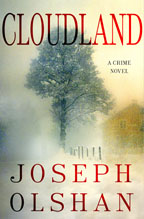
Joseph Olshan and CLOUDLAND at Kingdom Books
Many thanks to Joe Olshan, who traveled north today with friend and fellow writer Barry Raine (author of Where the River Bends) to visit Kingdom Books. We enjoyed hearing about his adventures with his new Vermont-set mystery, CLOUDLAND -- and caught up on some details of what he's writing next (oh yeah, sounds like a winner, crime, secrets, friendship ... and a touch of baseball).

To catch some conversation with this New York-born, Cambridge and Vermont-living author, listen to Olshan's recent radio interviews:

VPR: click here.

NHPR: click here.

Both interviews offer written material on the radio websites, as well as the chance to listen to Olshan's literate and thoughtful path and process.

And, of course, we happen to have a few signed  copies now on hand -- your chance to get one for your collection. As soon as Dave's placed them onto ABE, I'll post the purchase link here. Thank you, Joe and Barry.

Looking for a chance to meet Joseph Olshan? Mark your calendar for Bookstock in July in Vermont, or the New England Crime Bake in November outside Boston.

Tuesday, May 22, 2012

International Mysteries from Atria

Dave and I drove to Brattleboro last month to meet the Atria Books "Great Mystery Bus Tour," with authors William Kent Krueger, Liza Marklund, John Connolly, and M. J. Rose -- it took two hours to get there, and much longer to get home (we stopped to visit friends), but it was worth it. Kind host David Wilson at Mystery on Main Street swapped stories with us, too.

The cream in the coffee (well, really, it was more like that final swirled heart that the barista magically creates on the top of the cappuccino) was a modest paperback handed out to exiting readers by one of the bus staff: The Atria International Books of Mysteries, Your Passport to a World of Murder and Mayhem; Circle the Globe with 15 First-Class Mystery Writers.

This, of course, was one of that strange breed of "free" books known as "samplers." It contains chapter one -- ONLY chapter one -- of each of fifteen mysteries (crime fiction in this case) presented by authors that Atria (a Simon & Schuster imprint) publishes. How nice that it was a gift, and a softcover one at that. I knew Dave wouldn't mind if I toted the book around casually, reading on the couch, in bed, on the deck. Matter of fact, I barely put it down. Because every single chapter one in this sampler is a good one.

So my "free" book ended up costing me quite a bit, as I scrambled to purchase the books that were started within it. We already had plenty on the shelves by John Connolly and Liza Marklund and Walter Mosley, and a growing section of William Kent Krueger (because I enjoyed finding his books at the mystery shop in Madison, Wisconsin, a few years back). And Spencer Quinn is a regular in the Kingdom Books collections, as is M. J. Rose.

But Paul Cleave, of New Zealand? New to me. And his book Collecting Cooper is a wonderfully dark investigation, a cross between Garry Fisher and Dave Zeltserman with maybe more bodies. Malla Nunn of South Africa? Wow! Kristina Ohlsson, a Swedish author I'd missed in the new Scandinavian fiction craze, is going to be a new favorite, too.

(And don't worry, I'll get to talking about the other authors in there, too. Just not all at once, OK?)

I am ready for a long, long summer of reading. Thanks for the nudge, Atria Books.

Oh, almost forgot -- if you didn't get to one of the bus tour events, you can STILL get a free copy of this sampler, if you don't mind receiving it as an ebook. Here's the link. Go for it!

Monday, May 21, 2012

Slow, Moody, Penetrating: The Spring Mystery by Joseph Olshan, CLOUDLAND

Looking at a list of Joseph Olshan's novels and their publishers, it's clear this Cambridge, Mass., author has long been associated with literary fiction -- the kind that slowly eats its way into you, through the tenaciousness of ordinary people grappling with extraordinary stresses. Here are the titles that preceded this spring's publication of CLOUDLAND:
  • The Conversion (St. Martin's Press, 2008)
  • In Clara's Hands (Bloomsbury, 2003)
  • Vanitas (Simon & Schuster, 1998)
  • Nightswimmer (Simon & Schuster, 1994)
  • The Sound of Heaven (Bloomsbury, 1992)
  • The Waterline (Doubleday, 1989)
  • A Warmer Season (Bloomsbury/McGraw-Hill, co-pub, 1987)
  • Clara's Heart (Arbor House, 1985)
At first glance, that's the genre for CLOUDLAND, too, with its epigraph in French that translates as "The first love is the only love" (we know that's not true), and its opening chapter that's rich in description of the grainy snow of late March. But it is in fact a corpse that's discovered in this opening -- the corpse of Angela Parker -- and our protagonist, journalist Catherine Winslow, may be writing household hints these days, but she was once a major news reporter with crime knowledge of her own.

I sank into the book with something of the same discomfort as tramping in a Vermont early spring, one moment in wet, icy snow, the next in sticky mud or a cow pie. Catherine's life now isn't much different from what she once described as she waited for her daughter's precarious mental health to perhaps turn toward something better: "I lived from day to day in a stupor of anxiety, hardly eating anything myself, waiting for bulletins that were never very promising ... What they didn't tell me, couldn't tell me, wouldn't dare to tell me was, 'She wants to kill herself.'"

Nor is she the most reliable detective. She admits to us, in this first-person narrative, that the absence of a book from its familiar spot on her shelf confuses her. "I began to worry that I'd somehow lent it out and completely forgotten to whom. Perhaps my memory wasn't so good after all."

Yet these twinges of doubt are equally clues to what's gone wrong on the mountain ridge known as "Cloudland," where Catherine and her sparse neighbors barely speak, yet attempt to still be neighborly somehow. Drawing from some of Vermont's unsolved and unfinished murder cases, Olshan crafts a haunted -- and haunting -- progression from unease to risk to deadly danger.

This is a a book that requires readerly attentiveness and patience. But the rewards are powerful and unforgettable. CLOUDLAND will last on the shelf.

Friday, May 18, 2012

Coming Soon: Summer Mysteries

I plan to post a long-ish description tomorrow about the effects of reading a recent ATRIA books sampler, crammed with first chapters of international thriller/mystery authors.

Also, here are some of the reviews coming for this summer, with the publication months of the books:
John Gilstrap, DAMAGE CONTROL, June 
Peter Lovesey, COP TO CORPSE, June
Timothy Hallinan, THE FEAR ARTIST, July
Alexander Campion, KILLER CRITIQUE, July
Martin Limón, THE JOY BRIGADE, July
Jon Land, STRONG VENGEANCE, July
Lisa Jackson, YOU DON'T WANT TO KNOW, August
Barbara Cleverly, NOT MY BLOOD, August
In general, I aim to post a review about a week before a book will release, although sometimes I wait until a little while after the release date. Let us know if there are reviews you'd like to see earlier than that.
Oh yes, the photo here? Well, we don't do "coffee reviews," but we vote with our orders, which we continue to send to Café Grumpy in New York, with great pleasure. The sack of coffee shown here (with blossoming apple branch) is from Rwanda, and each time I've ground the beans and Dave's savored the beverage, we sighed with pleasure and marveled at what the new international connections offer us.

Think about it: International mysteries. International coffees. Oh yes, we buy LOTS of American, too. But isn't it nice to have such wide choices?

As you can tell, it's a happy day here at Kingdom Books.

Joyful News: David Downing's Fifth Berlin Thriller Is Available Now!

Want to know the downside of being a bookseller at Kingdom Books? Here it is: The books we love the most, that are really, really well written, are the ones we talk about enthusiastically with collectors and readers who stop in - and as a result, we keep selling them off the shelf!

That's been the case for every one of David Downing's John Russell novels. Set (mostly) in Berlin, as World War II and its close aftermath unfold, they feature British journalist John Russell and his family: his somewhat estranged teenage son living with Russell's divorces wife; his creative and strong-minded lover, Effi, an actress forced to work for Hilter's propaganda machine, while secretly fostering a Jewish child and helping Jews to escape almost certain death; and most of all, the city of Berlin itself, beloved by Russell and Effi and their friends, but occupied, bombed, shattered, dangerous -- and somehow inescapable, no matter how much safer John Russell would be if he stayed back in England or even Russia, where his travels at one point take him.

LEHRTER STATION opens with an ominous scene from December 1943, then leaps forward into 1945, as Russell discovers that the rash trades he's made during the war, in order to secure the safety of his family members, now require payment -- in a set of obligations that force him into espionage in the most distasteful ways. Effi too is caught in the pinch of threats from international spy forces, end-of-war trade-offs, and the need to track the surviving remaining parent of the child she's taken to her heart. As organized crime enters the picture, thirsting for the spoils of war, Russell and Effi find increasing threats to their safety, their family members, and their honor.

Powerfully and skillfully written, with constant suspense and sudden surprises of satisfaction, LEHRTER STATION is one of the vital 2012 books that I'd pack for a desert island -- or a beach vacation, or a rainy weekend.

Do you need to read the other David Downing John Russell novels first? Well, not exactly ... but it will add a lot of depth and resonance, so I'd recommend it. Look at the bright side: If Downing is new to you, you'll have five rainy-weekend delights ahead of you. And if you already have his earlier titles -- Zoo Station, Silesian Station, Stettin Station, and Potsdam Station -- now you can re-read and refresh before you cruise into this fifth and possibly final in the series. Or will John Russell rise in new ways, with the new Berlin? I wonder.

Donald Hall Celebrates New England Summer

Last winter I found a story on National Public Radio on the 82-year-old poet Donald Hall. Dave and I try to get to at least one of his readings each year. He names the vivid, the deep, and the truthful, all within precise images and stories within his poems. Mostly they say "New England" to us -- but they also speak of honoring what we've seen, who we are, where our lives are taking us.

Today I photographed dandelions, the rock garden by the garage, lilacs budding and blooming. I hope Mr. Hall sees all of those today too, whether out in spring himself, or through his farmhouse window, or in the tender lens of linked memories.

Click here for our list of Donald Hall books on the shelves.  Make it a day to treasure.

Tuesday, May 08, 2012

Maurice Sendak, Age 83, Died This Morning

a PBS image of Maurice Sendak
What a loss for every reader, and especially every parent who ever shared one of Maurice Sendak's book, over and over again (because the kids demanded it!), with a child or grandchild. To my grandson, Where the Wild Things Are is the must-read book of every Skype visit -- "Grammy, read the monster book!" I love the sweet ending, as much as the wild rumpus.

It's raining in Vermont today, a soft gray farewell of the heart.

Publishers Weekly notice here.

New York Times obituary here (first of many).

Wikipedia page here.

Monday, May 07, 2012

Collector's Corner: A Special Subset of Donald E. Westlake Books

Here's a piece from Dave today:

I collect titles written by the late Donald E. Westlake (1933-2008) and his many other pseudonyms such as Richard Stark. As part of the Richard Stark series Westlake wrote four Grofield Mysteries. In 1990 Foul Play Press/The Countryman Press in Vermont published the four Grofield Mysteries and they are becoming very difficult
to find in very good to fine condition. They were only published in soft cover.
 
The four titles are:
Lemons Never Lie, 1990
The Dame, 1990
The Damsel, 1990
The Black Bird, 1990

[Want to know more? Click HERE to see our Westlake books available.]

Thursday, May 03, 2012

Clea Simon, CATS CAN'T SHOOT: Dark and Delightful

I dare you to read Clea Simon's CATS CAN'T SHOOT -- because it's the only way you'll be convinced how good this mystery author can be, if you've already sworn to reject any book that might involve a talking animal, or a cat that picks out criminals from a line-up. Oh, I understand: Dave and I get touchy about animal mysteries, too ... But Simon's Pru Marlowe "pet noir" series doesn't purr or meow. It scrapes against bone, dark and sharp, asking hard questions about people and the malicious things they often do. The things that can involve their pets.

When Marlowe gets a call to assist the police in a "cat shooting," the animal expert is understandably furious. Who's been shooting cats? She knows people can be cruel. But it turns out that the white Persian cowering in the corner is literally a killer kitty: Evidence indicates her paw pulled the trigger on a valuable firearm that's caused the death of her owner, Donal Franklin.

Marlowe's more than just good with animals -- she picks up their thoughts from time to time. It's a mixed blessing. After all, what does a dog waiting to go outside think about? (Hint: He's gotta go. Fast.) And how much do you really want to know about a hunter's feelings toward prey -- that is, a cat toward food? Or a cat toward a weakness in its "owner"? Pru Marlowe has had reason to regret her relatively new ability to overhear animal commentary (and their insults of her), especially since she can't explain it to even her closest friends without risking being locked up, herself.

Simon's sharp, quick plotting, sturdily mixed motivations, and decisive characters move this crime fiction along briskly. And if the idea of a pet psychic is a bit outside normal beliefs, it's the only notion the reader will have to swallow against the grain; this title, like its predecessor Dogs Don't Lie, is a thoroughly enjoyable traditional mystery with a likable twist.

And actually, now you mention it ... didn't you say your cat knows which sweater is your favorite, and always chooses to curl up and shed on that one?

Simon's created a worthy shelf companion to the great early titles by Lilian Jackson Braun, with shades of Agatha Christie in the character analysis that eventually solves the crimes. I'm looking forward to more in this series.

Friday, April 20, 2012

2012 Arthur Ellis Awards

Crime Writers of Canada is proud to announce...
The Arthur Ellis Awards Shortlists


Best Crime Novel
A Trick of the Light by Louise Penny, St. Martin’s Press
Before the Poison by Peter Robinson, McClelland and Stewart
I Am Half-Sick of Shadows by Alan Bradley, Doubleday Canada
I'll See you in My Dreams by William Deverell, McClelland and Stewart
The Guilty Plea by Robert Rotenberg, Simon&Schuster

Best First Novel
The Man Who Killed by Fraser Nixon, Douglas & McIntrye
The Survivor by Sean Slater, Simon&Schuster
The Water Rat of Wanchai by Ian Hamilton, House of Anansi Press Inc.
Tight Corner by Roger White, BPS Books
Watching Jeopardy by Norm Foster, XLibris

Best Crime Book in French
La chorale du diable by Martin Michaud, Les Editions Guélette
Pwazon by Diane Vincent, Editors Triptyque
Pour Ne Pas Mourir ce soir by Guillaume Lapierre-Desnoyers, Lévesque Éditeur

Best Juvenile or Young Adult Crime Book
Blink & Caution by Tim Wynne-Jones, Candlewick Press
Charlie's Key by Rob Mills, Orca Book Publishers
Empire of Ruins by Arthur Slade, HarperCollins Publishers
Held by Edeet Ravel, Annick Press
Missing by Becky Citra, Orca Book Publishers

Best Crime Nonfiction
A Season in Hell by  Robert Fowler, Harper Collins
Hot Art: Chasing Thieves and Detectives Through the Secret World of Stolen Art by Joshua Knelman, Douglas& McIntyre
The Devil and the Deep Blue Sea by Steven Laffoley, Pottersfield
The Pirates of Somalia by Jay Bahader, Harper Collins
The Weasel: A Double Life in the Mob by Adrian Humphreys, Wiley

Best Crime Short Story
A New Pair of Pants by Jas. R. Petrin, Alfred Hitchcock Mystery Magazine
Beer Money by Shane Nelson, Ellery Queen Mystery Magazine
The Girl with the Golden Hair by Scott Mackay, Ellery Queen Mystery Magazine
The Perfect Mark by Melodie Campbell, Flash Fiction Magazine
What Kelly Did by Catherine Astolfo, North Word Magazine

Best Unpublished First Novel - “Unhanged Arthur”
Gunning for Bear by Madeleine Harris-Callway
Last of the Independents by Sam Wiebe
Snake in the Snow by William Bonnell
The Rhymester by Valerie A. Drego
Too Far to Fall by Shane Sawyer 

Note for those who aren't familiar with the Arthur Ellis awards: These apply to crime fiction and, in one category, nonfiction, by Canadian citizens. For award guidelines, click here. And for past recipients, click here. The nominees list becomes an intriguing reading challenge -- climb out of one's own backyard and into a new set of perceptions. Award results for 2012 will be announced on May 31, in Toronto; tickets are still available ($80 each -- pretty good, considering!).


Jassy Mackenzie: New Crime Fiction in South Africa

With Soho Crime's help, Americans are catching up on the South African crime novels of Jassy Mackenzie. Random Violence came out in 2008, My Brother's Keeper in 2009, Stolen Lives in 2010 -- and now, hurrah, we get THE FALLEN.

This time, private investigator Jade de Jong isn't working in the cramped urban tension of Johannesburg. Instead, she's booked a vacation trip to St. Lucia, where she hopes her boyfriend, David, a police superintendent, will relax with her and rebuild their relationship -- which has been rough, thanks to the presence in Jade's life of a former partner in crime who wants her to apply her security skills to his own work instead. But David on arrival is clearly holding Jade at arm's length, for reasons that she can't fight. And then, off balance as she is, she's suddenly caught up in the murder of the resort's scuba-diving instructor. And, typical of Jade, she's got to try to sort things out, no matter the danger.

But ... it's complicated. Well, sorting out a well-executed murder usually is complex, because there's motive, means, opportunity, and all of those may be hidden at first. The attractive instructor, Monique, doesn't seem like someone who'd get into trouble that kills her, and violently. And what about the man Jade's just had sex with, trying to escape her despair over David? Is he involved? There's blood all over his room, isn't there? And Craig's emotionally off balance, too, after the horrific death of his father in a terrible crash.

Also complicating the story is Jade's effort to pay homage at her own mother's grave in the nearby industrial town, the major port of Richards Bay. Her mother's stone isn't at the cemetery ... and the retired nurse from the hospital is reacting oddly to Jade's visit:
"I'm Elise de Jong's daughter. You looked after her at the hospital."

When Mrs. Koekemoer turned to stare at Jade, it as like a light had suddenly gone on behind her eyes.

"You are so like your mother, my dear. I'd forgotten how she looked, but seeing you brings it all back."

Jade took a deep breath. She realised her hands were clenched so hard her nails were just about piercing her palms. "You remember her well?" she asked. ... "I don't even know where she's buried."

The old woman's eyes widened. "That's a secret, my dear. I'm not allowed to tell."
The deeper Jade dives into one investigation, the more the other one also threatens to drown her.

This is a great series, and I enjoyed the change of venue, the insight into another part of South Africa, where the gulfs of rich and poor, white and black, criminal and victim, find new ways of haunting this nation's people. I'd walk a long, long ways to get the next Jade de Jong book from Jassy Mackenzie.

Thanks, Soho Crime, for bringing it to the bookstores nearby.

Sunday, April 15, 2012

James Lilliefors, VIRAL: Espionage, Enemies, Excellent

Trust Soho Crime to bring us another thriller with global reach, as US author James Lilliefors -- an award-winning journalist for the Washington Post, Boston Globe, and Baltimore Sun -- provides a hot new CIA adventure that focuses on medicine and murder in and around Uganda. The two poles of wealth exert a powerful magnetism here: the enormous profits available to pharmaceutical firms and bioweapons developers, and the tragic poverty and endemic diseases of regions of Black Africa.

How much of a stretch is it, to think that manipulative politicians might propose a form of racist eugenics in Third World regions, eliminating the undernourished and overpopulated, in favor of reshaping the world? Unfortunately, American history tells us it's happened before, on a smaller scale. The eugenics movements of the 1920s and 1930s took root in both the United States and Germany. We're still fighting, over and over in the courts, for how much autonomy should be available to people whose mental and emotional states differ from the mainstream -- and in America we've seen mandatory vaccination (now under challenge), sterilization, and involuntary commitment used as weapons instead of gifts.

In Jon Mallory, Lilliefors creates someone whose commitment to doing the right thing puts his life into jeopardy in ways that ring true and terrifying. When Jon goes undercover in Uganda, he's trying to ensure the safety of his brother Charles, who in turn is trapped in CIA connections but struggling to catch up with Jon's whereabouts and find a way to help him survive their mutual investigation and journalistic urge. Here's a sample of how it ramps up:
Her eyes shifted. Jon felt his heart racing, and he thought about logistics -- how would they get back to the airport, out of this country? Don't try too hard. "Is that what he told you? Is that who gave you the warning?"

... The calm steeliness in her eyes was arresting. "We don't know," she said. "We know that Paul had gotten inside. ... He made arrangements for me to come here some time ago. He wanted me to be a witness, in case the worst happened. A back-up."

"A human memory stick."

"Yes. ... He wanted to do something about it. But I'm afraid he didn't make it."
I bit my nails, stayed up too late, and swore I'd wait at least six months before re-reading this compelling thriller. But I may have to give in and tackle it again sooner.

Sara J. Henry's LEARNING TO SWIM Takes Wings

Vermont author alert! But much more ... southern Vermont resident Sara J. Henry, whose debut crime fiction LEARNING TO SWIM earned enthusiastic blurbs from such seasoned crime fiction authors as Lisa Unger, Reed Farrel Coleman, and Michael Robotham, is looking for your support.

Her thriller has won a slew of award nominations, including for an Agatha Award for best first novel; the Barry Award for best first novel; and the Mary Higgins Clark Award. Fantastic!

But the rules around voting for the Agatha at Malice Domestic mean that every one of your votes -- if you are attending that fabulous conference (I wish I could this year!) -- is essential if the book's going to have a chance. That means: Please make time to read this one, quick-in-a-hurry, if you haven't already. It's an extraordinary debut, tightly written, tautly plotted, and in the long run, a book that reaches the heart.

Left, Sara J. Henry; right, yours truly (talking of course).
Sara can't exactly ask you (I ran into her yesterday at David Wilson's "Mystery on Main Street" bookshop in Brattleboro, VT), so I offered to speak up on behalf of this well-written book. (1) Please read it ASAP. (2) If you're attending Malice Domestic, please consider giving it your vote.

I can hardly wait to see the results of your work! Oh yes, looking for the list of all the nominees? Here you are:
2011
Best Novel:
The Real Macaw by Donna Andrews (Minotaur)
The Diva Haunts the House by Krista Davis (Berkley)
Wicked Autumn by G.M. Malliet (Minotaur)
Three-Day Town by Margaret Maron (Grand Central Publishing)
A Trick of the Light by Louise Penny (Minotaur)
Best First Novel:
Dire Threads by Janet Bolin (Berkley)
Choke by Kaye George (Mainly Murder Press)
Learning to Swim by Sara J. Henry (Crown)
Who Do, Voodoo? by Rochelle Staab (Berkley)
Tempest in the Tea Leaves by Kari Lee Townsend (Berkley)
Best Non-fiction:
Books, Crooks and Counselors: How to Write Accurately About Criminal Law and Courtroom Procedure by Leslie Budewitz (Linden)
Agatha Christie: Murder in the Making: More Stories and Secrets from Her Notebooks by John Curran (Harper)
On Conan Doyle: Or, The Whole Art of Storytelling by Michael Dirda (Princeton University Press)
Wilkie Collins, Vera Caspary and the Evolution of the Casebook Novel by A. B. Emrys (McFarland)
The Sookie Stackhouse Companion by Charlaine Harris (Ace)
Best Short Story:
"Disarming" (PDF) by Dana Cameron, Ellery Queen Mystery Magazine - June 2011
"Dead Eye Gravy" by Krista Davis, Fish Tales: The Guppy Anthology (Wildside Press)
"Palace by the Lake" by Daryl Wood Gerber, Fish Tales: The Guppy Anthology (Wildside Press)
"Truth and Consequences" by Barb Goffman, Mystery Times Ten (Buddhapuss Ink)
"The Itinerary" by Roberta Isleib, MWA Presents the Rich and the Dead (Grand Central Publishing)
Best Children's/Young Adult:
Shelter by Harlan Coben (Putnam)
The Black Heart Crypt by Chris Grabenstein (Random House)
Icefall by Matthew J. Kirby (Scholastic Press)
The Wizard of Dark Street by Shawn Thomas Odyssey (EgmontUSA)
The Code Busters Club, Case #1: The Secret of the Skeleton Key by Penny Warner (EgmontUSA)
Best Historical Novel:
Naughty in Nice by Rhys Bowen (Berkley)
Murder Your Darlings by J.J. Murphy (Signet)
Mercury's Rise by Ann Parker (Poisoned Pen Press)
Troubled Bones by Jeri Westerson (Minotaur)
A Lesson in Secrets by Jacqueline Winspear (Harper)

Saturday, April 14, 2012

Superhero Writers on Mystery Bus Tour -- Stopped at Brattleboro Today!

Consider this a photo tale of an amazing visit. ATRIA sent this bus out on the road -- you can see on the back the schedule of visits:


For an small-town stop between Massachusetts and Albany, NY, Atria chose to send the four authors in the bus to Mystery on Main Street, where owner David Wilson welcomed them to a packed house of appreciative readers, surrounded by stacks of books by these and other mystery professionals. Here are the Superhero Writers (you can almost see their capes, right?) - starting at left with host David Wilson, then John Connolly, Liza Marklund, M. J. Rose, and William Kent Krueger.


We'll have more to say about their books in the days ahead. Meanwhile ... after a day on the road ... we're happily exhausted, and came home with stacks more to read (happy, happy).

Friday, April 13, 2012

Timothy Hallinan's First Book: Free Today as an E-Book

Timothy Hallinan
I stayed up WAY late last night reading an advance review copy of the new Poke Rafferty crime novel (Bangkok, yay!) from Tim Hallinan -- a great read, and I'll give more details as we get closer to the late-summer publication date -- so I was thrilled to find this "free" offer today, in Kindle format, of Hallinan's first book, THE FOUR LAST THINGS. It's 488 pages, and I don't see any catch to the offer, other than needing to download the free Kindle application onto the computer if you don't have a Kindle (I don't; I'm a dedicated Mac user). Get the Hallinan book HERE.  Oh boy, there goes the weekend!

Hallinan's first book is not in the Poke Rafferty series. It launches his earlier series featuring Simeon Grist, set on the West Coast. Here's a bit from his Wikipedia page (which could use some loving attention):
In the 1990s he wrote six mysteries featuring the erudite private eye Simeon Grist, beginning with "The Four Last Things," which made several Ten Best lists, including that of The Drood Review. The other books in the series were widely and well reviewed, and several of them were optioned for motion pictures. The series is now regarded as a cult favorite.
In 2007, the first of his Poke Rafferty Bangkok thrillers, "A Nail Through the Heart", was published to unanimously enthusiastic reviews. "Hallinan scores big-time," said Kirkus Reviews, which went on to call the book "dark, often funny, and ultimately enthralling." "Nail" was a Booksense Pick of the Month and was named one of the top mysteries of the year by The Japan Times and several major online review sites.
Hallinan won a 2011 Edgar nomination and also a Macavity for the Poke Rafferty thriller The Queen of Patpong. The 2012 book The Fear Artist is coming to us from Soho Crime, where editor Juliet Grames must spend a lot of air miles (and reading time) connecting with great international crime fiction.

A good middle section of my day, for sure.

Quick postscript for proud Vermonters: In the acknowledgments for The Fear Artist, where Hallinan credits the musicians whose work enriched his writing during this one, he mentions Neko Case. We're psyched -- Case, who lives in Vermont's culture-rich Northeast Kingdom, is one of our local treasures.

Tuesday, April 10, 2012

Vermont Quintessential: F. D. Reeve, NATHANIEL PURPLE

Ready for a charming Vermont novella, with just enough darkness and suspense to keep you reading? It's not crime fiction -- but F. D. Reeve's new book NATHANIEL PURPLE is a good read nonetheless, and likely to get multiple readings, too, because it's so satisfying.

If you're in northern Vermont, catch the chance to meet this Bennington-area novelist and prodigious poet and award winner at the St. Johnsbury (VT) Athenaeum at 7 pm on Wednesday April 11. It will be a great way to celebrate National Library Week.

**
What's that? Where are the mystery reviews? I promise, there are half a dozen on the way. Watch this space tomorrow morning.

Monday, March 26, 2012

When Thrillers Go "YA": THE HUNGER GAMES

Genre talk: "Mysteries and crime fiction" includes subgenres like thrillers and espionage, as well as the classic detection, investigation, police procedurals, and of course historical mysteries and village or traditional mysteries, a.k.a. "cozies." The Nancy Drew series is the classic example of what happens when these percolate to the "young adult" (YA) level (yes, I know these are "children's" fiction now, but they used to work for teens in earlier years).

This year's prime example of a thriller series aimed at young adults is, of course, THE HUNGER GAMES -- publication of the trilogy began in 2008. I'm a shameless fan (have read the series three times, am likely to do it again soon), and I couldn't resist heading to the box-office hit film of the first book, this weekend. Please note the "Team Katniss" sweatshirt, purchases well in advance. Being a committed reader has its quirky side at such moments, I confess! Dressing for the occasion ... oh well. It was a good film, skillfully crafted from the much longer novel.

South African Crime Fiction: James McClure, via Soho Crime

Excellent news: Soho Crime is just a few weeks away from releasing number seven of the eight James McClure "Kramer and Zondi" investigations, originally published from 1971 to 1991. Embedded in the years of apartheid, the series features the Afrikaans officer Lieutenant Tromp Kramer and his partner in detection, Bantu Detective Sergeant Mickey Zondi. While the restrictions of color line and racism fence the pair's actions on a daily basis, their clever and accepting working relationship and mutual respect (as close to friendship as such a pair can come, considering the one-way direction of their social structure) allows McClure's neatly plotted crime fiction to include warmth and affection.

THE BLOOD OF AN ENGLISHMAN contrasts the poverty and filth of bottom-tier criminals with the hard-working poverty of the Bantu detective and his family. At the same time, it pits Lieutenant Kramer's genial womanizing against the cruelties that many of the wealthy exert. Opening with the shooting of one former RAF pilot and the killing of another, with the same weapon, the novel also portrays the women in the detectives' lives as insightful and supportive. That's quite a contrast to, say, Mrs. Digby-Smith, whose car "boot" turns out to have her own brother's body in it. Or Mrs. Bradshaw, carefully ignoring the criminal bent of her husband and grown son.

McClure's best skill is adding small details that bring scenes into perspective, painting both the South African social structure and the stresses of human life that can lead to crime. I especially like this revealing bit from the end of an interview Lieutenant Kramer's been holding with "Jonty," English owner of a beauty salon, about the life of Mrs. Digby-Smith's brother, affectionately nicknamed "Bonzo":
"If your lads are staying on, I don't mind," agreed Jonty. "But I think in return you might let me in on a few of the details, pal. What was Bonzo robbed of, for instance?"

"His life," said Kramer.

The beer can crumpled in the Englishman's hand like a plastic cup. "You're pulling my leg," he said slowly.

"Not really. He was found shot through the head about an hour ago, trussed up like a fowl in the boot of his sister's car."

Jonty dropped the crumpled can into his waste-paper bin. Then he opened a desk drawer, took out a perfume atomiser, gave a puff into his mouth, making himself cough, and sprayed a lot more of the stuff over his chest and shoulders, smothering the smell of hops. "I must be getting back," he said, holding open the door. "You really are a right bastard, aren't you?"

"Tip of the iceberg," said Kramer, and winked at the red-head on his way out.
This is the second James McClure re-publication from Soho Crime this year -- the earlier one, in February, was The Sunday Hangman -- and this one releases April 17. So there's time to pre-order a copy and catch up on at least one of the earlier titles in the meantime; McClure's Wikipedia listing puts them nicely into perspective.  We're glad to have a growing collection of McClure here at Kingdom Books (click here to see the listings and order). What a pity that McClure died in 2006 -- so we'll never have more than the eight Kramer and Zondi investigations to enjoy.

Sunday, March 25, 2012

Collector's Corner: Louise Penny Ephemera

A Louise Penny Novella That Was Only Published In Canada
 
 
When The Hangman was published we were able to purchase about 14 copies of this novella and all the copies had been  signed in Canada by crime fiction author Louise Penny. If you are a Louise Penny collector and a Louise Penny "completist" this is a must for your collection. We only have two copies left in the shop, and generally few copies have been available in the United States.
 
Louise Penny's earliest titles have been escalating in value, and first edition, first printing hardcover editions of Still Life, the first book in the Chief Inspector Arman Gamache (Three Pines) series, are difficult to find. The British editions are beyond scarce here and have been priced at  about $600.00.
 
Here is description of The Hangman:
Signed by the author Louise Penny on the half title page. Soft Cover, first edition, first printing of this issue in fine & unread condition. A paperback original. 87 pages. A Chief Inspector Armand Gamache novella with a setting in Three Pines, Quebec. Louise Penny wrote this novella for Good Reads Canada and it takes place between her books The Brutal Telling and Bury Your Dead. A jogger finds a dead man hanging from a tree and Chief Inspector Armand Gamache is brought in to determine whether there was a suicide or a murder. A must for all of the readers and collectors of Louise Penny's books. Signed in Canada by Louise Penny. Scarce signed.
For our listings of Louise Penny's books, click here.

Monday, March 19, 2012

Olen Steinhauer: The TOURIST Trilogy, Completed ... And Next?


Good things often do come in threes. There are the three classics of The Lord of the Rings. Three books in the Hunger Games series. And now there are three books in Olen Steinhauer's "Tourist" series: The Tourist (2009), The Nearest Exit (2010), and An American Spy (2012).

Three turns out to be just perfect to create a time gap of an entire week of a reader's life. Yes, I decided I needed to go back and re-read the first two books before opening my just-arrived copy of the third one. It was worth it -- the details do build. For maximum impact and enjoyment, I strongly recommend reading these in sequence. It's not just the details of espionage and the recurring characters that add up. What matters most is the sequence of changes in Milo Weaver, heavily burdened black-ops spy working for the American government -- or at least, for what the Central Intelligence Agency thinks that means.

At the opening of the first book (whose film rights now belong to George Clooney), Milo's been on desk duty for a while, as a safety move for his unexpected and wonderful family: a wife and stepdaughter with whom he bonded permanently during one of his "Tourist" assignments. The "Department of Tourism" is the cover name for the black ops group, and Milo's work has included many a morally challenging assignment, ranging from theft and bribery to deliberate deaths. Not to mention a lot of "frequent flyer" miles ... heavily affected by stimulant drugs to keep going. That's not exactly the ideal framework for the husband and stepfather that Milo's ready to be.

The trouble is, Milo Weaver, like George Smiley, is one of those people who feels "responsible." In spite of having done some terrible things, he's mostly done them when directly ordered to do so, and he's the sort of spy who'd somehow try to make things right for people he's hurt by accident. So when people he cares about are threatened, and he's the only one who can take action, he's got little choice in his moral calculus: He's got to go back undercover.

What his family expects of him, what his secret extended family need (and what they want to give him!), and what the valued mentors of his life desire from and for him drag Milo to Europe. Even as he struggles with tangled assignment goals, he mentors other "Tourists," even to the extent of creating a sort of Bible of survival and morality for other screwed-up paid killers to lean on: "To the Tourist, success and failure are handed out in equal measure. To the Tourist, success and failure are the same things -- job completed." It's a boot that will make "the life" easier to take. But not, unfortunately, for Milo.

By the opening of The Nearest Exit, Milo's actions from the first book, balanced through his complex set of moral equations, have capsized the more direct calculus of morality that his six-year-old stepdaughter deserves to have him act from. He's on the run, and trying to convince the Department of Tourism to give him back the privileges of direct action and collaboration. But from Germany to Russia to the United Nations, people who know Milo's past aren't just setting up expectations around him -- they are trying their hardest to use him within their own plans for control and information. More to the point, they treat him as a spy and demand that he behave accordingly.

Each time that Milo straightens out a pocket of his life, people return to drag him back into danger and cruel choices. In An American Spy, Steinhauer offers a bold change in narrative: the first 89 pages are spent on in China, from the viewpoints of spies and manipulative bureaucrats there. That's right, Milo's voice doesn't speak until page 93 -- and when it's finally his turn to speak, he's clearly not recovered in most ways from the losses, complications, and violence that have dogged his past. But he's trying. Heck, he's drinking tonic water and paying more attention to his marriage -- and the forms of honesty it's demanding from him -- than to the machinations of his former comrades and bosses.

But when you've carried as many secrets as Milo, and when your extended family (of birth and of choice) is still entangled with global political information gathering in the shady sense, that "nearest exit" has really only led off one airplane and onto another. But this time, Milo has no well-funded organization behind him; has few colleagues left; and has to function without any real assurance that his wife and stepdaughter are safe. If they've been taken hostage for his actions, where are they, who's holding them, and will Milo's assignments, even if completed, ever add up to enough to get his family back? He's agonizingly aware that no "Tourist" should have a family he cares about -- it turns his morality into an adversary for his necessities.

Steinhauer's series is already a classic, a suspenseful set of page-turners in which nearly every choice facing Milo requires sacrifice and complex thinking. I'd love to say something about why I felt so exultant at the end of the third book, but ... some things should be saved for rewards for readers.

What are you waiting for? If you don't get started on the first two books, you won't earn your way to the satisfactions of the third!

A quick bit of background: Steinhauer is NOT a retired spy or spook or "Tourist." But he knows how to do good research and how to extend his imagination. Most important of all, he knows what espionage can do to the soul. And how it might be redeemed ... if things don't go too far off plan. There are some earlier Steinhauer books, but they're not connected to this series, and in the best of ways, can be considered the warm-up, the training ground, for what this American-born author has now achieved. He has a website, but it's a hodgepodge of material without a good way to sort it just now -- hmm, reminds me a bit of Milo at his most lost. Right, there's no time now to mess with the website if you haven't yet read the books. Priorities! Even Milo couldn't be conflicted about this one.

Sunday, March 18, 2012

Collector's Corner: Ephemera in Mystery Collecting -- Elmore Leonard

Dave is providing a series on items of "ephemera" -- meant to last a short time and vanish -- that may appeal to mystery collectors. Today's selection isn't the common single sheet of paper; instead, it's a "vintage" paperback.


Elmore Leonard's First Book Was ...

Clients of Kingdom Books are always on the prowl for their favorite author's first appearance in print. Recently a customer asked me to find her a copy of Elmore Leonard's first book, and she was curious about the title of the book, The Bounty Hunters, which was printed in paperback in 1954. The customer was surprised that Elmore Leonard early in his career wrote a number of Westerns. Now, 58 years after this was published, Elmore Leonard is still writing and producing some of the best crime fiction, and he will reach the age of 87 in October.

[PS from Beth: Collecting Elmore Leonard? Check out this oddball item that includes a recipe of his!]