Saturday, February 17, 2007

Out of the Blizzard, Into THE ELEPHANT'S CHILD: New and Selected Poems, 1978-2005, STEVE ORLEN


Our blizzard started Tuesday night, and "going out for breakfast on Valentine's Day" vanished as a possibility within a few hours. I shoveled snow three times on Wednesday, cut through five-foot drifts on Thursday to free up the dryer vent, and opened the same path all over again on Friday. It's Saturday night now. Snow hides the Kingdom Books sign by the outside staircase, but at least you can get there from here. And aspirin for all those newly worked muscles is the best of gifts.

Without the necessity of shoveling, the mind moves into gear, and I see at last some ways to talk about a book I've wrestled with for months: ELEPHANT'S CHILD, the volume of new and selected work from Steve Orlen (Ausable, 2006).

Long loose lines, absent of rhyme; iambics so relaxed they "slope out of the room"; story after story about people I haven't known, won't meet, haven't enough data about to visualize: Orlen's work differs from most of what I've consumed lately. It's not prose poetry, because I don't get a sense that the words have been compressed into deliberate sequence on the page. It's not line-driven, because most of the time the line seems to end by accident, without a bump or indrawn breath or even a pause. And it's definitely not what Gwendolyn Brooks described when she said, "Poetry is life distilled."

But that Brooks notion turned out to be the key for me to find my way into Orlen's work after all, since if the work hasn't been distilled, hasn't been concentrated or taken to boiling or even freeze-dried to essentials, then it must be ... well, it must be un-distilled. Loose. Gentle, rambling, discursive. Ahh.

Orlen, born in 1942 in Holyoke, Mass., has five collections before The Elephant's Child -- and by the way, two chapbooks preceded his first collection. With his narrative style and his roots in the peace movement of the '60s, his poems taste like Bay Area open readings. The "new" poems in Elephant's Child draw directly on images of 1956, 1966: starving poets, whether in New York or San Francisco, feeding from the margins of society. And they roll out a midlife vision of men and women, sex and survival, conversation and silence. The book title draws from the Kipling "Just So Story" about the insatiably curious Elephant's Child who gets spanked by his relatives for asking impertinent questions. But first it's filtered through Orlen asking people about their marriages, their accidents: Parenthetically within the poem he cites his wife telling him, "You're like the Elephant's Child. I ought to spank you when you ask such questions." Yes, spank -- quivering with marital teasing and lust, as well as with the original Kipling parental overtones.


"The City of Poets: 1966" becomes frankly autobiographical with the names of Orlen's poet friends from "back then," but first lays out a daily ritual of being a free spirit, whether fictionalized or not:

At Irene Kenny's bar I conspired
In the skirmishes of poetry
And got in a shoving match
With a drunken Kurt Vonnegut who said
"Free verse is shit," then I made love
With a lovely woman, six hours later with another
Who tried to teach me how to laugh in bed.

I ate the grits and canned beef offered by the State.
I slept too little and too much.


These mellow, memory-drifted narratives are classic Orlen. Although he has newer pieces with shorter lines, more deliberate breaks, in some current journals (like issue 6 of H_NGM_N at www.h-ngm-n.com), even when the lines grow short the story often lingers. His second collection, A PLACE AT THE TABLE (1981), offered more of these short-lined poems, and among these, "Family Cups" (included in the New and Selected also) concluded,

These two cups, chipped cold pleasures
Of the mouth, fill, are emptied, filled,
That after dinner two boys may stare
Out a window at stars lighting up,
Filling the heavens' face, where
Each of them wanders in his solitude.
The fist sorrow comes from the first hope.

There are poems in the New and Selected that speak more to my spirit than these; I like the slowly elongated lines of "The Painter" for instance, and of "Nature Rarely Confides in Me": "The pomegranates slicken after a rain. I know what color they are / Because I once had a magenta Honda 300cc motorcycle that glistened / In daylight and dimmed at night, like these pomegranates." Then I realize that I've slowed myself down, set aside the urge to shovel and sort, the tension, the push: Rather, Orlen's poems have done some of this, in asking me to be patient and keep listening.

The online journal H_NGM_N features a "Thank You, Steve Orlen" section now (issue 6), in which Orlen's teaching career is celebrated by poets who were charmed by him. He has taught steadily at both Warren Wilson College and the University of Arizona (Tucson). Tony Hoagland says Orlen taught him to "stay with your work"; Martha Zweig recalls Orlen teaching, "ride the music." Steady, supportive, gentle, despite an exterior that spoke of workingclass Holyoke and even a blued tattoo, Orlen's enduring gifts extend well past his own work to the hearts of poets unfolding in his classrooms.

These are good gifts. I'm glad I caught up on the poems that have accompanied such generosity.

Sunday, February 11, 2007

When Mystery Authors Go "Off Series"


[This was printed in the February issue of the Vermont Review of Books -- a great publication.]

When a successful mystery writer moves “off series” into stand-alone books, it can be a jolt for committed readers. But it’s often propelled by fresh depths in the author’s thinking and writing. So it’s worth testing out the fresh work.
Donald Westlake (a.k.a. Richard Stark) spends his life going on and off series, although many of his independents have become series in turn. For him, the pressure to move comes from a personal writing style that presses out far more than the standard one book per year that publishers expect. Multiple series, multiple approaches, let him put out more than one at a time.
Michael Connelly avoids having his character Harry Bosch become stale for him by diverging from time to time. In 2005 he brought out The Lincoln Lawyer, a legal thriller set in Bosch’s neighborhood; in 2006 he erupted with Echo Park, a powerful, suspense-driven detective novel that takes Bosch back into his unsettle past, and wrestles with whether he has the capacity for enduring love of anyone.
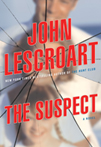
John Lescroart, after 13 Dismas Hardy/Abe Glitsky police procedurals, needed to plow new ground and took a minor character from the series, Wyatt Hunt, as protagonist in the highly satisfying Hunt Club last year; his sales leaped by 25 percent, and he released this month another stand-alone that reaches into the series for its protagonist, Gina Roake, in The Suspect.
Lescroart’s work has been far less recognized than Connelly’s, but his new surge of success may shift the balance a bit. Even less known outside the circles of mystery fanatics is S. J. Rozan, petite, tough New York architect, basketball player (despite her height handicap), and mystery author. Her series featuring Lydia Chin and Bill Smith is charged with electricity and chemistry, as well as the grit and diversity of New York., and she’s the only woman besides Sue Grafton to win the prestigious Shamus Award for Best Novel (for Concourse). But when she moved “off series” with the 2004 publication of Absent Friends, it was a publishing disaster.
Let me quickly add that Rozan’s Absent Friends is an intense, well-written, even gripping mystery. The drawback in publishing terms turned out to be that it probes corruption in the sea of fundraising that responded to the 9-11 disaster in New York City. And, as she explained when she visited New England last year, people who experienced the trauma of 9-11 just don’t want to read any fiction about it. That means most of New York, at least. Ouch. Yet I predict the book will be quietly rediscovered by the rest of us.
So when I picked up Rozan’s brand new 2007 release, In This Rain, I thought maybe she’d return to the tried-and-true series. Wrong. What she’s done instead is intensify the probing of a city’s complex politics and the pool of money that feeds urban development; braid it into multiple motives for political and personal loss of integrity; add a dose of realistic race conflict; and spin it all through two compelling characters, the gravely wounded Joe Cole (dedicated police officer burned in a construction scandal) and hard-driven office Ann Montgomery, Joe’s former partner.
The book opens with short jagged chapters that flash among a handful of unrelated settings, much like glimpses through a bus or train window: You see the scene, even grasp the motives, but a moment later you’re someplace else and you haven’t known enough to call in an SOS for anyone, so to speak. I hated the sensation of reading these disconnected pieces, but I admit it gives a real city sensation. And it doesn’t take long before the connections emerge. Who controls development in impoverished city areas like Harlem? How will this affect mayoral and governor aspirations for the current crop of politicos and their aspiring replacements? Joe and Ann keep diving through paper trails, crash-landing in deep waters, twisted by high risks. Their complicated affection for each other adds pain.
With these plot twists come hard questions for all of us: If a political leader makes a place better, is it worth ignoring his or her ethical lapses? If there are lives to be saved, how many of the rules can be broken? What happens in a person to move the mind into killing mode? And if you’re a career police officer, exposed to death and abuse on a daily basis, do you lose the capacity to fully love another person, even your own child or spouse?
Sure, Rozan’s earlier characters were likeable, eager, and good at unraveling police situations. But this newer Rozan, with its jagged and deep losses and its hard-won survivals, even triumphs, is a far better read.
Thank goodness she left her series and made the leap into such books. Of course, she still may not find easy recognition and fame; she might not even want it. (Could interfere a lot with the basketball games.) But with each book like this one, she’s earning the commitment of readers who want their “escape reading” to also fortify them, get them better able to face the nets of both hard choices and flaming beauty still to come.

Wednesday, February 07, 2007

Poetry Calendar: Vermont


It was sixteen degrees below zero here this morning. But the days are noticeably longer, and the poetry season is blossoming.

Coming soon to the Vermont Studio Center: Carol Frost, February 12; John Haines, February 26; both at 8 p.m. Be sure to phone the center on the day of the reading, as Vermont winter can force schedule changes (802-635-2727).

Kingdom Books co-sponsors the Fireside Literary Series at St. Johnsbury Academy's Grace Stuart Orcutt Library -- and welcomes Cleopatra Mathis on Friday March 30 at 3 p.m. More details later.

April is National Poetry Month, and scheduled to read at Kingdom Books are Julia Shipley on April 9, which will be our spring "poets' tea"; and Ellen Dudley and Joan Aleshire on April 28.

Riddle: When is a children's picturebook really a poem? One answer: When it's written by Reeve Lindbergh, who starts each "read-to-me" book with a poem that sees multiple drafts that emphasize rhythm, not just as meter, but also as the back and forth look and love between parent and child. Her newest is My Little Grandmother Sometimes Forgets, and we'll present it with delight on March 12.

And one more quick bit of poetic news: William (Bill) Biddle, retired St. J. Academy teacher, renewed as Lyndon State College prof and simultaneously as a slam poet (!), sent the following e-mail:

I've had a poem published in Poetry International, a nice journal from San Diego. In the same edition with Diane Wakoski, many others . . . my name actually on the cover! [...] I'm so pleased.

It's "The Satellite Man"

The man who came to realign our dish
when satellite signals failed to reach us
couldn't wait to tell my wife what he'd seen
at his previous stop. "They had chickens
that didn't have no arms, that marched around
with giant steps. Like this," he said, goose-stepping
across our dooryard, bobbing his head and shoulders
sideways like Ray Charles at the piano.
"They just walked . . . on their feet,"
he showed again, "and didn't have no hands at all."
This man looked fifty, had his teeth, used tools,
appeared, though uniformed in white, quite normal.
But he confessed he'd lived his "whole life so far"
in Angel of Mercy Parish, Boston,
and had just seen his very first live hen.
Dish reconnected to the heavens, he left
beneath a halo from my wife; no wings.


Bravo, Bill! He'll introduce Rachel Hadas at the March 31 celebration of her work at the St. Johnsbury Athenaeum.

Monday, February 05, 2007

Archer Mayor, BELLOWS FALLS (1997): On Film!


(Photo: After his Kingdom Books event, Archer Mayor kicks back to talk shop for a bit longer -- both police work and writing. Yes, those books on the table are all mysteries that he's written.)

At almost every book event, Archer Mayor, creator of the Joe Gunther series of Vermont police procedurals, fields the question: "Have you ever had a film option on any of your books?" He gives an easy smile, replies "yes, but," and goes on to say that nothing has yet come of the offers and options.

Now, thanks to Vermont's own noted filmmaker Jay Craven and his team at Kingdom County Productions, Mayor has a new glimpse of the possibilities -- because Kingdom County Productions announced last week that it has the option on BELLOWS FALLS for a new feature film. The screenplay is under development.

This haunting novel that digs into small-town life and the complications of human police work has always been one of my favorites of the Joe Gunther line. I'm re-reading it this week, with camera angles in mind. Go, Joe!

Saturday, February 03, 2007

Vermont Fine Press Feature: PLOWBOY Press, Andrew Miller-Brown


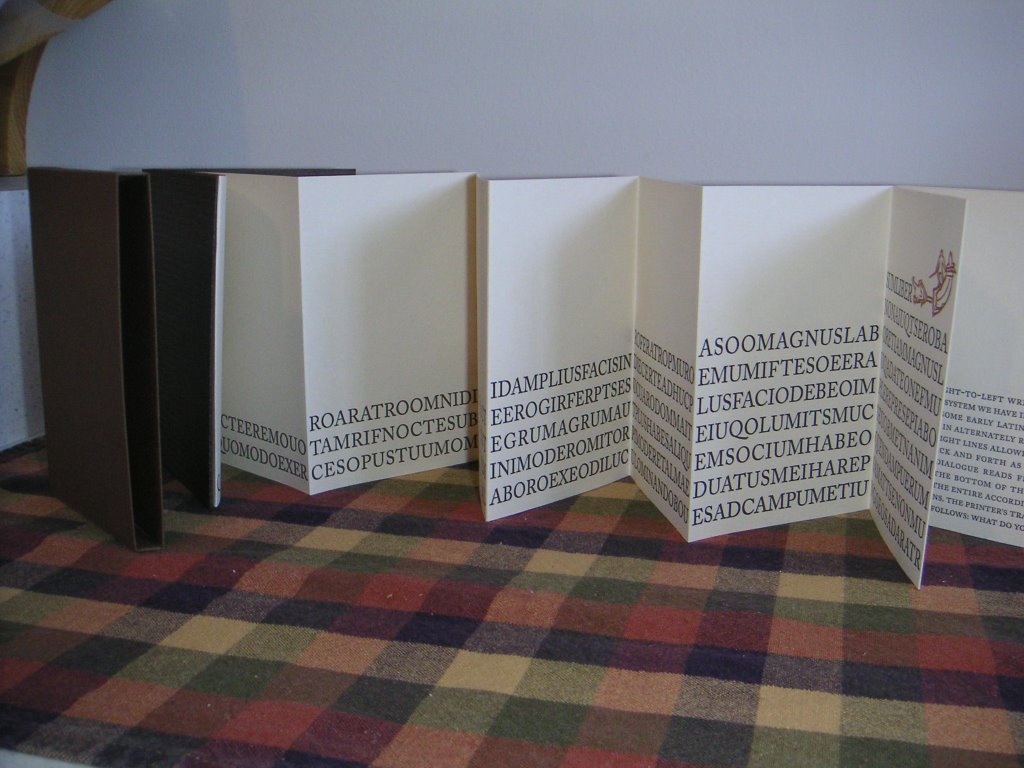
Working daily with Claire Van Vliet at Janus Press, Andrew Miller-Brown handles designs, papers, and inks that slowly develop into projects of great beauty and impact. But he also has developed his own press, Plowboy Press, with an icon of a wide-spread V crossed by a horizontal at mid height, and a location given simply as "Vermont." The imprint begins in 2004 with a modest entertainment, and blossoms with Miller-Brown's fall 2005 work, "Boustrophedonic."

Andrew studied creative writing at Johnson State College (Johnson, Vermont) in 2000 and was always in the art department and print shop, where he began to study printing. In the summer of 2003 he talked with Van Vliet, whose press is about an hour and a half from the college, in the hills of Newark, Vermont. And he began working for her in 2004.

His first project independent of Van Vliet's work was his May 2004 "Fable of the Cow," 20 pages of computer-set type and shadowy cow and milking parlor photos wrapped in a chapbook-style dust jacket, itself a set of images from the photo negatives; on the reverse of the jacket is a child's fanciful drawing, also held to be a cow.

The piece is crisp and shows the precision that Miller-Brown draws on in his work, but he frankly calls it "not much," and it might have had very limited life indeed had the college not requested a printing of it -- which drove the project into its second printing of 25, for the JSC trustees. Now a third printing, of 100, gives Andrew an amusement to share with friends of his press.

"Boustrophedonic" is far more serious in its design and construction. Printed on Barcham Green Sandwich, in letterpress work (Adobe Caslon), the pages are accordion folded and bound in paste paper on Fabriano Miliani Ingres (dark brown with lush golden-brown stripes, like an upscale woolen suit fabric), in a Fabriano Tiziano slipcase of medium brown. The edition numbers 100 pieces. The text is
"a passage from Aelfric's Colloquoy, an Anglo-Saxon primer used to teach Latin to young boys. Originally written in Latin and later glossed in Old English, it is a series of dialogues between a teacher and various Anglo-Saxon tradesmen and laborers. In this dialogue, presented here as a boustrophedonic inscription, the teacher asks a plowman about his daily work. The word boustrophedonic comes from the Greek meaning "turning like an ox while plowing." It is also related to the Greek word for ox-guiding or an ox goad. During the translation from Phoenician right-to-left writing and the left-to-right system we have inherited, early Greek and some early Latin inscriptions were written in alternately right-to-left and left-to-right lines allowing the reader to read back and forth as an ox plows a field. The dialogue reads from left to right along the bottom of the accordion and moves up the entire accordion in alternate directions. The printer's translation of the dialogue follows: What do you say, plowman? How do you keep busy with your work?..."
[I leave the rest to you to read within the piece.]

One fascinating aspect of this formal, elegant, classically derived piece is that it develops into a social or political statement, and the final words are "because I am not free." Following this strand further, with Van Vliet, Miller-Brown crafted a strong political broadside in June 2006, using words from Aristotle to deliver a stinging critique of the Iraq war and its pursuit by the Bush Administration. (The broadside is issued by the Janus Press.)

Future projects from Plowboy include a larger book of poems from a Burlington (Vermont) poet with "lots of dark imagery, using handmade paper for covers," and a book based on what Miller-Brown's wife's grandmother brought from Italy when she emigrated in the 1950s with her family, including both recipes and stories.

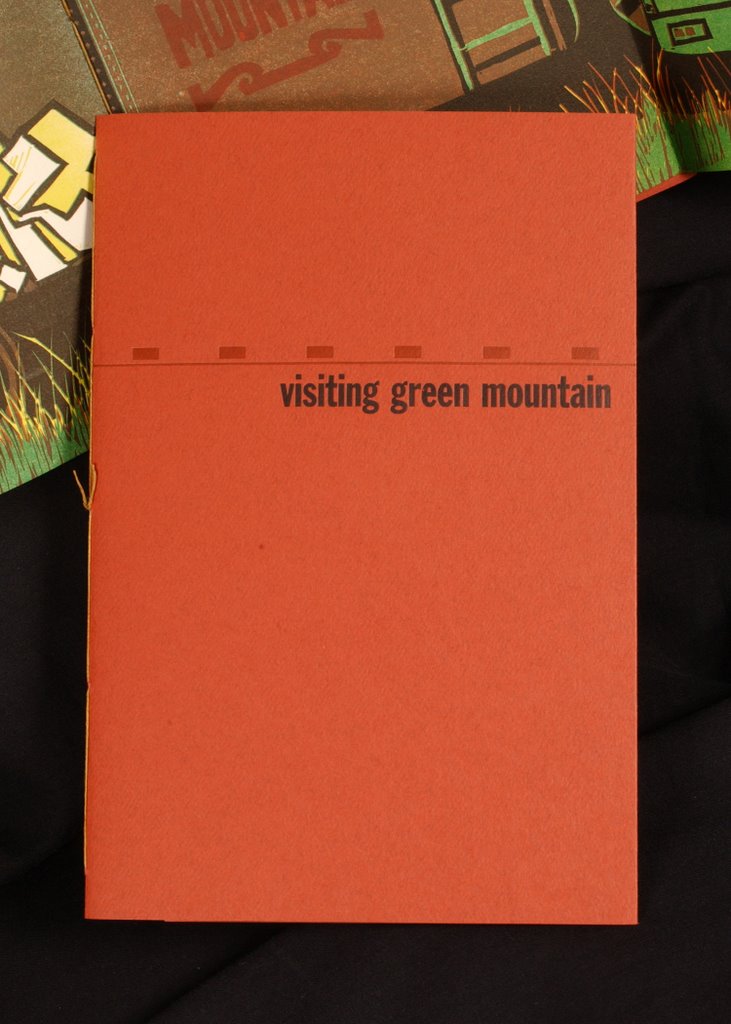
Kingdom Books is pleased to offer two copies of "Boustrophedonic," pictured here, and one of the broadside "The tyrant who impoverishes the citizens"; contact us for more information.

Friday, February 02, 2007

Planning a Summer Vacation


Yes, I know, it's snowing... thank goodness, since up here we've been seriously worried that Global Warming would capsize Vermont's tourist industry. Skiing, snowshoeing, even maple syrup: they all depend on cold winters. We also need the deep cold to do away with pests like ticks.

But summer will most likely arrive in a few months, and I want to announce a date that's worth shaping a vacation around: Saturday July 14, at 3 p.m., we'll host an event for Alice James Books that features four terrific poets (names announced later). April Ossman, the publisher, just stopped by to help hammer out the details. How often do you get a chance to spend a Vermont summer afternoon with four poets at once? (And that's not even counting April or me, or the neighborhood of Vermont authors who'll probably drop in.)

So if you're pondering reservations for the summer, here's a way to start choosing dates and places. In fact, Dave and I will even throw a supper afterward, so people can keep on talking. Count on stacks of books, signings of course, and conversation that's worth the drive.

Thursday, February 01, 2007

Abundance = Kenneth Koch


No, it's not "new math" -- but it's a simple equivalence. Kenneth Koch, who died in 2002, was one of our most prolific authors, turning out 20 pages or more each day and amassing an archive at the New York Public Library that has set records for its size, and maybe for its variety, too. Best known as a poet, he was also a gifted teacher who in turn taught others his insights for "how to teach poetry" (Wishes, Lies, and Dreams: Teaching Children to Write Poetry, 1970; on the title page the authors are actually listed as "Kevin Koch and The Students of P.S. [that's Public School, for you non-city folk) 61 in New York City"). In addition, he wrote fiction, drew cartoons, and more.

Despite his death, it's now clear that the abundance of Koch's life continues well beyond his passing. In 2005, the threesome who make up his literary estate -- his wife Karen Koch, poet Ron Padgett, and Koch's editor, assistant, and also poet Jordan Davis -- brought out The Collected Fiction of Kenneth Koch (Coffee House Press). The team also assisted in the publication of The Collected Poems of Kenneth Koch in fall 2005. This year, it sees release in softcover.
Moreover, Padgett is the editor for the upcoming April release of Kenneth Koch: Selected Poems (from the Library of America, American Poets Project).

But this IS, after all, one of American's most abundant poets we're talking about. So Ron told me this week that there's a FOURTH book coming in fall 2007: On the Edge: Collected Long Poems, a companion to the other collected poems volume.

I'm clearing a larger shelf. Meanwhile, watch for Ron's related events, of which we're glad to announce the following, already scheduled:

February 1: Emory University, Atlanta
February 20: Double Change series, Le Point Ephémere, Paris
April 11: Beinecke Library, Yale University, New Haven
April 26: Lecture on Kenneth Koch and Frank O'Hara, Milwaukee Library, Milwaukee
April 27: Reading at Woodland Pattern, Milwaukee

Tuesday, January 30, 2007

Entering Vermont Winter: Poets Carol Frost and John Haines, at Vt. Studio Center


Lyrical, image-rich, penetrating: the poetry of Carol Frost and that of John Haines share these aspects, although the poets couldn't be much more different. Frost has been both professor and poetry editor for years; her latest book, The Queen's Desertion (2006), is her tenth. Yet she's not much older than Haines was when his first collection emerged in 1966 after years of isolated homesteading in Alaska -- at age 42. Each is scheduled to read at the Vermont Studio Center in Johnson, Vermont, in February: Frost on Feb. 12, and Haines on Feb. 26, both at 8 p.m. Here's one from Frost's new collection:

To Fishermen


No more savage art: filleting: a deft pressure along the backbone
from tail fan to the red gills: fighting mystery with a honed blade
through the small bones: salt and scales on face and hands:: the Greek god,
as well, found flesh unmysterious, but in anger and disappointment: —
seagull cries, your music, are all about you: Apollonian but hungrier: nature is hungry::
the brave fish dies the birds swoop for the insides in no lovelier spirals.

And here's one from the collected poems of Haines, titled The Owl in the Mask of the Dreamer (1993):

If the Owl Calls Again

at dusk
from the island in the river,
and it's not too cold,

I'll wait for the moon
to rise,
then take wing and glide
to meet him.

We will not speak,
but hooded against the frost
soar above
the alder flats, searching
with tawny eyes.

And then we'll sit
in the shadowy spruce
and pick the bones
of careless mice,

while the long moon drifts
toward Asia
and the river mutters
in its icy bed.

And when the morning climbs
the limbs
we'll part without a sound,

fulfilled, floating
homeward as
the cold world awakens.


If you plan to attend either reading, call the Studio Center that day to confirm that the poet has indeed arrived (it's winter here; things change) and to reserve your seat: 802-635-2727.

Thursday, January 25, 2007

The Play, Not the Poetry: Grace Paley


Named Vermont State Poet two years ago (ah, that haunting line, "It is the responsibility of the poet to be a woman"), Grace Paley is better known outside Vermont for her stories: vignettes that capture women's lives in intimate detail, often as they relate to protests on behalf of peace.

This evening was the opening night for a new performance drawing on those stories: STATES OF GRACE, staged by the Underground Railway Theater in Boston. Here's the skinny:

"States of Grace"

World-premiere! A new play for actors and puppets inspired by the smart, sly, funny, and moving stories of activist author Grace Paley.

Faith, a writer in a magical kitchen that becomes as animated as her imagination, seeks hope with eyes open. States of Grace is a thoughtful comedy about how to maintain optimism in a world that, as Grace Paley puts it, "threatens to drop away from us in poisonous disgust."
For show times and more detailed information... www.undergroundrailwaytheater.org or 781-643-6916.


The production runs through February 10, and on the final night there's a pre-show reception for Paley, and Howard Zinn gives a postperformance talk.

Wednesday, January 24, 2007

Vallejo Symposium and the Complete Poems


Clayton Eshleman's bilingual edition of the complete poems of Cesar Vallejo, immense, comprehensive, and threaded throughout with the insights of this powerful contemporary American author (his depth of study and experience in myth, image, shamanism, and complex poetry are stunning), came out last fall through the University of California Press. Whether you've acquired a copy or not, if Vallejo touches your soul, here's an unusual opportunity to plunge more deeply into his work: Professor Caleb Na at the UCLA Spanish Department welcomes guests to a two-day Vallego Symposium there, on Febrary 22 and 23. Here are the details from Professor Na (q@humnet.ucla.edu):

Here is a rough schedule, and for more information, the public is welcome to call our front desk, 310-825-1036.


Thursday, 2/22
4PM – Vallejo Symposium in 314 Royce Hall
Introduction of Eshleman and Dr. Stephen Hart by John Dagenais
Introduction of Eshleman by Hart
Poetry readings by Eshleman
Introduction of Vallejo and Vallejo DVD by Hart
Showing of the DVD
Comments about translations of Vallejo by Eshleman
6PM –reception to follow


Friday, 2/23
10:30AM – Morning Roundtable in the Faculty Center downstairs lounge
Readings and comments by Michael Heim, Kelly Austin, Eshleman, and perhaps Efraim Kristal. Moderated by Kristal or Michelle Clayton
12Noon – Lunch for speakers in a Faculty Center room
1:30PM – Re-showing of the Vallejo DVD
2PM – Four afternoon papers
Papers by Kristal, M. Clayton, Hart and Chrystian Zegarra
Q&A
4:30PM –reception to follow

Sunday, January 21, 2007

California Dreamin': John Lescroart's New Mystery, THE SUSPECT


We headed to the venerable mystery bookshop in San Mateo, M Is for Mystery, to help welcome mystery writer John Lescroart Saturday as he presented his hot new page-turner, THE SUSPECT. It's the latest in the series he's set in San Francisco around legal eagle Dismas Hardy and dedicated detective Abe Glitsky -- but not. After about 13 books featuring the pair, Lescroart decided a couple of years ago to slide sideways and try a new lead character, Wyatt Hunt, who eventually tied in with the others. The result was last year's lively and well-received release, THE HUNT CLUB. The author said the fresh approach pushed sales up about 25 percent ... so how could he resist trying it again?

This time, though, the protagonist is a woman, Gina Roake -- first time for this author. It didn't change the way the story flowed for him; nor did the change of scene, as his legal consultant, Al Giannini, has moved out of SF to "the peninsula" south of the big city, and as a result the plot moved south, too.


We'll post a review of THE SUSPECT on the KB web site later (www.kingdombks.com). Meanwhile, here's a quick look at the three aspects of writing and working in the genre that the gathered fans pushed: (1) the loss of one of the favorite characters within the series, Daveid Freeman; (2) the changing world of book promotion; and (3) the differences that revolve around the subgenre of thrillers. So ...

(1) No matter what Lescroart said about the new book, the questions kept hauling him back in time to when he killed off David Freeman, in THE FIRST LAW. Lescroart said the loss of the well-loved wise advisor "broke his heart" but was "necessary" in order to propel Dismas Hardy and Abe Glitsky into the plotted actions. Hence, character compels plot compels character. Hmm. Is there another character in the series who'll grow into the slot of team guru? Yes, says Lescroart: Aaron Washburn. Try the new volume and see if you can spot the trend.

(2) Book promotion sure is changing. Do it yourself -- don't count on the publisher. That's what this Bay Area writer discovered, after a fairly passive early career. Now he runs a web site, flies around meeting reps from Borders and Barnes & Noble, and pays to have his work announced through Author Buzz, a service that he said reaches some 40 million readers. May be paying off -- that, or the solid writing -- because his publisher, Dutton, finally bought him a full-page color ad in yesterday's New York Times.

(3) Thrillers: To Lescroart, thrillers are differentiated from the rest of the mystery genre by the unrelenting suspense in them. As a founding sponsor of a new organization for thriller writers, and joined by other sponsors Clive Cussler and Jonathan Kellerman, he's excited that conversation and sales are spiking in the subgenre.

Why did he move into legal thrillers? "Because I was failing desperately at making a living," he confessed, and also because he wasn't happy with the level of his own writing. But the critical shift in pace and depth took place when he was 41 and went into a deadly coma from spinal meningitis. A couple of weeks later, when he'd surprised himself and his world by moving into recovery, he dedicated himself to writing "a better, more important book" and crafted HARD EVIDENCE -- his fifth book and the one that really woke up readers. The first version, driven and compelling, he showed to Al Giannini, the legal eagle mentioned earlier. Al said, "It's a great book but the legal stuff is all wrong." So page by page, the team rewrote and polished.

By now, Lescroart doesn't just know his characters; he listens to them. "These guys are so real to me," he admitted Saturday. "It's not hard to keep track of them. I know where they are and where their children are. They're walking around the caverns in my brain."

As a result, he's 75 percent done with the next book already, which opens in Iraq. The research (he's not actually going there) has involved people freshly returned, and Lescroart says it's been "pretty disturbing ... the people that come back are a lot more emotional than we realize or read about in the newspaper."

But that's another story. For now -- check back with us in a week or so for a review of THE SUSPECT. And oh yes -- if you find yourself in California, do stop by M Is for Mystery. We do!

Monday, January 15, 2007

Hermetic or Transparent? John Yau Reads


(Art by Jasper Johns: 0 through 9)

"Post-Modern life, you can't do anything right!" mourned John Yau as he warmed up in his reading at the Vermont Studio Center (Johnson) this evening. He was talking about the criticism he got for writing a poem in the voice of his baby daughter (now about 4 and sleeping in her mother's lap nearby), but he could as easily have referred to the sprained knee that relocated the reading, gained in a slippery winter storm today.

Yau read from his new book, PARADISO DIASPORA (note that the two words are anagrams of each other), including the long and tasty "In the Kingdom of Poetry." He slipped smoothly into his Egyptian sonnets ("A, becauses Egyptians never wrote sonnets, and B, because I've never been to Egypt"), which result in word strings like "cursing there's no canopic jar to piss in" and "riding a crocodile, gold head held high," as well as "a human jar with coiled hair," and closing with "and your face greets you from a wall you've seen before in a black mirror."

I liked his wacky 9-11 "A Revised Guide to the Ruins in New York City," and one of Cerise's poems (that's his daughter; the poems all begin with something the very young lady has said, in her own words). I also enjoyed hearing Yau talk about his passion for writing pantoums ("I go through peridos when I just write one after another -- and then I hate 'em all"), and he read aloud two that he was liking this time: "Self-Portrait by Francis Picabia" and "The Child's Story Under Duress," which opens, "A french fry stuck its tongue out at you."

The Studio Center brings together both visual artists and writers for its sessions, and Yau brings both into his work, as he is at least as serious an art critic as he is poet (and prof. at Rutgers). One result of this mingling is that the after-reading questions dare to truly question the work. After explaining the pantoum form to one artist and replying to his wife's question about his obsession (her term) with the painter Jasper Johns, Yau heard from another artist who said, "I understood one of your poems and none of the others -- are you trying to have that effect?" Yau replied directly:

"I'm not trying to write poems that people don't understand, but I'm trying to write poems that go beyond MY understanding."


He pushed this into more concrete terms by bringing back the french fry line and explaining that to him the line "is kind of inherently interesting," with its suggestion of a child's cartoon. And then there's the challenge of how to follow "a line that is complete in itself."

Most intriguing to me, though, was the discussion of why Yau's reaction to the Jasper Johns paintings is driving him to write a second book on them (the first came out in 1995). A listener inserted an extra question, asking what it is that other people miss about Johns, and Yau grasps. Yau's response:

"Everyone says Johns is hermetic and Andy Warhol is transparent. But if you're a poet, or a certain kind of poet, being hermetic is not necessarily a bad thing, and being transparent is horrible."

To Yau, "hermetic" indicates possessing a body of knowledge before you come to the world -- in this case, knowledge of Kabbala. He segued into the kinds of knowledge and work he demands of his students, whether in poetry or art criticism: He has rules, including a demand for consistent grammar and, in art criticism, a drive for fact rather than opinion. "If you choose not to know how to write, you're choosing to be ignorant," he conclued. "And that's unacceptable to me."

Next at the Vermont Studio Center: Howard Norman on January 29. Be sure to check with the center on the day of the reading to be sure Winter hasn't prevented the author's arrival: 802-635-2727.

Friday, January 12, 2007

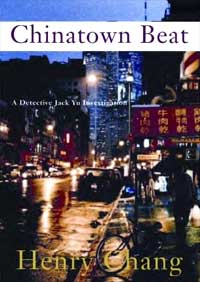
CHINATOWN BEAT: Henry Chang and the Sound of a First Mystery


January Magazine just picked CHINATOWN BEAT for its Best Crime Fiction 2006 list, adding to the buzz and heat around this book. Here's why it's worth reading:

A piece of jade, carved with ideograms that relate to phrases that sound like the I Ching: that's the key to the actions of a Chinese mistress named Mona in New York's Chinatown. Although she's not the protagonist of Henry Chang's first detective mystery, her movements drive the plot from its inception. Chinese detective Jack Yu is caught between "old Chinatown" as spelled out in his father's life and death (and Jack's own traumatic experience as a teen) and "new Chinatown" with its gangs and power struggles (well actually, that's not so new, but perhaps more in-your-face and dangerous than it used to be). And it takes him a while to penetrate the overlapping stories around the death of a "benevolent society" leader, Uncle Four, to discover Mona's driving plan and persuasions behind the scene.

Gritty, definitely in the noir category, penetrated by dark dreams and omens, CHINATOWN BEAT is a great "first mystery." The poet side of me is especially intrigued by Chang's use of fortune-telling phrases and rhythms, his interleaving of language, image, and his abrupt transitions among characters and situations. It's a choppy, jittery tale -- but with an implication that the multiple Chinese languages behind it are forcing that sensation, as they butt up against each other, against translation, and against change.

I'd read it again.

Thursday, January 11, 2007

Save the Date: Rachel Hadas in Vermont, March 31, Award Party!


The St. Johnsbury Athenaeum will award its medallion in the arts to poet Rachel Hadas on March 31, at the Athenaeum (1171 Main Street, St. Johnsbury, Vermont). Hadas, the author of a dozen books of poetry, essays, and translations, also teaches at Rutgers Newark. Count on a gala event; yours truly is on the Athenaeum committee doing the party planning. Between her incisive thinking, her fierce classicist background, and her willingness to put her emotions at the core of many of her poems, Hadas offers strong and accessible work. Her newest collection, The River of Forgetfulness, is available POD from David Robert Books, http://www.davidrobertbooks.com/hadas.html

Tuesday, January 09, 2007

Vermont Poet Major Jackson: HOOPS Makes the NAACP Image Award Finalists List


Hurrah! Major Jackson's outstanding 2006 collection HOOPS is one of the poetry finalists for the NAACP Image Awards -- awards that honor works in the arts creating and fostering diversity.

HOOPS contains strongly formalist narrative work by the Burlington, Vermont, poet and UVM professor, who also has a fellowship this year at the Radcliffe Institute of Advanced Study at Harvard in Cambridge, MA. The first section of HOOPS draws heavily on Jackson's North Philadelphia school years; the second is a powerful sequence that continues his "Urban Renewal" sequence launched in the earlier collection LEAVING SATURN; and the finale, thirteen poems long, is his "Letter to Brooks" -- Gwendolyn, who gave him his first public reading, and made sure he received a check for it, in an act of magical generosity across poetic generations.

The other nominees in poetry include:

Celebrations: Rituals of Peace & Prayer -- Maya Angelou
Jazz -- Walter Dean Myers
We Speak Your Names -- Pearl Cleage
Check the Rhyme: An Anthology of Female Poets & Emcees -- DuEwa Frazier, ed.


To learn more about the awards, visit: www.naacpimageawards.net/imageawards38.html

And for a review of HOOPS, see www.KingdomBks.com

Sunday, January 07, 2007

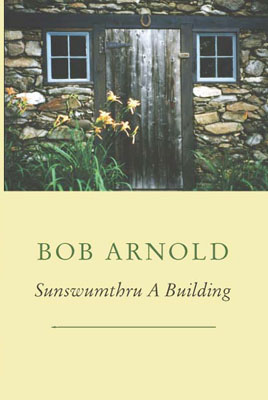
Bob Arnold and Longhouse: 35 Years of Poetry in Print

When Bob Arnold reached Vermont in 1971 as part of a negotiated deal with the U.S. government (remember the draft? remember what it took to earn Conscientious Objector status? remember what would come next once you became a C.O.?), he found a mimeograph machine at the church where he settled to work. And each time that he discovered poetry that he liked, he found ways to get it into print: via mimeo, typing, photocopying, and evenutally through letterpress efforts of friends (at least for wrappers; Bob wanted to keep the final prices easy on the wallet in order to see the poetry race out to readers) and this year, for instance, in a neat, conventional perfect-bound book.

The authors who became regulars for Bob's press, Longhouse, mostly wrote lyric and narrative poetry. They ranged from the frankly wild, like Irving Stettner, to a straong selection of the distaff side of the Beats (Janine Pommy Vega, Anne Waldman, Joanne Kyger), to Vermont's storytelling poets like Hayden Carruth and David Budbill. Bob has published a lot of work by Ted Enslin, a Maine poet who merits far more attention than he's had so far. And perhaps most memorably, Longhouse is the home of Cid Corman's poetry: printing, publishing, supporting, and inextricably woven into the fabric of Cid's life, whether in the U.S. or in Kyoto. As a direct extension of this resonance, Bob also vigorously promoted the work of Lorine Niedecker, a modest Wisconsin poet whose death in 1970 cost us all dearly. Niedecker's spare, incisive writing meshed well with Corman's urge to spend fewer and fewer words, with targeted energy. Bob thus nurtured the printed careers of both of them.

Bob announced this past week that the Longhouse Bibliography from 1971-2006 is now online, complete with his very personal annotations (brief but poignant) and color images of many of the covers. He invites viewers to:

Begin with the Longhouse Bibliography Part One 1971 - 1989

http://www.LonghousePoetry.com/bibliography1.html

And continue with Longhouse Bibliography Part Two 1990 - 2006

http://www.LonghousePoetry.com/bibliography2.html


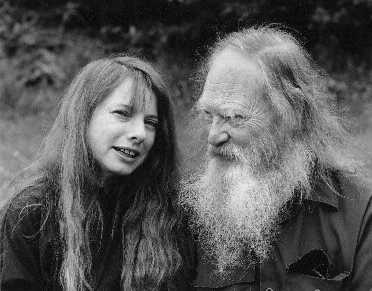
I note here that Bob's wife Sue is inevitably part of his efforts; she joined him in 1974 and the two form an intimate Vermont partnership, with weather, wood, press, and poem. To celebrate their 35 years, in addition to savoring the bibliography, you'll probably want to pick up some of the small-press-run work that they mention, before it's gone. I do. The web home is http://www.LonghousePoetry.com

And here's a taste of Bob's own poetry, from his 1990 collection WHERE RIVERS MEET (Mad River Press):

WINTER

Just before supper
I watched a storm draw in
Taking light
The trees toss
No matter
I have finished carrying
Elm from the edge of the woods
Bucked, split then stacked
I am done
Well used
Come snow


Oh yes, I mentioned a perfect-bound volume issued in 2006: That's Bob's new SUNSWUMTHRU A BUILDING, a prose sequence of tender meditations on tools, building, and fathering. Although issued through Longhouse, the book bears the Origin Press imprint, which Cid Corman originated and Bob is carrying onward, with help from Charles Sandy. But that's another story and I'll save it for another day.

Tuesday, January 02, 2007

Poetry on the Calendar: 2007


Kingdom Books hopes to host Brian Turner, Julia Shipley, Ellen Dudley, and Joan Aleshire over the next few months; we'll announce dates as soon as they firm up.

Co-hosting with St. Johnsbury Academy at the Grace Stewart Orcutt Library, we are very definitely presenting Dartmouth professor/poet Cleopatra Mathis on March 30 and Amherst-region poet Kevin Goodan on May 4 (those are Fridays; 3 p.m.).

Still in the planning stage: a series of visual media/poetry events featuring poets who've found Vermont to be the best retreat from the streets of New York City. Stay tuned.

And now, a few other poetry dates to note: Henniker NH's fabulous MFA in poetry program at New England College opens its January session with a dramatic move south, to a campus in Northfield, MA. See the college web site (www.nec.edu) for more details -- reading at the campus on Jan. 4 at 7 pm, Michael Waters and Ilya Kaminsky (don't miss it!); at the Hooker Dunham Theater in Brattleboro on Jan. 5, Anne Waldman and Toi Dericotte (talk about contrast!) at 8 pm; on Jan. 7 at 8 pm at the Jones Library in Amherst, Ross Gay and Gerald Stern; on Monday Jan. 8 at 7 pm back in Northfield MA, Maxine Kumin and Judith Vollmer; on Wednesday Jan. 10 at 7 pm, on the Northfield campus, Jan Heller Levi, Alicia Ostriker, and Jeff Friedman; and on Thursday Jan. 11 at 7 pm on the Northfield campus, Carol Frost, Paula McLain, Wyn Cooper, and Chard deNiord. Whew!!

Coming up at Vermont Studio Center: Jan. 15, John Yau; Feb. 2, Carol Frost; Feb. 26, John Haines (be sure to call on the date, for seat reservation and to confirm the poet has arrived -- 802-635-2727, changes DO happen).

And in case you haven't looked at The Frost Place web site recently, the 2007 resident poet is -- drums, please -- Jody Gladding! Quite a line of poets are scheduled for this summer (www.frostplace.org) at the Franconia, NH, site.

Wednesday, December 13, 2006

Write It: Galway Kinnell and "When the Towers Fell"


Late last summer, before his new collection STRONG IS YOUR HOLD came off the press, Galway Kinnell gave a reading locally, for the northern Vermonters who claim him as one of their own. (Some of them came from New York City, too...) That is, he tried to read -- and to his consternation, he lost most of his voice, and between that and the heat and the crowd, it was a tough event.

So this evening, he graciously offered a second chance, in the high-ceilinged glory of Athenaeum Hall in St. Johnsbury, where many a poet, novelist, biographer, politican, even the traveling speakers of the 19th century like Russell Conwell ("Acres of Diamonds") have spilled forth rich language. In the audience were other authors, a book designer, a magazine editor, professors, high school teachers, an innkeeper, a contractor, a marketing pro, retirees -- and a handful of high school students. And whether it was the comfort of reading "at home" or the sight of the neighbors or their enthusiastic questions, the grand poet responded amply.

He told a bit about Rilke before reading his popular new poem "Dinner Party," said that Rilke believed the moment of the poem could easily be missed, and hence one shouldn't go out to be with others, but should simply wait at the desk for the muse. "Are you like that?" one listener asked him.

"I don't actually agree with Rilke," Kinnell replied. "Although I've translated a large bulk of his poems -- I don't like him." He continued, "Rilke's work is greatly marred by his inability to love."

"Strong is your hold O mortal flesh / Strong is your hold O love," wrote Whitman in "Last Invocation," from which Kinnell drew the title for the new collection. Much of the work in it recounts incidents that only love brings about: moments with his children, and with his wife, some stunningly intimate.

Another neighbor (and up here, a neighbor is someone who lives within visiting distance) asked Kinnell why he'd written so much about the Vietnam war, but not yet about the current one in Iraq.

"When that war started, I felt like I was the only person in the country that knew what was happening," Kinnell mourned. Invited to a dinner party of doctors in the neighboring town then, he spilled his passion about the war and against it -- and felt the silence of the room and the gradual withdrawal, one by one, of the fellow guests.

He admitted to writing poetry as a teenager, but without seriousness. Then, "I realized that poetry was central to my life. I was writing, but I wasn't writing well." He thought perhaps he'd become editor of POETRY magazine or something like that. Gradually his writing changed, and he now says his habit, good or bad, is to strive for perfection. So when a teen asked him whether that ever pushed him toward maybe revising something that he felt he didn't have quite right, he exclaimed to her with a tender smile, "Oh, my dear!" Then he held out his copy of the "new" book -- already marked in ink with a rewritten final line to the poem "Field Notes."

Although he regularly reads aloud many of the poems from STRONG IS YOUR HOLD at his author events, the central poem,"When the Towers Fell," the one that focuses the book, is one he doesn't often provide to audiences. It's too long, for one thing. Six pages. This evening he took "author's privilege" and condensed it, reading about half the stanzas, and carefully delivering the Middle French and German sections in translation.

Prompted by more questions, he explained that he had started writing the poem because of the classes he taught at New York University at the time. His students were breathing the disaster, walking through it, crying; they came to him and said, "How do we cope? What do we do?" He told them, "Write about it," and set an example by penning three lines -- lines that he now calls "quite bad." He enriched them with observation, sitting for a morning in a food stand erected by McDonald's for the firefighters and rescue crews. The first publication of the poem took place in THE NEW YORKER at the one year anniversary of the attack of September 11, 2001. An audience member asked him whether he'd mixed narrative and lyric in it, and he said yes, calling the work (as it now stands) a series of moments rather than a narrative. "And I think it's better in poetry to get as much narrative as possible out of it. Maybe better for all writing."

Gently, he confirmed that more revisions would take place. He added, "Sometimes one doesn't get everything right the first time, but then when it's published in a book, it has an objective reality that allows you to see what needs to be changed."

And then, steering the conversation back from theory and poetics to love, he read aloud his "Shelley," which turns away from both the early poet's ways and some of his own youth, and wrapped the evening and the audience in the delicious love poem "Field Notes":

.., in the taxi on the way home we kissed
a mint from the maitre d's desk
from my mouth to hers,
like cedar waxwings.

...

I slid around the foot
of the bed and climbed in
and slid toward the side lined
with the warmth and softness
of herself, and we clasped each other
like no birds I know of.

Our cries that night were wild,
unhinged, not from here,
like the common loon's.

Saturday, December 02, 2006

On the Tip of the Tongue: Arguing With A Collection of Poetry


I've never met the poet Lesle Lewis (that's right, her first name has an unusual spelling), but the photo on the back of her 2006 poetry collection LANDSCAPES I & II looks like a nice person, relaxed, dressed in sweatshirt and corduroys if I see the detail right, with a tousle of short fair hair, a wide grin. Still, if she tried talking to me the way these poems read, I'd explode: "Why can't you stick with one topic for longer than a sentence? What do you mean by talking about an alligator, Milwaukee, love, and summer, all at once (in the poem "Bumblebee Love")? How am I supposed to understand that prose poem called Story?"
In fact, "Story" begins, "You, my girl, I don't dislike. Faith is a male. This is a love story."
Honestly, I thought I'd go crazy. But I kept reading. Lines like "You've had some accidents and some illnesses and some lovers" grabbed me. or "There was a singing by the river, and no one but me was thinking of me." (That's from a two-paragraph prose poem called "Wrapping Paper.") And it began to feel like being immersed in a new language, where at first the only phrases you're sure of are the ones that borrow from the English you've always spoken, and then you begin to recognize the words that mean "please" or "too bad" or "awesome." One night you wake in the darkness and realize the voices in your dream were speaking in that other language, too.
So Lewis's carefully chosen sequences build to inner recognition of how conversations happen, inside the mind as well as spoken; of love and its absurdities ("For me it's always you, you, you"); of what a creator might really be if our minds were that stretched, that elastic.
By the time I reached the book's finale, a ten-section poem, "The Moon Is Over Alstead," I knew that Lewis inhabits the same rock-and-water-and-weather New England that holds my own heels and heart. I even had a sense that it might make sense to put heels and heart into the same stretch of poem, and not to worry too much about which bones or blood vessels linked them. This collection is fresh language for me, and although I struggle for footing among its unexpected twists and bumps, I like the energy and the challenge.
And that's what leads to my recommendation: Pick up this book and set it aside for an afternoon of cabin fever or depression. That's when the line "You keep your soul in your dog" will bless your day with laughter, and a couple of poems later, you'll hit "Abstraction puts on her cowboy boots. Who else would walk the boundaries with you and photograph your pears?" Ah. The world is more free than it seemed before, while Lewis spills its phrases and images into her poems.

'Tis the Season for Poetry


I get serious seasonal confusion disorder in December. Our household celebrates the Festival of Lights, better known as Hanukkah. My individual path takes me toward Christmas -- but I struggle for a clearer vision, stripped of the images of white people of the Middle Ages, more a sense of Jesus the Jew coming out of his wilderness experiences with fresh leadership. Yet the hill-walker that's my everyday self is most attuned to weather just now: snowstorms, wind, plunging numbers on the thermometer, glimpses of blue sky or bright moon or the wide shoulders of the constellation Orion. I count the days until the Solstice, need to notice the changes in daylight and darkness.

Hence it's a huge relief to be able to recommend the following, as poetry to seize for oneself, one's friends, one's dreams:

From the moment the first snow clouds hover over the landscape, Vermont winter is a season of longing: for tender snowfalls, for sparkling beauty, for the exhilaration of the cold, and also for comfort, warmth, protection, assurance. So it's a good season to read Kevin Goodan's first published collection of poetry, IN THE GHOST-HOUSE ACQUAINTED, which came out through Alice James in 2004. Goodan's second collection is on a publisher's desk; catch up now and be ready for the new book when it arrives.
The title poem opens, "I close the simple flowers / and bid the moon now rise / for Death is not my harbor." Walking through a quiet nighttime pasture, Goodan evokes the haunting and threat of the evening: "as frost presses down / with equal weight and terror." Shadows, moonlight, a sense of the earth at its beginning: "I remember that world / pouring into this."
Those well acquainted with West Coast Native American legends may recognize the ghost-house as an anchor of the Tsimshian world, though it's also a thread in Sioux explanations, and in another form in Cherokee language about the worlds of life and death. I find in Robert Frost a New England sense of ghost house, in the barren foundation of a house long uninhabited. It's fair to let all these threads braid while reading Goodan's work, for he draws from them in turn. Raised on the Flathead Indian Reservation in Montana as white stepchild in a strong family of Native American leaders, his spiritual vision mingles animism, the Lord, the land. Into the cradle of his childhood he pours his adult labors with animals, in the cruel winters of Montana and the damp chill ones of western Massachusetts, where he lives now.
This mingling of hauntings erupts in language like the close of his "Almanac of Caliber and Distance": "I want to build my house / in you, phantom in the song-light. // Starlings unsilence, / jay-crows gloss a bone-stack // and I will not close my eyes / to the flame held before me, // O fire -- of human / And not."
After this, the poems trek from llama raising (including the sorrowful weight of them when they die) to birds ("O, my soul is a hermit thrush"), to horses that crowd up against a fence and the ghostly vision of a white mare, summoned: ""In field, in bone / You white mare / In rain that peens a curved world flat -- ... Through every weather between us / Come O come you white mare," Goodan cries out.
Here are calls to a Lord, as well as sobs of frost and lambs and owls. By the time the collection wraps up, winter itself peals forth meaning and sustenance, even as the land groans under the ice.

Friday, November 24, 2006

Poems for the Ear in the Heart: Linton Kwesi Johnson, MI REVALUESHANARY FREN


Language and poetry: if there's a way to separate them, I don't know it. But despite the heartbeat meter underlying most lyric poetry, and the sensuous slide of alliteration and rhyme plaiting the lines together, and the laid-in pauses and rhythms of the page, the line, the spacing -- well, despite the way one hear's a poem as one reads it, MI REVALUESHANARY FREN demands a different kind of reading. A reading aloud.

Intrigued by the unexpected gift of an introduction by novelist Russell Banks (the book's published by his wife Chase Twichell's Ausable Press), I pressed into reading this September 2006 release. Poems like "All Wi Doin Is Defendin" seemed straightforward enough, but hard on eye-brain linkage as I sounded out the Jamaican Creole on the page:

war ... war ...
mi seh lissen
oppressin man
hear what I say if yu can
wi have
a grievous blow fi blow

wi will fite you in di street wid we han
wi hav a plan
soh lissen man
get ready fi take some blows


And so it goes on, line after line, stretching the inner eye-ear to make sense of the page, with the finale:

all wi doin
in defendin
soh set yu ready
fi war ... war ...
freedom is a very fine thing


AH! Revolution to achieve freedom -- it's an American virtue, and from war in the streets, I translate at the final stanza to why so many of us react so strongly to, say, the Rodney King beating, hate crimes against gays, the double binds of victims of domestic violence (need I mention OJ's family?), desperation on Native American lands, laws that punish immigrants for having roots elsewhere.

But to be American and middle class and white is a hard place to be when identifying across color lines. Even to fully recognize what generations of enslavement-via-skin-color did to our nation's ideals and humans take hard work for those living the presumed easy life.

Linton Kwesi Johnson, better known as LKJ, born 1952 in a small town in rural Jamaica, arrived in London in 1963, for secondary school and later studies in sociology at Goldsmiths' College, University of London. Here he joined the British Black Panthers and helped organize a poetry workshop within the movement. His published poems and his music erupted together through the 1970s, bringing him recognition that came by definition internationally: You can't separate him from either England or Jamaica. By the 1980s he'd entered radio journalism. The awards piled up momentously: associate fellow of Warwick University (1985), honorary fellow of Wolverhamption Polytechnic (1987),an award from the city of Pisa (Italy) for his contribution to poetry and music.

Under the conventional list of awards and achievements (his own record label; "the second living and the first black poet to have his selected poems published in England in the Penguin Classics series" -- says Banks in the introduction) is a concentrated focus on oppression and resistance. People are killed regularly within the "revolutions" that demand freedom and rights.

there are sufferers with guns movin breeze through the trees
there are people waging war in the heat and hunger of the streets.
("Song of Blood")

I'm seized by "sufferers with guns, and by "heat and hunger." This isn't revolution as an intellectual excercise; it's revolution as survival. As necessity. As breath, and as chilbirth. I remember what I did to make sure my kids were fed (stomach, heart, mind); I would do it again. LKJ's lyrics remind me of how some things just have to be done, no questions, no "I can't" -- you move, you go to the front lines.

Poems here that stay with me include "Inglan Is a Bitch" (opening with work, as an immigrant, in the Underground/subway), "Reggae Fi Radni" (in memory of hate crime victim Walter Rodney), "New Crass Massakah" (about the racially motivated arson in 1981 that killed 14 young blacks at a 16th birthday party, 1981), and in the Nineties Verse that makes up the final section of the book, "If I Woz a Tap-Natch Poet" and, especially, "Hurrican Blues," which opens:

langtime lovah
mi mine run pa yu all di while
an mi menbah how fus time
di two a wi com een--it did seem
like two shallow likkle snakin stream
mawchin mapless hapless a galang
tru di ruggid lanscape a di awt sang


But it wasn't until I captured my husband at a moment when he could listen, and began reading awkwardly aloud to him, that I felt, heard, saw the drums and pounding feet and bass guitar and breathing in and under the words.

When the students at Kent State were attacked, there were new openings in the revolution, for white middle-class college kids like me. When the revelations of My Lai and Abu Ghraib unfolded, there were more places. When I hear a small child in my beloved Vermont landscape say, uncorrected, to her father, "Chinese people say chinky-chinky-chong," the revolution calls again.

And on every page of MI REVALUESHANARY FREN, there is another clang of the bell.

Sunday, November 19, 2006

The Young Adult Novel: Sweet or Dark?


Here's a quick question for those who read (and write) "YA" novels -- that is, novels intended for adolescents. As I mull over the teens on my holiday list, I see that the ones who've reached driving age are ready for just plain good writing, never mind the YA qualifier. But for the ones between 10 and 15 years, the magic of YA fiction makes the list. And the question is:

Is YA fiction better when it's sweet (that is, has a good ending that the protagonist works hard to achieve), or dark (that is, carries the harsh tang of unpredictable disaster)?

My favorites for this year's "satisfying ending" category include Katherine Paterson's BREAD AND ROSES, TOO and the paperback edition of Natalie Kinsey-Warnock's AS LONG AS THERE ARE MOUNTAINS. David Stahler, another Vermont author, brings out volume 2 of The Truesight Trilogy next spring and I just devoured an advance copy (THE SEER), so if you haven't started these, now's a good time to pick up the first one (happily now in softcover), TRUESIGHT.

But Stahler always has a frisson of horror, something that the warm friends in his work help the protagonist to bear and supercede. In his 2006 stand-alone, DOPPELGANGER, Stahler went all the way to the dark side, much as DRACULA and even THE WIZARD OF OZ did (and Barry Moser's illustrated editions bring out the shadows brilliantly). And knowing some downright ghoulish 12-year-olds, I'm wondering -- will they prefer the scarier stuff?

Discussion invited. And if you're under 16, your opinion matters even more.

Saturday, November 18, 2006

That Holiday Feeling: The "Must Buy" Poetry of 2006

[Hayden Carruth and Jo-Anne Laughlin, poets; courtesy of their "family album"]
The catalogues have been pouring in. Here on our ridge in northeastern Vermont (the Northeast Kingdom -- hence Kingdom Books) the air has a fierce clarity, and snow hesitates just beyond the curtains. Dave complains about shop displays, mounds of holiday decor and gifts to navigate past. But I'm thinking of it as the American season of declaring the importance of friends and family. So here's my first pick of the season for poetry:

TOWARD THE DISTANT ISLANDS, by Hayden Carruth.

Edited and introduced by Sam Hamill, this is Copper Canyon's brilliant compact book, small enough to tuck into the pocket of a generous handbag or wedge next to the laptop in the carrying case. I keep it on a shelf in one of the workrooms of the house, to grab and nibble at will.

Carruth is still not as well known as he deserves, despite awards and, in the past few years, a sincere effort by Vermont to promote him as Poet Laureate. When financial need tugged him past Lake Champlain into upstate New York, Vermont only assumed he was on some sort of stretched out tether. He'd nailed the rural conversation and the endless struggle with wood and weather that's unmistakeably the real Vermont, where maple syrup isn't a "branding effort" but rather the mere end result of eight weeks of break-your-back labor, which itself is sweetened not so much by the size of the woodpile (Thoreau) or the quarts of syrup, but by the hours spent in conversation with friends and neighbors. (Even if they're not in the room with you.)

For every reading Carruth does here, the "iconic poem" that's in demand is Johnny Spain's White Heifer. The hunt for the four-legged, four-quartered (that is, four-teated) version of Moby Dick is masterminded by Johnny himself, a beer in one hand, a walkie-talkie in the other: ""Me boys is up in the hills, looking. / I'm di-recting the search."

To hear Carruth read it aloud is to hear generations of half foolish, half wise, three quarters wet and cold fellowship out in the hills. And though there are precious few females in the narratives, the ones that slip in are also slipping into someone's heart, usually Carruth's. As Sam Hamill wrote in the introduction:

He has stripped himself bare as he has constantly resurrected himself -- often with the aid, both finanical and pyschological, of strong women, loyal friends, and a good doctor (of whom he has written). But his "shamelessness" is not in the tradition of "confessional" poetry; rather it is the result of unblinking and sometimes scarily honest encounters with himself.


Hamill in fact compared Carruth more closely to Chinese and Greek classical poets than to, say, Frost, who of course is always present in any gathering around New England poetry. Frost isn't exactly absent from his own poems -- I'm thinking in particular about when he compares himself to the tree at his window, or moans at the ache of his feet after harvesting apples -- but his "I" is often the rather formalized one of, say, "But I have promises to keep, and miles to go before I sleep." Carruth's, on the other hand, has hands stained from truck bearing grease, knees patched or damp, overalls hanging loosely over a softened belly. You can smell the outside air or the woodsmoke as he peers around the corner, still talking over his shoulder with someone who just stopped in. "Almost 500 bales we've put up // this afternoon, Marshall and I," he rambles, in a pause after the declaration of:

Coming home with the last load I ride standing
on the wagon tongue, behind the tractor
in hot exhaust, lank with sweat

my arms strung
awkwardly along the hayrack, cruciform.


So I'm recommending TOWARD THE DISTANT ISLANDS for a stocking stuffer or gilt-wrapped packet next to the menorah or to treat yourself to a few hours of separation from the shopping malls. And it will lift you into a place where the politics and pressures seem worth bearing, too -- as the final poem in the "new and selected" collection, "A Few Dilapidated Arias," denies the minimizing title and takes up arms against folly.

"Never say the earth is not extraordinary!"

Likewise for these poems.

Wednesday, November 15, 2006

Freedom of Speech: OJ's and Ours

I was horrified this afternoon to learn that OJ Simpson is releasing both a book and a Fox TV special next week on "how he would have killed Nicole, if he really did." I've just contacted the offices of Vermont's three Congressional reps, our governor, Howard Dean, and the President, and also left word on Katie Couric's blog: Sure, OJ has freedom of speech, but so do the rest of us. At the very least, let's all push for a TV special that runs during the same "sweeps" time slot as OJ's, a special that says, "Domestic violence should NEVER be a spectator sport or a source of commercial revenue." Please join me in adding your voice to any and all of the above.

Tuesday, November 14, 2006

Research and the Police Procedural: Archer Mayor and THE SECOND MOUSE

The crowd had gathered, clusters of friends claiming seats together, and a few loners staking out corners of the shop. Outside, the light was fading -- November in Vermont, dusky and gray with a hint of snow in the bank of clouds. Dave and I, knowing that Archer Mayor cuts his timing tightly, checked voicemail and e-mail to be sure there weren't any emergency messages ("I'm involved in an untimely death..."), glanced at the clock, which said a minute after four, and suddenly heard boots on the outside stairs. Exhaling in relief, I rushed to the door.

"Sorry I'm two minutes late," the author said at once, "but I'm kind of muddy and if I look a little beefy, it's the bullet-proof vest. I'll tell you all about it later."

And that was the start of the latest Kingdom Books author event, presenting the 17th Joe Gunther mystery, THE SECOND MOUSE, from Vermont's master of the police procedural, Archer Mayor.

Mayor hates to "read" from his pages, and launched into a well-tuned talk about the character interactions that prompted this latest novel. Starting with an urge to explore the "romance" between two of Gunther's police team members, edgily dangerous Vietnam vet Willy Kunkle and risk-taker Sammie Martens (she's blonde, tough, stunning when she wants to be), he paired their story and Joe Gunther's (recovering from a breakup) with a much nastier tale of three criminals. As Mayor described the writing process, he saw the two threads as the top two lines of a Y: and their eventual merging into the suspense and action of the book as the base of the letter. (I kept looking at his half-zipped bullet-proof vest and thinking, zipper.)

Volunteer firefighter, ambulance staff (EMT), and death examiner, he also recently joined the police force in the rough-and-tumble but slowly yuppifying town of Bellows Falls. Turns out, though, he had already started writing his series before all that. Now, the daily efforts become more material, clearly.

But what fascinated me was how he conducts research in, say, domestic violence, which somehow almost always enters his plots.

"I don't go to the conferences (on DV)," he said. "I go to the person who hosts the conference. And I don't interview rapists -- who'd want to give them the satisfaction of even a little extra attention? Instead, I go to the psychologist who treats hundreds of them and who knows what's going on."

That's the kind of incisive thinking and planning around each minute of his day that lets Mayor make time to write a book each year. He's about halfway into number 18 but not yet sharing its plot or title.

Oh yes, the mud, the combat boots, the bullet-proof vest? No, he wasn't being chased by a killer on his way north. But he had, in fact, been at a training with other police officers, shooting high-power ammunition and various guns, considering sniper attacks, arrests of violent perpetrators, working out demonstrations of stop, drop, shoot....

Now that's the kind of research that it takes to drive a real Vermont police procedural. THE SECOND MOUSE is a prime example.

Mayor is traveling with the sequel in his car, for moments of typing, parked at the side of the road between events around New England. Dave asked for a peek, a question Mayor admitted he knew would come from Dave, as the author grinned and said firmly, "No!" Well, that's okay, we can wait a bit to find out what's next; we want to chew on THE SECOND MOUSE some more anyway. I've got this holiday list of relatives who keep asking about "the real Vermont." I know what to give 'em.

Sunday, November 05, 2006

No Iconic Poems of the Boomer Generation of Poets?


{AP photo}
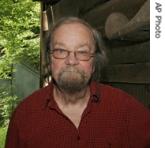
Donald Hall's own poetry series, the Eagle Pond Authors' Series at Plymouth State University (NH), billed today's presentation as Liam Rector reading from his new collection (The Executive Director of the Fallen World), to be followed by a discussion called Literary Generations. Rector's wife Tree Swenson, director of the Academy of American Poets, asked questions of the two men.

After Hall provided a number of memories of poets "of his generation" and posed them as reacting against the free verse of the modernists (a stance he said they all forsook at some point as they wrote in their own variants of free verse), he moved into recollections of meetings with T. S. Eliot and Ezra Pound. The Paris Review, he said, invented the contemporary author interview presented "as a play" in format, and called him into the adventure when it decided to move out to poets as well as novelists.

To Donald Hall's vision, his generation's iconic poems include Philip Levine's "They Feed They Lion." Hall asked Rector (who directs the MFA program in poetry at Bennington College and who was born in 1949, a "boomer"): "But Liam, your generation in poetry -- what have you done?"

Rector was silent a moment, then replied, "I don't think we've done that much -- there are no signature poems from this generation comparable to 'They Feed They Lion.'"

With this statement, Hall immediately agreed.

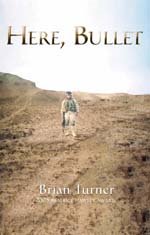
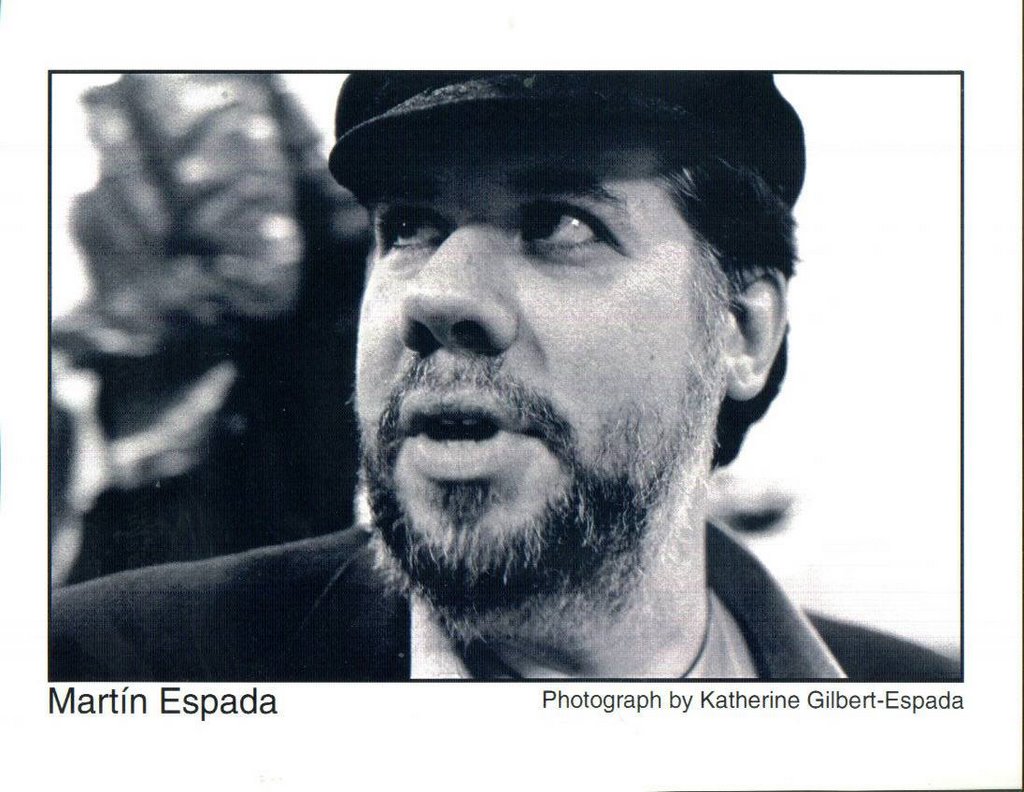
I can't agree. And I have a few candidates to offer for "signature poems": Brigit Pegeen Kelly's "The Peaceable Kingdom"; Carolyn Forché's "The Colonel"; Eric Pankey's "Reliquaries"; Martín Espada presenting "En la calle San Sebastián"; Anne Marie Macari's "Mary's Blood"; several by Mark Doty and Billy Collins; "Here, Bullet" by Brian Turner (although that may be of the next generation).

Suggestions? Arguments? Further discussion?

Thursday, November 02, 2006

The Poetry of Language: Ilan Stavans

Scrambling for pen and notebook, I missed the exact words, but the gist of what Ilan Stavans said casually last night -- before beginning his stunning lecture on dictionaries, Spanglish, and why bilingualism is an American paradox -- was this: The finest poets are the ones who cut to the heart of the language. They are the ones who know how to display the riches of the tongue.

Stavans writes over a wide range (two novels, eleven books of nonfiction) but is not a published poet. He is instead a reader of poetry. Moreover, he straddles two areas of expertise that draw on his personal and linguistic background as a multilingual Latin American Jew who, upon arrival in the United States, embraced and appreciated and analyzed the diversity of speech in America (north and south). He has a strong sense of story, collects the Jewish ones, and lectures vividly without notes.

Last night's talk was "On Dictionaries." Consideration of the Academie Française, Dr. Samuel Johnson's dictionary of the English language, and the Oxford English Dictionary, as well as Noah Webster's early American one, led Stavans directly to his own work with the emerging tongue that he calls Spanglish (he's published a dictionary of it). He points out that the 42 million Latinos in the U.S. are learning English at the same rate as any other immigrant group -- but that, in part because of the waves of immigration, they are not giving up their native language. Spanglish is hence a wonder of what's now called code switching and code mixing, zipping from one tongue to another as the topic and meaning fit better there (and occasionally to hide what one is saying from others, as immigrant parents have often done in the past!).

Moreover, digging into how the English language itself is going to change in our newly "global" world, Stavans asserted that "No language is ever pure, no language is ever static; they need to improvise. Just like jazz, they need to be contaminated."

He wasn't "going" into bilingual education in his talk. An audience member popped the question. The political insight that Stavans shared at that moment hits at the hypocrisy and poetic poverty of monolingualism (which, as one bumper sticker declared, "is curable"). Stavans said:

"In this country, if you speak two languages, such as Spanish and English, and are a member of the upper class, you can get a Rhodes scholarship. If you speak the same two languages and are a member of the lower class, you will be penalized."

Tuesday, October 24, 2006

Poet Sydney Lea Reads New Work


Newbury, Vermont, poet Sydney Lea is a dedicated outdoorsman (yes, that means sometimes hunter, but mostly these days just tramping the hills with a dog or two), Dartmouth professor, and author of some of the best collections of New England narrative poetry. His PURSUIT OF A WOUND was one of three finalists for the Pulitzer in 2000, and his eighth collection, GHOST PAIN, dips into the effort of "recovery" while also nailing the conversations of living in Vermont, word by word by heart by soul. Most recently, Story Line Press brought out a collection of his essays, A LITTLE WILDNESS: SOME NOTES ON RAMBLING. It's a perfect companion for this season of the year, when the flaming leaves have left the northern hillsides and "stick season" marches across the slopes, wet and gray and barren.

On Friday November 3 at 3:30 p.m., at the Grace Stuart Orcutt Library on the St. Johnsbury Academy campus (see www.stjacademy.org for directions or call Jean Fournier, library director, at 802-751-2100), Lea plans to read from his newest work, as yet unpublished but with the working title AMERICAN DREAM. He noted last weekend, with a wicked tilt of the head, that this collection is "more political." That may be the enduring legacy of the Bush Administration's actions: that poets, even the ones who'd normally immerse themselves, like Robert Frost, in the struggles of the hill folks and the mysteries of the land, are moved into the arena of American assertion.

More on this collection after Syd reads from it -- better yet, come hear him in person.

Sunday, October 22, 2006

Joe Gunther, Vermont Bureau of Investigation

Congrats to Archer Mayor, whose 17th Joe Gunther mystery, THE SECOND MOUSE, drew a warm and enthusiastic mention from New York Times crime fiction critic Marilyn Stasio in today's Book Review section. For a longer review of the book, check our web site tomorrow (www.KingdomBks.com) -- and mark your calendar for Monday November 13, 4 p.m., when Mayor visits Kingdom Books for conversation about the latest in Joe's career (and signing books, of course). We have most of the other Joe Gunther series here, signed, in case you're missing any. To reserve copies, drop an e-mail to us so we order enough... they go like crazy! Fun, good reading, smooth plotting, and set in Vermont -- perfect.

Friday, October 20, 2006

Brian Turner, HERE, BULLET: and the PEN Award


When I first thumbed through HERE, BULLET, the notable first collection of poetry from Brian James, I stumbled and had to sit down. This isn't amateur hour from the war, was my startled thought -- it's highly professional poetry from a poet who knows the field.

And that, in turn, is why I am delighted this evening to pass along news that emerged October 13, but just caught up with me: The PEN USA Literary Award for Poetry is going to Brian Turner's HERE, BULLET. The award ceremony takes place in December. It will probably wreak havoc with Turner's schedule, as he is much in demand for readings and interviews.

In a short, pithy essay for the New York Foundation for the Arts site (http://www.nyfa.org/level3.asp?id=418&fid=6&sid=17), Turner describes himself as having been an "embedded poet" in Iraq. Veteran already of an MFA program, he lived in South Korea for a year, then entered the armed forces (U.S. Army) for seven years (the same as the apprenticeship period for which the biblical Jacob labored to win his wife; hmm). Part of the service took place in Bosnia-Herzegovina with the 10th Mountain Division; the most significant, in terms of HERE, BULLET, was the final year, spent as a buck sergeant in Iraq.

This poetry is finely crafted, resonant with form, carefully shaped lines, spare language and rich images. The war reports are clean and clear; sorrow, shock, pain, and fear emerge without headlines or italics. There isn't even a lot of blood, although there is plenty of death. My current favorite example of this is the final stanza of "Hwy 1," which, like many of the poems, bears an epigraph from Arabic poetry (Turner determinedly immersed himself in poetry, people, language: "embedded" at its most complex.) The opening line of the poem is, "It begins with the Highway of Death," and the final stanza is:

Cranes roost atop power lines in enormous
bowl-shaped nests of sticks and twigs,
and when a sergeant shoots one from the highway
it pauses, as if amazed that death has found it
here, at 7 A.M. on such a beautiful morning,
before pitching over the side and falling
in a slow unraveling of feathers and wings.

Another facet of this collection to treasure is that despite the clearly personal impact, Turner hasn't tried to turn his sequence of poems into a time-labeled narrative of his year in Iraq. Only the reflective "Night in Blue," near the end of the volume, asking (among other hard questions) "Has this year made me a better lover?", suggests the transition back to civilian presence in a safer landscape. And instead of "me me me" there is a quiet unfolding of layers, of friendships, of loss and growth.

The PEN USA Literary Awards honor more than poetry; they honor a sense of outreach and commitment to the people of a beleaguered planet. Turner's HERE, BULLET is hence the obvious and valued selection for the 2006 award.

Tuesday, October 10, 2006

Sweeney St. George in the New York Times

Congrats to Vermont author Sarah Stewart Taylor, whose fourth Sweeney St. George mystery, STILL AS DEATH, earned a long complimentary paragraph from Marilyn Stasio in Sunday's New York Times Book Review section. Brava!

Crown Ring Press, Sara Owen


One delight of collecting poetry, mysteries, and fine press work is to catch something great in the first book, the one that others aren't yet aware of -- but that sends shivers down your back as you say, "I really LIKE this one."

So here's the good news: There's a brand new press with its first gorgeous offering, and Kingdom Books has three copies available. The press is Crown Ring; the book artist is Sara Owen; and her "fine press genealogy" goes directly to the Univesity of Alabama book arts MFA program, run by Steve Miller (studied with Walter Hamady; founde Red Ozier Press; now he's Red Hydra Press in Alabama).

And the book is, Visiting Green Mountain. Printed in the winter of 2006 at U of A, in Walbaum type (letterpress) on Rives Heavyweight, it's a nostalgic mini-memoir of family, of Vermont, and of trains. Covered in deep red with black type, neatly stitched with golden cord, the front free endpages are chestnut brown and the title and closing pages (ivory) are pictorial. But the stunning heart of this limited edition (only 75 copies) is a double-width centerfold that spreads out to the width of four pages. I'll post images of the cover and centerfold here. It's $45 plus $4.25 postage (Priority Mail).

This is Sara Owen's first book. I look forward to adding subsequent ones ... and to enjoying that satisfaction of having spotted the first, when it was still a relative unknown.

Saturday, October 07, 2006

Writers, Readers, Voices: A Remarkable Festival of Books


The Brattleboro Literary Festival began Friday evening, and continues through Sunday October 8. From the strange coincidence mentioned at the opening of Friday's kickoff reading, a haunting and powerful spirit of conversation across cultures and languages fluorished.

Here's the coincidence: Both Ilya Kaminsky and Martín Espada, the poets reading that night, became Legal Aid lawyers and worked for the rights and lives of those whose voices are rarely heard, and rarely strong enough.

Like many a coincidence, when you delve into this one further, it starts to make astounding sense. The two poets speak, in their writing, not just for themselves but also for those wounded and threatened. Kaminsky's award-winning book DANCING IN ODESSA begins with "Author's Prayer," opening:

If I speak for the dead, I must leave
this animal of my body,

I must write the same poem over and over,
for an empty page is the white flag of their surrender.


And Espada, in his newly released THE REPUBLIC OF POETRY, speaks for Chile and its people; for the beloved poet Pablo Neruda; and for the lost, the disappeared, the dead. From "The Soldiers in the Garden," set outside the home of the dying Neruda:

For thirty years
we have been searching
for another incantation
to make the soldiers
vanish from the garden.


Framing his reading Friday with poems from his earlier book ALABANZA, Espada also gave voice to veterans of the Vietnam war, in the context of the enduring wars in the Middle East.

Translation weaves its complex patterns through both poets' lives, also: Espada, a New York Puerto Rican, learned his Spanish as a second language and now it's part of his heart, just as his heart, corazon, is part of a throbbing, drumming voice of poetry that echoes the rhythms of Latin America.

And Kaminsky, who came from the Ukraine to the United States as a small boy and who "had to learn English or die," proclaims his poetry with both the heavy accent of his birth language and the rising call of one who has long ago ceased being able to hear "normally."

So one of today's extraordinary moments was Espada reading multilingually with Iranian poetry translator Niloufar Talebi. Talebi, lead poet in the afternoon's "Hearts of Spain" exploration of poetry and the Spanish Civil War, is engineering a global translation effort for the poems of Iran -- which has its "disappeared" just as Chile and Nicaragua and many Caribbean islands have experienced. Her presentation of Neruda quickly grew to include Espada and his booming voice, driving the Spanish words into the air like hammered beams, strong, true, visible. When Espada later commanded the podium on his own, working with the words of Vallejo, Hernandes, and more (including some of his own translation work), the packed room shook with his vehemence.

And one of last night's unforgettable visions was the four-way poetic performance of (1) Ilya Kaminsky, (2) audience members holding and sharing with each other copies of DANCING WITH ODESSA that Ilya provided to help them understand his voice, (3) a Sign translator for the deaf moving Kaminsky's poetry from the page to her hands and face seconds before Kaminsky spoke the words, and (4) a second translator for the deaf, picking up the text from her collaborator and echoing it, with dramatic gestures and expressions, for those able to lift their eyes from the printed pages.

Let not the distance in time and place, from the Spanish Civil War to today's Vermont festival, be considered so very wide as to defy translation. With Brian Turner, soldier/poet and author of the acclaimed HERE, BULLET also giving voice to the poetry of 1938 and 1939 Spain came the reminder that this war and the war in Iraq, where Turner served, share events, mishaps, shapes on the tongue and in the mind's eye, courage and love, and the same abiding and terrible losses. Turner's poem "Body Bags" begins with an image from any war, from all:

A murder of crows looks on in silence
from the eucalyptus trees above
as we stand over the bodies --


And Turner frames his sections of poems with much older work from the Qur'an and other translations from the Arabic: such as, "Do they not see the birds above their heads, / spreading their wings and closing them?"

To share all this -- ah, poetry. Ah, the festival. Ah, the poets. Or as Kaminsky wrote of World War II (multilingual) poet Paul Celan:

He writes toward your mouth
with his fingers.


[N.B. Espada reads at the St. Johnsbury Athenaeum on Sunday October 8 at 3 p.m. -- free and open to the public, and fully accessible. I would drive at least 200 miles again to hear him read.]

Friday, October 06, 2006

Brattleboro Literary Festival: Hearts of Spain, and More

Vermont is one of the "whitest" states in the nation, and tourism promoters encourage taking this to mean that the state is filled with white-haired wise elders in red-and-black checked wool jackets and jeans, varied by the addition of barn boots or flowery pocketed aprons.

This year's Brattleboro Literary Festival reminds us that there's depth and diversity way beyond the tourism imagery -- thank goodness!

Featured at the festival, which begins tonight, is poetry rooted in Russia, Spain, Latin American, and Iran. This evening's 7:30 reading kicks off the weekend with Martín Espada (sometimes called THE Latino voice of his generation) and Ilya Kaminsky (not yet as noted as he ought to be; a remarkable young Russian poet who's lived in the US much of his life but who speaks from another drama entirely).

Saturday, at 11:45, poet Niloufar Talebi brings the Iranian experience forward, thanks to The Translation Project. And the 3:15 panel "Hearts of Spain: Poetry of the Spanish Civil War" provokes fresh vision through readings by Espada and also the newly noted poet Brian Turner, author of Here, Bullet!

These are my top picks from a rich weekend schedule that also includes poets Maxine Kumin and Chard deNiord, novelist/musician Madison Smartt Bell, Vermont fiction crafters Mary Gaitskill and Jeffrey Lent, and on Sunday an appearance by Jamaica Kincaid.

For a full listing of events, check the web site: www.brattleboroliteraryfestival.org


Reminder: Martín Espada reads in St. Johnsbury, through sponsorship by Kingdom Books, on Sunday October 8 at 3 p.m. at the St. Johnsbury Athenaeum. All events are free and open to the public. We've posted a review of Espada's new book, The Republic of Poetry, on our web site, www.KingdomBks.com .