Sunday, May 29, 2011

Connecticut Crime Novel: WHO WROTE THE BOOK OF DEATH? by Steve Liskow

This is a really good mystery, hidden in a silly cover and under a completely wrong title. It's published by Mainly Murder Press, a relatively new publisher in Wethersfield, Connecticut -- and the "print-on-demand" publishing, coupled with fairly amateur page layouts, could convince you that this is more or less a self-published book, presumably because the author wasn't yet good enough to make the big leagues.

Wrong.

WHO WROTE THE BOOK OF DEATH? is going on a very special shelf here at Kingdom Books: the shelf where "first books" from authors we're betting on get stashed. Sure, this (probably retired) high school teacher has been writing short stories all his life, and has some manuscripts tucked away, but this is his first book-length publication.

Plot, characters -- oh, and genre. This is a "romantic" mystery in the sense that the main characters have love issues, and resolve them at about the same time that the death threats and criminal behavior resolve. Gorgeous romance author Taliesyn Holroyd is afraid for her life, and shows up at the office of private investigator Greg Nines, in urban Connecticut, looking for security for her upcoming author tour. The only thing is, that's clearly not her real name ... she's got to be hiding something about the threats ... and her level of fear is way higher than the situation seems to call for. Nines, not quite three years sober after a terrible drinking problem that followed his pregnant wife's death while he was still a cop, knows his stuff, and he's absolutely on target to tag "Tally" as a liar. Yet when his researcher partner, Svetlana Thirst, speed-reads the new potential client's work, she declares it's got fresh strengths -- this author is worth protecting.

While the violent attacks on "Tally" multiply, secrets in the household unfold, and Greg Nines has to face down some of his own hauntings before he and his police-force friend Art can see the case clearly enough to figure out how to interfere with a determined murderer targeting this client.
"...Someone wants to kill me." Her voice spirals out of control, and Greg leads her into the hall, Art a step behind them. Greg wraps his arms around her and holds her until she knows she won't scream. His stubble prickles her cheek.

"Where were you when this happened, Ms. Holroyd?"

"On the couch downstairs. Jim and Greg, Mr. Nines, went upstairs, and a minute later I heard Jim fall, and Greg shouted at me not to touch anything."

"Do you have any idea who would want to hurt you?"

[She] feels like she needs the right answer. "Nobody. Well, nobody I know. I'm working on a book, maybe someone's worried about that. We, I'm, using a real person as the basis for a character, but nobody ..."

... "We might as well start somewhere," Art says. "What is his name?"
I skipped lunch today in order to finish the book -- yep, several kinds of suspense, quick movement in the story, believable motives and changes ... Hey, I felt like I'd won a bet with myself, finding a bright new mystery worth reading and enjoying, against the odds of the physical book's appearance.

That cover? No, there are no skeletons or ghosts in the book, and no forensic anthropologists, either. The title? Nope, rockk-n-roll isn't in here either, although the author likes it (www.steveliskow.com). And it's not a caper mystery, not light-hearted, not funny.

It's a good traditional whodunnit with unusual characters. Credit to Mainly Murder Press for spotting a well-done book and getting it into print. I see no suggestion that it will be part of a series, but Liskow says on his website that he's in fact developing a series in another setting (Detroit). I'll be watching for it.

Friday, May 27, 2011

Storm Damage -- In the Neighborhood

I'll post some reviews later this evening, but you can see from the images that it's been a busy day here at Kingdom Books. Last night we had thunderstorms for about seven hours, and along with the mothball-size hail (which shredded the poor rhubarb leaves), we had strong winds and way too many inches of rain. We really do have a road here, not a riverbed, but you can't see it that way today. Cross your fingers for this evening -- more storms expected.

Saturday, May 21, 2011

Deborah Crombie: Delicious British Police Mysteries with a Twist

Deborah Crombie
If you're smart in this business, one of the ways you learn is by listening to your clients. One of ours, an ardent collector, has had us chasing down lovely copies of Deborah Crombie's police procedurals for months now. So ... I made time to read one.

The one I read this weekend is the third in the series, LEAVE THE GRAVE GREEN (1995). Scotland Yard, at the request of a wealthy and influential couple whose son-in-law has just died, sends Superintendent Duncan Kincaid and Sergeant Gemma James to see whether there's been foul play. Murder is almost immediately likely, and Kincaid and James spread their resources, often each investigating solo, to track down the motive and killer. (The means, unfortunately, is all too close: a dangerous lock of the Thames River.)

Oh, lucky me! I loved the book! It wasn't just the evocative descriptions of British countryside tucked amid the rapid plot twists, or the intelligent insights into what makes families work and not -- how they fall apart, and how people gain a reason for taking a life. No, it's the existence of a constantly tightening thread of tension between Kincaid and Gemma James, echoing and reflecting the discoveries among the people being investigated. Crombie knows how work and love and despair can braid and bind. And in spite of a solved crime, the book's finale is heart-rending.

Fortunately, I don't have to go weep into my hanky: There's a fine list of Crombie's novels ahead of me, assuring me that somehow the characters move onward from their losses and pain. (Since this isn't a recently translated Scandinavian crime series, I also don't have to be concerned that the pain will simply deepen from book to book, ending in a morass of darkness.)

Here's the list -- oh, and by the way, Crombie, like "Charles Todd" (the son and mother writing team), loves the British and Britain, but started life in the United States and has returned to live here, in Texas (the Todds are on the East Coast). Her next novel, No Mark Upon Her, is scheduled for February 2012 in the US -- and sooner summer 2011 the UK. Check her website for sample chapters and more.
The Duncan Kincaid/Gemma James Novels
1. A Share in Death
2. All Shall Be Well
3. Leave the Grave Green
4. Mourn Not Your Dead
5. Dreaming of the Bones
6. Kissed a Sad Goodbye
7. A Finer End
8. And Justice There is None
9. Now May You Weep
10. In a Dark House
11. Water Like a Stone
12. Where Memories Lie
13. Necessary as Blood

Friday, May 20, 2011

Diversion: Marvelous Poetry from Michael Chitwood

Michael Chitwood
There are always reasons for falling behind on the stack of books ... family, work, the garden (ah, the garden! daffodils collapsing in exhaustion, parsley a bold green, pea plants round-leaved and childish, too many dandelions but how wild their golden heads). Then I make time to open one and ..

Omigosh.

Michael Chitwood's collection POOR-MOUTH JUBILEE (Tupelo, 2010) is a marvel of fresh language, bright new images, and incisive portrayal -- of grief, loss, healing, life. I even love the section titles, like "Never Take Your Own Advice" and "In God We Trust" (yes, think of dollar bills). From the loss of a friend's life by motorcycle accident, Chitwood pinwheels out and in again, painting and proclaiming.

Here's a segment that I especially like from the poem "Self-Help":
Great-Great-Grandpa Self,
The yawp is loosed.
We are talk.

In the street, in bedrooms,
in elevators, in the great stadiums,
in our cars as we plunge into sunlight,
we are not without voices,
saying and said to.
But it is the voice of the Great Horned Owl that then slices into the poem, then a crying woman, then the Self again, followed by a long sequence of couplets like "At the Chapel of the Chained Ankles / people have left pictures" -- prayers for healing speed across the page, disguised within precise images.

Whitman and his "yawp" return later -- so do many forms of considering what an "accident" is, as well as the connections among us. Chitwood, author of six previous poetry collections, has caught me. More, please, more.

Quick note: I'm also delighting in another 2010 Tupelo Press book, THE LAKE HAS NO SAINT by Stacey Waite -- rumbling sentences chasing each other through prose poems and shaped blocks of text, probing gender, mother and father, more. Great to know this press keeps picking winners.

Eliot Pattison at Kingdom Books, July 31 -- And Calendar Reminder for June 11 and June 25

We're excited to welcome Eliot Pattison to Kingdom Books again -- this time, on the evening of Sunday July 31. Mark your calendar for a thoughtful and intriguing discussion with this author of two mystery series and the new postapocalyptic detective novel ASHES OF THE EARTH.

Also, if you're in New England or can get here, please mark your calendars for two Saturday morning (11 a.m.) author events: Dave Zeltserman with his quirky, dark crime novel OUTSOURCED will be here June 11, and Lea Wait is coming from Maine to present her wonderful "traditional mysteries" -- the newest is SHADOWS OF A DOWN EAST SUMMER -- on June 25.

We're glad to reserve books for signature in advance, and we ship to just about anywhere on Earth.

Thursday, May 19, 2011

HUNTER'S WORLD, Fred Lichtenberg: "We have another situation."

Police Chief Hank Reed could be working in a bigger zone, but he's at home, more or less, in the close-knit Long Island (New York) community of Eastpoint. Crime is minor, and Hank and his wife Susan have comfortable roles in town.

But that all changes in a matter of hours, when the murder of romance columnist and secret artist John Hunter falls into Hank's lap. It's not just the violent crime that shakes things up. It's the paintings Hank finds: lewd ones, of Hunter and some of the local married women. Even Hank's wife becomes a viable suspect in the killings, and it looks like the 15-year downhill slide of their marriage is about to hit a nasty bottom indeed.

The plot twists of HUNTER'S WORLD kept me reading eagerly, in spite of a not-so-good fit of my taste and the author's style. Written entirely in first person, Hank's present-tense narrative of what's going on wasn't what I was looking for. It shows what a strong crime novel this is, though, that I couldn't put the book down. Here's a sample of what bugged me:
I'm about to shovel a spoonful of peach cobbler in my mouth when my cell phone vibrates on the table. I scowl, polish off the contents of the spoon, then reach for the phone.

It's Kate, my secretary. "I'm not interrupting your lunch, am I, boss?"

"I'm finishing my dessert," I say, choking on a piece of peach.

"I thought you were on a diet, Hank," she admonishes. "Let's see, you're at Salty's and you're in the middle of a peach cobbler."

No one can hide in this town.
And yet that's almost a match for the classics of detective fiction, isn't it? And Kate's call sends Hank back to the crime scene to find a woman claiming to be the victim's sister. Meanwhile his wife is both enraged and grieving, thanks to his accusations. And the artwork that he'd hoped to keep out of public view is coming out of the closet -- "As I watch my deputies nervously lift the paintings off the floor, their silence and glum expressions tell me that the proverbial shit is about to hit the fan."

Lichtenberg spins a tight and compelling plot, and especially for eager readers of dark detective series, this book is well worth adding to the shelf. Although the author, a native New Yorker, now lives in Florida, he's got plenty of the city in his writing. Check his website, http://fredlichtenberg.com, for more on the book, the author, and his upcoming tour. Official release date for the title is June 8, although some bookstores may have it sooner.

Monday, May 16, 2011

International Noir: KISMET, from Jakob Arjouni

Hurrah for the passion of translation that's bringing eccentric characters and fresh predicaments to the crime novel. And another hurrah for Melville International Crime, an imprint of Melville House Publishing (born in Hoboken, NJ, now living in Brooklyn, NY) -- where translations are erupting faster than seasons.

KISMET, by Jakob Arjouni, had its US debut in 2010 from Melville Crime. The translator from the German is Anthea Bell, who filled the gap in a series that's been otherwise translated by US poet Anselm Hollo, well tuned to the quirks of this unusual detective. Kemal Kayankaya has a Turkish name and heritage, but he was raised by Germans in Frankfurt. Thanks to his name, he's well acquainted with racism in today's Europe. Maybe that's why he bonds so readily with friends who've endured being "different" -- like the Brazilian restaurant owner Romario.

In fact, it's Romario's fault that Kayankaya and his old buddy Slibulsky are hiding in a china cupboard in the restaurant, wearing bulletproof vests, sweating, and inhaling each other's most potent bodily fragrances ... while waiting to protect Romario from a shakedown by a newly arrived set of thugs whose ethnic sort hasn't yet been determined.

What the thugs are, though -- silent, faces powdered in white, blond wigs, white suits -- is members of the Army of Reason: brutal, swift, and giving very few extra chances. Poor Romario lost a thumb to the thugs at their first visit. So is it any surprise that on this second try, the violence escalates immediately to deadly? Well, it's a surprise to Kayankaya. Private detective that he is, killing criminals hasn't come up before. Or disposing of their bodies, either.

This gritty, urban, and somehow very funny detective novel sorts out Bosnians from Croats, native Frankfurters from Berliners, and men from women, frustrating and delicious though they can all be. I'd hate to mention how many "scheduled chores" somehow slipped off my list while I burrowed into KISMET. Trying to recall what the word means? It's Turkish (from Arabic) for fate, or destiny. What could this string of uncomfortable situations bring out for Kayankaya? Is it destined to end as darkly as it's begun?

KISMET is the first Arjouni crime novel that Melville International Crime brought out, but there's more of the series already available: Released in February of 2011 was Happy Birthday, Turk!; coming in June are More Beer and One Man, One Murder. (All three of these are translations by Anselm Hollo.) If you like the dark detective and a hearty dose of entertainment, you'll probably want them all -- I know I do, and so will Dave when he gets started.

A note for collectors: Thanks to the helpful folks at Melville House Publishing, I think I've got the sequence of US publishing for the Arjouni crime novels more or less straight. But there are a lot of varied titles: One Man, One Murder was previously released as One Death to Die (a hardcover on the Kingdom Books shelves), and More Beer was earlier titled And Still Drink More.  Don't get me started on the UK releases (where Kismet came out in 2009), or the German ones of course. And technically, KISMET is the fourth in the Kayankaya series. Sigh.

About the author: In Europe, Jakob Arjouni (born in Frankfurt in 1964) is noted for his award-listed novel Magic Hoffman. He's the son of a playwright. And his four books about private detective Kemal Kayankaya are the most popular, and have been awarded the German Thriller Prize. He lives in Berlin and Languedoc.

Sunday, May 15, 2011

Small but Mighty (and Affordable): A Summer Writing Program Worth Noting

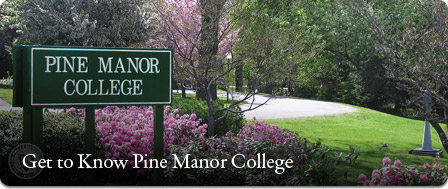
Dennis Lehane is a July writer in residence at Pine Manor College, the small but well-focused college just outside Boston. If you sign up for this new program, you might see him as you stroll the campus ... but I have to confess, if I had these courses close enough to me to audit, my mind would be entirely on my classwork, and on the great writing that I know would emerge! Here's what Pine Manor asked me to pass along:

PINE MANOR COLLEGE INVITES LOCAL WRITERS
TO AUDIT GRADUATE-LEVEL CREATIVE WRITING CLASSES

[Chestnut Hill, MA, May 2011] Pine Manor College is pleased to announce that a select number of graduate-level creative writing courses will be open to the public for auditing during the summer residency of its Solstice MFA Program, scheduled from July 8–July 17, 2011.

Classes are open to serious writers working at all levels; auditors are encouraged to complete the advance preparation requirements for any MFA class they wish to attend. The registration fee is $25 per course for Solstice graduates/$35 per course for the general public; the deadline for enrolling as an auditor for the summer 2011 Residency is July 1, 2011.

For course descriptions, our audit policy, and a downloadable registration form, go to: http://www.pmc.edu/mfa-classes-for-audit

Summer 2011 MFA classes that are open to the public include:

Fiction:
·        The Political Novel
·        The R&R Moment: Recognition & Reversal
·        Point Of View In Fiction
·        The Slant-Wise Mirror: Creating Speculative Fiction Images That Reflect Reality

Creative Nonfiction:
·        The Experimental Essay: A Class For All Genres
·        The Travel Essay As Gateway To Sacred Space

Persona: Across Genre
·        The Multiple Selves Within Me: Narrator As Persona In Literary Nonfiction
·       Persona: Writing About Someone Other Than Yourself (Poetry & Fiction)

Poetry:
·        Be Bold! Revise!
·        Introduction To Prosody
·        About The Music Inside Your Lines

Special Guest Q&A:
·        Q&A with three-time Newbery Honor Winner Jacqueline Woodson


ABOUT SOLSTICE & PINE MANOR COLLEGE

As an undergraduate institution consistently ranked among the most diverse in the country, Pine Manor College emphasizes an inclusive, community-building approach to liberal arts education. The Solstice MFA in Creative Writing reflects the college’s overall mission by creating a supportive, welcoming environment in which writers of all backgrounds are encouraged to take creative risks.

Impressive Debut Crime Fiction: THESE DARK THINGS, Jan Merete Weiss

Last week, Soho Crime finally released the debut crime novel THESE DARK THINGS by Jan Merete Weiss. I was fortunate to get an advance copy from the press some months ago -- and after reading it, immediately e-mailed editor Juliet Grames to say how glad I am that Soho found this author. Maybe only a publisher that swims internationally would have caught hold of it, because Weiss grew up in Puerto Rico, lives in New York, and set her book in ... Naples, Italy.

And it's not a book that the Naples "Chamber of Commerce" will adore. During a city argument with a local -- and regionally connected -- crime family, the Camorra, the city reeks of trash, piled all around. A brutal aspect of the plot is that citizens who tackle the trash on their own, attempting to clean up around their homes by hauling trash out of the way themselves, risk an instant end to their lives. And in this mess, Captain Natalia Monte of the  Carabinieri gets called to deal with the corpse of a beautiful college student, discovered among stacks of bones in a church crypt.

Natalia is a team player with a carefully quiet past episode that comes up early in the murder investigation as she presses to discover what the college student had actually been doing, and who she'd been doing it with, at the time of the death:
Natalia too had been close to completing her doctorate, until the same Dr. Marco Lattanza pressed against her as they rode along in an elevator at the conference they were attending in Rome. She pushed him away, refusing to sleep with him. A month later, he scrawled Indefensible ["Rejected"] across her black-and-white title page in blood-red ink.

Too ashamed to tell her parents what had happened, for a year she lived at home, not doing much of anything. It was [her friend] Mariel who'd finally rescued her from depression, encouraging her to join the force.
Now that episode gives Monte some insight into how Teresa Steiner could have become trapped in a relationship with an organized crime leader. Or at least, that's how it seems at first. Monte's pursuit of the truth will lead her through the city's catacombs, and to converse with a blind monk somehow involved.

Monte's persistent investigation, pressing against the crime family in the process, puts her at great risk. But in a sense she's reclaiming something stolen from her as she insists on pursuing the case. Weiss gives her a vivid personality that pairs strength with vulnerability, and political savvy with romantic uncertainty. And the well-spun plot plays out among powerful descriptions of Naples -- here's one of my favorites, from late in the book:
In among the restored facades of their gentrified domiciles and offices were slummy residences of the poor. Their kids played in the streets, beneath endless lines of drying laundry strung across the narrow lands and blind alleys, and skateboarded along the well-maintained streets. Bent old women trudged past the cafés, carrying groceries home, grimy youngsters in tow. A woman openly sold tax-free contraband cigarettes and lottery tickets at the corner, and two African peddlers offered knockoffs of designer handbags and watches. A young man sold gelato beneath a cheerful red-and-white-striped awning. It was  a fashionable area reclaiming its past splendor, made all the more popular by its views of the water.
Pay attention, amid all this distracting scenery, to Monte's own strength, because it's the best clue to how the case finally resolves. Even with this nudge, though, I'm betting most readers will be surprised by Weiss's final twists. I hope this is the start of a powerful series -- and once again, hats off to Soho Crime for bringing a new voice forward.

Tuesday, May 10, 2011

Taylor Stevens, THE INFORMATIONIST: Vivid Debut Thriller, Africa, Female Protagonist ...

I got lucky in two ways when I settled down to read one of the hottest spring thrillers for this year, THE INFORMATIONIST. Lucky thing #1: I didn't read any of the reviews. If I had, all the casual references to "like Lisbeth Salander" would have driven me nuts. Lucky thing #2: I didn't read anything about the author before starting the book. That's good, because this author's life story is a thriller that would have distracted from the story. And it must have just been luck, because usually I know a lot about a book (and author) before I make time to read it!

Vanessa Michael Munroe, known to her friends as Michael, doesn't just Google for data. She's highly skilled in gathering the real thing -- most often, by going to the nation, corporation, or other entity to be investigated, and digging in, in person, using her wide experience of contrasting cultures to grapple with what's really going on. As a result, she's a highly paid consultant, just completing an assignment in Ankara as the book opens. Her team -- an assignments and finance manager, an equipment genius, and others -- know her need for privacy, her addiction to action, and her fierce intellect. And they protect her as best they can. Unfortunately, the assignment calling Michael back to the US (after two years away) isn't as simple as it seems: a missing person trail, four years old, in West-Central Africa. There's good news, though: Any case this complex and multilayered has plenty of detail for Michael to process, and in days, she's further ahead on it than any other investigators have been.

Until it all turns violent, against her -- and the people she cares about.

Here are four reasons this smart, caring, and bitter protagonist is getting compared with Lisbeth Salander: She doesn't hesitate to use violence when needed; she surfs the Internet like a pro; she rides motorcycles; and she won't let anyone into her head.

But Michael has an emotional depth that Lisbeth can't expose; if there's something "wrong" with her, it's not Asperger's or any form of autism, but a more desperate haunting that probably comes from her (mostly unrevealed) childhood; and she's a leader, someone at home with a pack of her own, rather than living in the bitter isolation that Stieg Larsson's Lisbeth requires. This is a protagonist to identify with, in spite of all the differences from our own lives.

And that comes from Taylor Stevens, a self-taught author rising up from a near-incredible past to hammer out a top-notch thriller (modeling her work after Robert Ludlum). In the long run, I decided she's creating something close to Lee Child's Jack Reacher series, with more to lose and more to give ... and, because this is her first published book, a lot more uncertainty about what's coming next. I already look forward to the second Taylor Stevens book. Her Facebook page suggests she's now working on number three.

If you've got a moment, let me know where you think the best comparisons can be made on this one. I promise not to grumble if you say "Lisbeth Salander" after all -- if you've got a good reason.

Taylor Stevens
Do explore the author's website, and this poignant interview from the Huffington Post.

This and That: Stella Rimington, P. D. James, Edgar Awards

US cover
UK cover
With Stella Rimington's sixth book, RIP TIDE, scheduled for August release, this interview with this former Director General of Britain's MI5 recently caught my eye  -- it's short but includes a few details that interested me.

Also, here's a nice gem on how P. D. James broke into publication, and her best advice to newer writer.

Last but not least in this collection of bits from my virtual desk, here's the Edgar list, as announced two weeks ago by the Mystery Writers of America (MWA) -- handy to have at hand for this year's summer reading list.

BEST NOVEL
The Lock Artist by Steve Hamilton (Minotaur Books)
BEST FIRST NOVEL BY AN AMERICAN AUTHOR
Rogue Island by Bruce DeSilva (Tom Doherty Associates – Forge Books)
BEST PAPERBACK ORIGINAL
Long Time Coming by Robert Goddard (Random House - Bantam)
BEST FACT CRIME
Scoreboard, Baby: A Story of College Football, Crime and Complicity
by Ken Armstrong and Nick Perry (University of Nebraska Press – Bison Original)
BEST CRITICAL/BIOGRAPHICAL
Charlie Chan: The Untold Story of the Honorable Detective and his Rendezvouz with American
History by Yunte Huang (W.W. Norton)
BEST SHORT STORY
"The Scent of Lilacs" – Ellery Queen Mystery Magazine by Doug Allyn (Dell Magazines)
BEST JUVENILE
The Buddy Files: The Case of the Lost Boy by Dori Hillestad Butler (Albert Whitman & Co.)
BEST YOUNG ADULT
Interrogation of Gabriel James by Charlie Price (Farrar, Straus, Giroux Books for Young Readers)
BEST PLAY
The Psychic by Sam Bobrick (Falcon Theatre – Burbank, CA)
BEST TELEVISION EPISODE TELEPLAY
“Episode 1” - Luther, Teleplay by Neil Cross (BBC America)
ROBERT L. FISH MEMORIAL AWARD
"Skyler Hobbs and the Rabbit Man" – Ellery Queen Mystery Magazine
by Evan Lewis (Dell Magazines)
GRAND MASTER
Sara Paretsky
RAVEN AWARDS
Centuries & Sleuths Bookstore, Forest Park, Illinois
Once Upon A Crime Bookstore, Minneapolis, Minnesota
THE SIMON & SCHUSTER - MARY HIGGINS CLARK AWARD
The Crossing Places by Elly Griffiths (Houghton Mifflin Harcourt)

Sunday, May 08, 2011

THE FIFTH WITNESS, Michael Connelly: Sequel to THE LINCOLN LAWYER

US cover
Don't start telling me about the movie for The Lincoln Lawyer, please! Due to "life on life's terms," we're late getting to the theater; I think Dave is planning to fit this into tomorrow evening. We're both looking forward to seeing how the film folks have adapted Michael Connelly's 2005 courtroom crime novel that brought Mickey Haller to life.

Meanwhile, the cynical defense attorney -- who'll do anything for a client's case, but can't quite believe in the innocence of any of the people walking in the door -- has seen other appearances, in The Brass Verdict and The Reversal. (He also has a small appearance in 9 Dragons, a Bosch novel.) And this spring, Haller returns in THE FIFTH WITNESS.

UK cover
Here's the basic situation: Haller's criminal defense business has gone to heck during the recession, but he's found a new and profitable niche: defending people from foreclosure on their homes. It's a hot area with plenty of action, and his team's actually grown. Of course, he operates from the back seat of his Lincoln Town Car, with his driver Rojas -- but adding a "junior lawyer" to the team, young Jennifer Aronson, is changing how Mickey feels about making do without an office. It's the disappointment in her otherwise enthusiastic face that gets to him. Maybe a "real office" with desks and doors would be appropriate after all.

Aronson, quickly nicknamed "Bullocks" by Haller, turns out to be a pretty sharp lawyer, a good addition to the firm. But naturally she's idealistic -- hey, she's new! -- and the glow in her eyes when Mickey takes on criminal defense case after all, well, it's enough to keep Mickey thinking about the opinions of the two women who matter most to him: his daughter Hayley, and his ex-wife, Maggie McPherson (better known in her crime-fighting role as Maggie McFierce). Actually, they already know about the case, which involves a foreclosure client that Mickey's already worked with, Lisa Trammel. And it's no surprise that Maggie knows -- but Hayley?? Mickey Haller's not ready for that kind of discussion with his fourteen-year-old.

When I'd read about half the book, I said to Dave, "It's not as intense as I've come to expect from Connelly's books. And it's missing the thing I like the most in a good crime novel: conflict within the investigator's life."

Well, I was wrong. Mickey Haller's life becomes tightly fastened to how he handles the murder case and the witnesses involved in Judge Perry's courtroom. And although there aren't many "dark scary risky" scenes, what's at stake for the former "Lincoln Lawyer" is everything he's come to value, as he's sobered up and come to grips with who he is.


The more I think about it and mull over how Connelly draws all this together -- from the need to ignore whether a client is guilty, to how you treat a potential witness, to being the best at the research end of a case, and to what family means -- the more sure I am that Connelly's invested the best of himself in here, as well as the best of Mickey Haller.

Australia/New Zealand cover
Two extra plusses to mention: The hardcover includes the first chapter of Connelly's next book, The Drop, due to release in October and featuring Mickey Haller's opposite number, Harry Bosch.

And on Connelly's website right now, there's a free download available of Eric Clapton singing "Judgment Day," as well as Connelly's own interview of the singer that Mickey Haller listens to while riding in his Lincoln. Fun!

Look for more here tomorrow, pushing further along the line of "what really matters in life?"

Saturday, April 30, 2011

Be Thankful This Isn't Your Last Zombie Apocalypse [Guest Post from Bethany Maines]

For those of you not yet acquainted -- Bethany Maines just released her second book, COMPACT WITH THE DEVIL, the sequel to the hilarious escapades of Carrie Mae agent Nikki Lanier described in Bulletproof Mascara. Welcome to the Kingdom Books blog, Bethany! 


There’s a question I get asked about my books somewhat frequently. “Where do you get your ideas?” And sometimes there’s a subtle tone that implies that the idea of an at home make-up sales corporation running an international, all female, espionage ring is not something that occurs to normal people.  And I just end up thinking, “Well, thank goodness I didn’t write about my plan for the zombie apocalypse.”

Now, I’m not saying that a zombie apocalypse is imminent; I’m just saying that I have a plan in place. A lack of preparedness is the same as handing a zombie a spoon and marking an X on your skull, I always say.  It’s a relatively simple plan; I would gather with the other students at my karate school and together we would go take over a small island a short distance off the coast from my house (I live in the Puget Sound where coastline and islands abound). I figure within ten years we could have founded karate dynasty and reclaimed most of the Puget Sound area from zombie infestation. Of course, there is some debate about the safety status of the island based on whether or not zombie’s float or can walk under water, but I figure a few brown belt teenagers with katana swords would take care of that problem regardless of zombie floatation status.  The teenage students at the dojo, when I told them the plan, were more than happy to go along with it (promise a teenager sword and you can get them to go almost anywhere – how else do you think Merlin managed it?), but the adults seemed surprised.  Apparently, most of them had not bothered to plan for the zombie apocalypse.  One person rolled their eyes and said “Well, now we know why you’re a writer.”

Is planning for the zombie apocalypse a sign of an overly feverish imagination? Maybe it was the fact that I had my zombie apocalypse thought-out well into the next decade? OK,  so maybe plotting the next generation of zombie fighters was perhaps a little over the top.  But what a great story!  Can’t you just see the passion, the romance, (not to mention the action sequences) of two zombie fighters in a world gone mad, torn apart by rival kung fu/karate families?  (No?  In fact, that never occurred to you?  Huh.)

Bethany Maines, planning ...
But I know what people are saying.  Ideas like that aren’t sensible.  A zombie apocalypse isn’t likely (or so you think), so why waste time on such an idea?  A simple question with a simple answer.  Because art isn’t sensible.  In an age when everyone with a keyboard or cell phone can “write,” we occasionally lose sight of the fact that writing is an art.  And attempting to justify art in “sensible” terms will never work because art does not appeal to us on a sensible level.   It’s my firm belief that we should treasure those who go through the effort of inventing a zombie apocalypse for our reading pleasure.  Without the zombie apocalypse or a few secret organizations, whose main goal is helping women everywhere, but is being run by a cosmetics company, wouldn’t this world be a poorer place?  So don’t ask why, ask why not, and hug your nearest author today.
 

"Fight Like a Girl" -- Bethany Maines, COMPACT WITH THE DEVIL

[Come to think of it, why SHOULDN'T kickboxing gloves come in stylish colors?]
Let's imagine this direction first: Mysterious handsome boyfriend saves the life of a local merchant by leaping across the check-out counter to deliver a well-placed kick to an armed robber. Can you imagine his girlfriend telling him afterward, "You need to just call the police when these things happen, because you're no expert and you might get hurt" -- No? No such scene?

Then why on earth should it keep happening to Nikki Lanier, highly trained secret agent for the Carrie Mae Foundation, the part of the marvelous cosmetics corporation that buckles down to doing anything, anything, to help women around the world?

But it does. Not only that, Nikki's got issues with her mom (if she's out too long on a mission, her mother is likely to call the cops), her co-workers (who'd have guessed Camille would ignore the mission plan!), and, of course, the bad guys. What's a woman to do? Well, in Nikki's case, it's a good idea to listen to your teammates and never ever wear pencil-style eyeliner if you're going to get all sweaty while fighting.

Listen, I wish I could drag you into even the scene in the kitchen making tacos -- or the one with the rock star? the motorcycles? the secret weapons disguised as makeup and jewelry?

But then I'd have to ... no, Nikki would have to ... well, not exactly kill you. But maybe recruit you.

COMPACT WITH THE DEVIL is the second too-true-to-life and side-splittingly funny action spoof from West Coast author Bethany Maines. I giggled and snorted while reading the first one, Bulletproof Mascara. And this one kept me cracking up, while at the same time marveling at how tightly written it is. Only a real expert in this violent spy material could pull it off. So, is Bethany Maines a secret agent herself, fooling us all?

Oh, yes, the book. The plot. Well, Nikki's in Colombia, on a rescue mission of a very important woman. And when things go wrong, it is SO clearly not her fault. And that, of course, must be why Mrs. M immediately shakes up the team by sending geeky Jane on vacation, and Nikki across to Europe, on Christmas Eve, un-boyfriended, and without a team. Of course, there are smart, agile, Carrie Mae-trained women to liaise with in Germany and even in Paris -- Paris? Wait a minute, how could a true Carrie Mae agent spend time in Paris without romance? Well, yes, the gunfire is a bit distracting.

You want it all to make sense? Read it yourself! Of course, then you'll be caught the way I always am with a Bethany Maines action espionage Carrie Mae delight: clutching the copy you've been laughing with all evening, while making a mental list of all the friends you've got to give a copy to. No, not your copy. Better buy two more ...

Oh, some QUICK NEWS: Bethany Maines will be on the blog here Saturday evening, in case you've forgotten to book something more rational for your own entertainment. (Of course, you can always read her piece on Sunday afternoon, can't you?) We're here for the fun of it -- and of course, as the founder Carrie Mae Robarts herself might have said, for the sake of well-groomed and free-spirited women everywhere.

Friday, April 29, 2011

Sequel to BULLETPROOF MASCARA: Bethany Maines and COMPACT ...

Some of my favorite people provide cosmetics through the woman-oriented company whose name is not quite Carrie Mae -- which is the fictional company for which Nikki Lanier works, in the adept hands of author Bethany Maines. I laughed and giggled and guffawed my way through the first book of Nikki's adventures, Bulletproof Mascara, and I'll fill you in on the second volume, Compact with the Devil, tomorrow.

Here's an extra special alert: On Saturday April 30, we're expecting the author herself to visit this blog. I wonder whether she'll be armed and dangerous?? I can hardly wait! Mark your calendar -- I've marked mine.

The Complexities of Being a Good Person -- and a Police Investigator: Donna Leon, DRAWING CONCLUSIONS

In her 20th book in the Venetian mystery series featuring Guido Brunetti, Commisario di Polizia, Donna Leon presents this mature husband, father, and negotiator of police business at his most complicated form yet. Gently probing a death that "feels wrong" to him -- but can't be clearly named a murder -- Brunetti clings to a need to find some kind of justice for an elderly woman who'd been a good listener and perhaps too good at telling awkward, even painful, truths.

And in the pursuit of truth and justice for "Mamma Costanza" -- called a "good woman" by her neighbors and family -- Brunetti finds himself smoothly telling lie after lie. It's not new for him to lie to his boss, of course; Vice-Questore Patta is such a political creature that the only way Brunetti and his colleagues Vianello and Signora Elletra can do their jobs is to constantly distract and manage Patta and the slithery Lieutenant Scarpa. But to the son of the dead woman? To the nuns at a nursing home where she'd been a volunteer? And to knowingly assist Signora Elletra in her clever manipulation of the Venetian databanks and not-very-just court system? This is a new Brunetti.

Or is it? He's always been passionate about working the system on behalf of the victims of crime -- and victims of the system, come to that. Maybe it's simply a Brunetti with his doubts exposed, his sense of "wrong" elevated, as if he were able to carry with him the smart, caring insights of his wife Paola as he walks the alleys and rides the canals of the ancient city. Here he is, waiting for some revelation from another elderly woman who seems somehow linked to the crime, but who has taken shelter among the nuns:
He sat quietly, trying to sense how aware, or unaware, she was of his presence, and as time passed he began to suspect that she was as sensitive to his presence as he was to hers. He let more time pass. Occasionally people walked past the door, but because Brunetti was sitting to the side of it, no one noticed that he was there. No one stopped to look in, nor did anyone come in to speak to Signora Sartori. After ten minutes or so Brunetti began to suspect that the noveices had forgotten about him or perhaps assumed that he had left. ... The silence and the passing of time began to weigh on him, but he forced himself to remain both silent and still.
And at last, the woman who holds the key to the mystery breaks the silence, and gives him the small clue he needs to press forward.

This is a quiet book, reflective, moody, as though both author and characters have paused to ponder the weight of 20 volumes of narrative. And it's a tender one. In the long run, almost everything wrong in the lives the inspector is viewing turns out to have come from love -- as does his own career.

Don't let this be your "first ever" Donna Leon book. Read a couple of her other titles first -- here's a website from her publisher to give you the list. Then when you enter the gentle pace of DRAWING CONCLUSIONS, you'll have a sense of the view that Brunetti has climbed to reach.

There's also a good Public Radio interview with Leon about this book; I'm glad it can easily be replayed at the radio website, here, along with an excerpt from the first chapter.

Saturday, April 23, 2011

A LESSON IN SECRETS, Jacqueline Winspear: The 8th Maisie Dobbs Mystery

Maisie Dobbs is an expert at re-creating her life: From the role of a servant, she educated herself and advanced to being a nurse at the painful edges of the Great War. With war's end and peace, she opened a detective agency in London. She studied with her mentor, Maurice Blanche, learning to think clearly, ask wise questions, and seek wisdom -- including through meditation, as well as action. And she began a careful working relationship with investigators of other British bodies, like Scotland Yard.

The eighth Maisie Dobbs mystery (after Maisie Dobbs; Birds of a Feather; Pardonable Lies; Messenger of Truth; An Incomplete Revenge; Among the Mad; and ) opens in 1932, the year before Adolf Hitler would assume enormous power in Germany. It's hard to write a series fitted into years when "we readers" know a lot about what's destined to happen: the rise of the Third Reich, the twisting rationales for persecution of ethnic and religious groups, the inexorable movement toward eruption of war for the second time in half a century, involving Europe and eventually the United States. Jacqueline Winspear weaves a cautious route of foreshadowing and limitation -- as does Dobbs herself, recruited to work for both Scotland Yard's Special Branch and the Secret Service, and soon hot on the trail of a murderer at a small Cambridge college.

In classic modern detective format, Dobbs finds her life complicated by other strands that need attention at the same time as her case: her new and as yet untested romantic relationship with the often mysterious James Campton; the disappearance of her newly hired file clerk; the tension of a new baby arriving in her assistant's family, where an earlier baby had dies. In Winspear's hands, Dobbs confesses that the multiple strands and pressures have knitted into a circle of constant demands.

But where many another mystery -- including the earlier Maisie Dobbs ones -- would ride an increasing tension of threat and risk, A LESSON IN SECRETS quietly dodges each crisis. A threatening crime lord is arrested off scene, without repercussions. A killing is so mildly executed that it's accepted as a heart attack. Maisie's concerns about whether James is cheating on her rise to one session of weepy concern, then are put to rest before they have cost her anything of value.

At times, the quiet movement of scenes and characters even becomes a little silly, as in this passage in which "facts" that should have been part of earlier structure are hastily introduced:
Upon reaching the railway station in Cambridge, Maisie went straight to a telephone kiosk and placed a call to The Old Fenland Mill, the inn where she knew MacFarlane and Stratton had taken rooms. She left a message for MacFarlane, and said that she would meet them at seven o'clock in the private bar.

Now she was on her way to see Professor Arthur Henderson. Although he was retired, she had managed to find out his address from a porter at Trinity College -- again, lies came easily when she was in search of more color to add to her picture of Greville Liddicote.
In this instance, the inn gets offhandedly introduced, as well as a new professor's name and retirement. And the issue of lying in order to get information gets tossed out, as it will be repeatedly through the book. But there is no cost, no pain, from all the lies Maisie keeps utilizing to solve her case.

I ended up frustrated by what could have been a much better book -- and feeling that it's filling a timeline that Winspear must already envision, carrying Maisie Dobbs toward warlike Germany and the Resistance movements about to emerge.

If you're a series reader, this book is necessary to connect the earlier books and the ones yet to come. But oh, how I wished it had serious consequences and events that mattered. Even the silvery shadow of the late Maurice Blanche wavers in too much ordinary sunlight in this volume. Yes, it happens. And in the best of worlds, the "next book" comes through incisively, justifying the time spent waiting in the hallway for something significant to happen.

In which case -- consider me waiting for the next Jacqueline Winspear work.

Sunday, April 17, 2011

OUTSOURCED: All Too Real! Gritty and Funny, from Dave Zeltserman

It's tempting, isn't it -- to contemplate solving a family problem via murder, or replacing lost income through a bank robbery. But you wouldn't really do it, right?

In Dave Zeltserman's hands, the slide into actually planning a bank robbery seems like the only solution for a handful of aging computer whizzes whose jobs have been "outsourced" to India, or simply reserved for younger, quicker minds trained in the newest programming languages and platforms. And in Dan Wilson, Boston-area software pro, Dave Zeltserman has written a classic character whose woes multiply with every further step into crime-as-solution.

Dan's desperation matches those of several friends, whose resumés look "too old," too dated, for the current marketplace. And he knows something about a local bank's security that leaves it vulnerable to a well-timed, neatly executed robbery. Why not his?

If you're a Westlake fan, you know some of what comes next: The perfect foursome Dan envisions for the task expands to five, then six; the loot taken from the bank turns out to involve a vicious mob personality; people who aren't supposed to shoot, do it anyway. And Dan's "intuitive" wife Carol, for whom he'd do anything -- even rob a bank -- gets suspicious. Very suspicious. Uh-oh.

In addition to Zeltserman's lively pace and immaculately timed dark comic twists, the prolific Boston writer -- a former software pro himself -- continues to craft both vivid scenes and unique turns of phrase. I love the opening of chapter 2, when over-aged-and-out-of-work Gordon Carmichael struggles to suck in his gut, and to stand so his jowls don't sag, while imagining how he could conquer the job market if he could just afford plastic surgery. And when the very disturbed Eric Hoffer becomes part of the gang, Dan's take on his appearance is a warning in graphic red flags: "He looked pretty much how Dan remembered him. Small eyes that seemed almost buried in a pig-like face and skin the color of boiled ham." Oh yeah, got it!

This book is a must for any collection of caper crime fiction, that time-honored genre that inspires snorts of laughter tucked between groans of disgust and the urge to call out, "No, don't do it!" Dan Wilson and his ill-timed venture into crime are totally engrossing, totally memorable, and oh, so very unfortunate ... even when Dan gets what he thinks he wants, he's headed for more losses. Gotta love it.

OUTSOURCED is a paperback original issued by Serpent's Talk, Zeltserman's long-time British publisher. With his brilliance in dark crime and satire, Zeltserman continues to turn out more books than any one publisher can handle, though, and is now offering e-books of new titles like the Julius Katz Mysteries (a grand new take on Nero Wolfe) and one that I'm eager to read soon, Blood Crimes. See his blog for more details: http://smallcrimes-novel.blogspot.com.

Food and Murder: Chris Cavendish Cooks up A PIZZA TO DIE FOR

I've never had a Chicago-style "deep dish pizza." In fact, I had to look it up on Wikipedia to be sure there was such a thing (http://en.wikipedia.org/wiki/Chicago-style_pizza). Married to a guy raised in New Haven, Connecticut, I know I'd be chased from the kitchen if I even suggested one (New Haven pizzas have thin, crisp crusts and a delicate balance of toppings, never ever thick or deep!).

But oh boy, it sounds good, as pizzeria owner Eleanor Swift grapples with how to make one for a special customer order, and keeps refining it over the course of A PIZZA TO DIE FOR. Author Chris Cavender, a kitchen maven himself, even provides recipes at the back of the book.

Deep-dish pizza
The steady progress toward a good and reliable deep-dish pizza recipe is the only reliable thread of this multiple-murder, delicious detective story whose surprises bubble up every couple of pages. The first one, and a major blow to Eleanor and her staff (which includes her sister Maddy), is the announcement that the little town of Timber Ridge, North Carolina, is about to have a second pizzeria -- literally just down the block from A Slice of Delight. Moreover, the new owner -- a stranger to town -- announces that it will boast "a wood-fired oven and a professional pizza maker who will spin your crust into the air as you watch amazed!" Even Eleanor's most loyal long-time customers will want to sample that, won't they? And the narrow profit margin of the Slice seems about to get scorched.

It's not giving away much to say that one of early disasters (or mixed blessings) here is the murder of the new pizzeria owner ... and Eleanor is quickly tagged as having a motive to kill off the competition.

Cavender's plot is tight and entertaining. As in earlier books in this series -- A Slice of Murder and Pepperoni Pizza Can Be Murder -- Eleanor's detection is accompanied by gentle wrestling with her sister Maddy, and confusion on how to handle romantic possibilities when her husband's recent death is still very much part of her daily awareness; after all, the Slice was their joint business dream.

But life goes on, and around Eleanor, unfortunately, so does death. At least there's something good in the kitchen to nibble, between scenes! Things do get a bit complicated when Maddy catches the "create a pizza" bug, though ... as Eleanor discovers:
I got up my nerve and took the first bite.
"It's interesting," I said. "I've had pineapple and ham on a pizza before, but never combined with spicy sausage, mushrooms, jalapeno peppers, and Tabasco sauce. If you had to give it a name, what would you call it?"
She grinned at me as she said proudly, "I don't know about you, but I kind of like 'the Volcano.' Should we add it to the menu?"
Deep-dish, Volcano, and death on a slice. Now that's a menu for a lot of fun reading!

A PIZZA TO DIE FOR comes out through Kensington Books on April 26.

A Mystery to Share With the Kids: THE ROMEO AND JULIET CODE, Phoebe Stone

I'm a Nancy Drew fan -- always was, always will be -- but I have to admit that Phoebe Stone surges well past my idol of teen mystery in her new book THE ROMEO AND JULIET CODE. If the "goodness" of a book can be measured by how many people you want to give or loan copies to right away, this one is a 10+. And omigosh, it is not a coming-of-age novel (whew! had enough of those lately). But it's jammed with mystery, suspense, and love.

Eleven-year-old Felicity Bathburn Budwig arrives at her grandmother's home in Maine, totally bewildered by what her parents are doing. They've brought her from England, where bombs have been falling in the German attacks, and the Americans haven't yet jumped in to help. Felicity travels with her old stuffed bear, Wink; she calls her parents Winnie and Danny; and she only knows that they intend her safety as they abandon her to the relatives she's never before met.

Almost immediately, she loses even the familiarity of her name, as the Yankee relations give her a family nickname to go with her new life: Flissy. The don't do it to be mean, and it's her grandmother who provides the name, as Felicity samples the incredible secret almond and honey muffins, closing her eyes to keep her "British balance" and reserve.
"What did I tell you?" said Uncle Gideon.
"See what we meant?" said Aunt Miami.
"Well, that settles it," said The Gram. "She must have a nickname. Everybody gets a nickname here if they like my muffins. What about Flissy?"
It's a pet name, and although it would be better to check with her parents first, Flissy has no option to do that -- they've returned to their mysterious activities in Europe, without a promise of coming back to her, and nobody explains anything. What's worse, Flissy soon discovers her father is sending letters to Uncle Gideon. But not to her. And ... the letters are in a code she can't read.

Between locked doors, a visitor from Washington, the problems of Aunt Miami, and the grim rulings by The Gram, Flissy is half bewildered and half determined. She's going to decode what's happening to her, and she's going to stick up for her parents, no matter what secrets seem to lie in their past -- and her present.

Written from Phoebe Stone's own childhood experience of a year in Britain and the delicious accent and new words that she brought home to America, this is a tale of intrigue and detection. Flissy's forms of courage are called for in so many ways that half the time you wish you could put your arms around her and let her have a good cry. The other half the time, you're saying, "Yes, open that door!"

No matter what ages your best friends and relatives are, from eight to eighty, this is a dandy book to share with them. But don't tell them what's going to happen! And I won't tell you, either. Except ... wow, you're going to love it. So would Nancy Drew.