Monday, May 31, 2010

Coming in July: John Gilstrap, HOSTAGE ZERO

How fast can you make a decision? If it's a small one -- chocolate or vanilla -- it's almost instant. But when it's a huge one, with someone's life at stake, are you willing to risk being wrong?

Jonathan "Digger" Grave, level-headed fixer and planner, returns in John Gilstrap's newest thriller, HOSTAGE ZERO (scheduled for July release). Teaming up with "the Big Guy," best known as Boxers to his friends, Grave is working what should be a simple retrieval of a pair of kidnapped children. With the explosives capacity of his buddy, and the computer skills of Venice Alexander behind them both, Grave should be able to resolve the situation quickly. Yes? Umm, no.

The trouble is, this is no simple grab-for-money caper. The two boys seized in a raid on the school Jonathan cares fiercely for, Resurrection House, aren't the orphans that many think live at the school, either. Even more grimly, as the team digs into what's happened to the boys, it appears that one of them has been captured for long-term leverage on people of national importance. And where would you hide a boy that you needed to keep for, umm, years??

Hint: You wouldn't hide him anywhere that's easy to get to. Or safe.
Jonathan slammed the table with his palm. "Stop!" Everyone jumped. "Box. Gail and Ven. Let's be clear we understand what we're doing here. Look at the screen." He pointed, but they continued to stare at him, startled. "Look at him, goddammit."

Their heads pivoted to the projected image of Evan Guinn. His face seemed small under his thick helmet of white hair. His blue eyes blazed. "Evan Guinn was my responsibility," Jonathan said. "He continues to be my responsibility. If Ven is right -- and Ven is always right -- that boy has just been folded into luggage. Luggage, people. Like so much dirty underwear. We need to fix this." He wondered if his hands might be trembling.

Heavy silence devoured the room. Boxers dared to be the one to speak. "Calm down, Dig. We're all on the same team. We'll get the job done. This isn't the first time we've rescued a kid."

His anger continued to burn. "It's never been one of my own," he said.
This fiercely suspenseful action thriller is packed with violent maneuvers, clear lines between "our side" and "them," and situations that insist that the light stays on for reading another chapter, even though the clock is steadily heading toward morning. Don't read it on a night when you've got to get eight hours of sleep ... this one is really tough to put down. And if the finale is a bit wilder than Grave and his team had planned, well, that's no surprise, is it?

This is a classic John Gilstrap novel, the second featuring Grave (the first was NO MERCY), and a great addition to the thriller shelves.

Friday, May 28, 2010

Summer Arrives ... and Summer Reading

Sorry to have been rather silent this week, but as usual, it's because I struck a large pile of books that I wanted to read. Reviews coming this weekend, starting tonight.

Meanwhile, a quick mention: I enjoyed Olen Steinhauer's last book, THE TOURIST, and the new one, THE NEAREST EXIT, showed up in last weekend's New York Times Book Reviews -- not in Marilyn Stasio's "Crime" column but facing it, in a review written by Joshua Hammer. Now here it is again in a piece by Janet Maslin, recommending the vision of "beach reading" as a way to approach the stack of books with a light heart. Maslin's list for the summer is:

BLOOD OATH by Christopher Farnsworth.
THE NEAREST EXIT by Olen Steinhauer. 
THEODORE BOONE: KID LAWYER by John Grisham.
I’LL MATURE WHEN I’M DEAD by Dave Barry.
STAR ISLAND by Carl Hiassen.
ME, THE MOB, AND THE MUSIC by Tommy James, with Martin Fitzpatrick. 
WHEN I STOP TALKING, YOU’LL KNOW I’M DEAD by Jerry Weintraub with Rich Cohen. 
SHE AIN’T HEAVY, SHE’S MY MOTHER by Bryan Batt. 
CHELSEA CHELSEA BANG BANG by Chelsea Handler. 
TELL-ALL by Chuck Palahniuk. 
ARM CANDY by Jill Kargman.
SEVEN YEAR SWITCH by Claire Cook. 
HANNAH’S LIST by Debbie Macomber.

Monday, May 24, 2010

A Permeable Wall Between Crime and Family: Donna Leon, A QUESTION OF BELIEF

The nineteenth Donna Leon mystery featuring Commissario Guido Brunetti arrived in time to lure me away from the garden. Ardent sunshine, nights that are finally free of frost, and the threat of dandelions taking root everywhere drive me to spade up the vegetable garden's crumbly soil. There's a lot less pressure to read the next mystery -- but a new book from Leon exerts a quiet allure, a promise that somewhere in the world, stewardship and forgiveness extend to humans, as well as to the earth.

Venice is baking in summer heat as A QUESTION OF BELIEF opens. The Commissario, like everyone else in the city, longs for a vacation in some cooler place, and this time he's put the pieces together to take his family to the mountains. He only needs to clear his desk to some degree, as he fantasizes about whether "crime" itself might take a summer holiday -- after all, the tourists aren't thronging Venice at this season, so the pickpockets must have gone elsewhere. Even murder might take time off.

Yet two quirky situations arrive in the hands of people Guido respects, and although he's not sure they represent crimes, he'll investigate to some degree. One is a curious pattern of delayed cases at the local court, brought to his attention by his old friend Toni Brusca, who has spotted the paper trail of what may be more than just favors among lawyers and judges. Most attractive in this case is the willing participation of Signorina Elletra, nominally the administrative assistant to the unpleasant Vice-Questore Patta (the political creature who runs the police force) but actually the brains and heart behind much of the Questura's investigative and personal strengths. Even Guido exerts extra effort to win Signorina Elletra's half smiles and approval.

He's not alone in this -- one of his men idly speculates on how good life might be if this woman ran the Questura -- and his colleague Inspector Vianello has been learning computer search skills from Elletra. But Vianello is helpless in the face of a family problem: his aunt's increasing faith in and fiscal support of an astrologer. Trust built from years of collaboration allows Vianello to bring the issue to Guido's attention. And after all, if the astrologer is bilking one old woman, might he not be defrauding others?

Inevitably, threats, risk, and murder arise from these humble beginnings -- but not until the Commissario is literally on the train to his vacation retreat with Paola and their two teenaged children. Friends of this series already can guess that Paola will send Guido back to the city to deal with the disaster, as well as with the probability that his gentle probing has backfired horribly. It's part of the enduring charm of this series that almost all of the stress and intensity of Commissario Brunetti's life are at the Questura and in the pursuit of criminals. His family remains his shelter, his predictable comfort and strength. And this makes the reading of a Donna Leon mystery gentle and soothing, even as crime itself turns grim and malicious in front of Guido and his team.

Moreover, what Guido and Paola discuss in terms of how they are raising their children turns out to shape the Commissario's approach to his work-life conundrums:
On his way back to the Questura, again taking the vaporetto to avoid the sun, Brunetti considered what he and Paola had said to one another and what Paola had not said to the children at lunch. How many times had he heard people use the phrase, 'Governo Ladro'? And how many times had he agreed in silence that the government was a thief?
So the contemplations that root in a solid and intelligent homelife become the ground for Guido's decisions as the cases in front of him unfold. Signorina Elettra will approve.

How rare is it that a well-plotted crime novel reinforces a bent toward kindness, courtesy, and honor? Leon does it again and again. Thank goodness. Or ... grazie.

Friday, May 21, 2010

Book Trailers: The Moby Awards!

Book trailers are on my mind lately, so it seemed only fitting that as a hundred mystery books arrived at the shop this morning, the person carrying them in said, "I've been waiting for the Moby awards!" Most particularly, this person wanted to know who had won the category of "Book Trailer Least Likely to Sell the Book."

The whole story of the awards and last night's ceremony is here in this dandy Wall Street Journal blog article (who knew?!).  For those in a hurry, here's the list:
Best Cameo in a Book Trailer:
Zach Galifinakis in Lowboy
Best Performance by in Author:
Dennis Cass in Head Case
Best Big Budget/Big House Book Trailer:
Going West by Maurice Gee
Best Low Budget/Indie Book Trailer:
I am in the Air Right Now by Kathryn Regina
Least Likely Trailer to Sell the Book:
Sounds of Murder by Patricia Rockwell
 Actually it's been a winning book-trailer week here, too, as my own recent effort is a finalist in the ForeWord Reviews Book Trailer Contest, and if you attend BookExpo America (nope, not me this time), you can pick up a CD with mine on it, for The Darkness Under the Water. Or just peek here on YouTube instead.
 
All this lead-in chat is a way of working toward the bigger questions for mystery lovers: How much of an effect do these alternate media visions have on a person's desire to buy or read a good mystery? I have to confess that the movie trailer for Shutter Island lured me to the theater sooner than I would have gone to see this adaptation of Dennis Lehane's novel. (I like the film for Gone, Baby, Gone the best of Lehane's book adaptations.) I think film and video trailers had a huge effect on sales for Dan Brown's sequel to The DaVinci Code. But ... for me anyway, it's the written word -- the review, the word of mouth, the author's promise of what's coming -- that lures me into a book. How about for you?
Last but not least, I'll pin up on this spot a pair of book trailers for two very different mysteries: one by  Michael Connelly and one by Laurie King. Careful -- these are LONG (the Connelly one is almost 10 minutes) so don't click on them unless you've got time to spare or have good instincts for when to disconnect and get back to your other life. Comments, anyone?

Thursday, May 20, 2010

Poet Gerald Stern Honored by American Academy of Arts and Letters

Some days keep tipping over into poetry. We meant to purchase mysteries this morning but came home with poems, and then Dave found this great news in an ad in the NYTimes: Gerald Stern is this year's winner of the Award of Merit Medal for Poetry from the American Academy of Arts and Letters. Actually, today is the opening day for a grand exhibit of work by newly elected members of the Academy and of the recipients of honors and awards (try saying that one quickly). It's in New York City; here are the details.

Every time I open one of Gerry's books of poetry, I'm struck all over again by the fresh language and the irresistible settings. Here's his poets.org page.

I love Stern's poem "The Dancing," which can be found on the poets.org link -- especially the last line, "oh God of mercy, oh wild God." Congrats, Gerry -- here's looking at you.

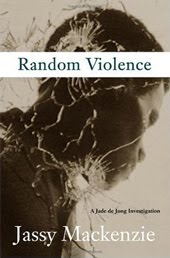
Debut Crime Fiction by Jassy Mackenzie: RANDOM VIOLENCE

Soho Crime has done it again: brought us a crime fiction author from far away and made us sit up and pay attention. Jassy Mackenzie's debut is RANDOM VIOLENCE, set in South Africa, powerful, dark, and well worth the reading.

Private investigator Jade de Jong is back in Johannesburg, where razor-wired fences, security systems, and private guards are part of middle-class life, thanks to the extremes of poverty and violence in the city. Corruption is about as common as you'd expect, and fueled by the city's constant growth and the profits to be made (although, as usual, "it takes money to make money"). Jade is back to witness the end of a case she'd been part of, a decade before, but that's her private knowledge. On the surface, she's simply signing up to help an old friend, Superintendent David Patel, who used to work for Jade's policeman father. And the random acts of violence that have overwhelmed David's office have no apparent connection with each other -- or with Jade.

Yet from the moment she gets home, Jade realizes she's being watched, and violence seems drawn to her. Actually, it's more that she seeks violence, with some determination:
Jade walked back and climbed into her car. Behind her, she heard the man revving his engine in triumph. She pushed in the clutch. Then she popped her car into reverse and hit the accelerator.
Her car shot backwards. There was only room for it to travel a few feet before her rear bumper collided with the front bumper of the luxury car behind her. It was a small impact. She barely felt it. But for him, it was more serious. Because his airbag deployed.
Looking in the rearview mirror, she saw his body whiplash backwards as the powerful bag shoved him out of the way, and then slump forwards again as the bag deflated. His expensive dark glasses fell out of the window and shattered on the tarmac. [ . . . ] Jade put her car into first gear and drove on.
Mackenzie paints a bold portrait of a woman whose unfinished business can endanger any goodness left in her life. Whether Jade can help David depends on whether she can stay alive. In Mackenzie's hands, there's doubt at every step, risk in every decision, and a vivid sense of evil lurking in the past, present, and future. There's no feel of a "first book" here -- this Rhodesian-born South African pounds the pages with skill and vigor. I'm delighted to know that Soho often nurtures sequences of books from its authors; I want to read more Jade de Jong.

PS - In my opinion, the book jacket is awful. Don't sweat it -- go for the book instead.

Monday, May 17, 2010

Stieg Larsson, The Girl With the Dragon Tattoo: The Film

Brilliant screenplay. We watched the film this evening, Swedish with English subtitles (and after a while your ear adapts and you're half getting the Swedish too). Lots of great choices in which material was immaculately reproduced in the film version and which bits were cut. We've already decided we'll purchase the DVD when it's available.

This has to be one of very few occasions when the film actually complements the book.

Sunday, May 16, 2010

Quick Notes: Dave Zeltserman, Carla Neggers

Coming soon: a review of Dave Zeltserman's late-summer release, the quirky and compelling CARETAKER OF LORNE FIELD. We hope to have copies here in time for Dave's June 19 visit here -- and we'll definitely have copies of KILLER.

I mentioned earlier this week that Carla Neggers has four series of books/characters going. Well, I indulged myself yesterday afternoon -- and much of last night and today -- by taking time to read NIGHT'S LANDING from her U.S. Marshal series. And it is delicious: well plotted, with a very believable set of crises, characters that ring true (what an adventurous and intelligent woman Sarah Dunnemore is! and hurrah for Nate Winter as he learns to appreciate her), and a fine sense of timing.

One more series to go ...

And because no Vermont conversation is complete without a bit of weather: Thank goodness, the season of snow and ice seems to have finally ended! The blue-sky world outside the office window is windswept and sixty-eight degrees. And the purple finches, northern waterthrushes, and chipping sparrows that have been desperately cramming seed from my window feeder are all out in the greenery instead. I'm planting peas this evening after supper. But (oh my) our "Eye on the Sky" weather forecasters are still insisting we could have frost again tonight. Reminds me uncomfortably of Vermont's "Eighteen Hundred and Froze to Death," 1816, when crops were decimated by at least a frost in every month.

Thank you, Howard Frank Mosher ...

What a delight to savor the slideshow that author Howard Frank Mosher brought here yesterday, showing the inspiration for WALKING TO GATLINBURG. I liked hearing about the Nashville muse who leans over this author's shoulder, too.

Friday, May 14, 2010

Catching Up With Carla Neggers

What a satisfying read!

I've just enjoyed THE MIST, which is the third in the Boston Police Department (BPD)/FBI series that Carla Neggers began with The Widow and then The Angel. So I'm about ready for the fourth book in this series, which hits the shelves in July -- The Whisper.

Reading a Neggers series is like moving into a neighborhood: You get close to one family/character, then ease back a bit and get to know another, and come to see how they link with each other.  Then someone else stops in with a cup of sugar and after an hour of chatting, you realize they know your ex or one of your kids.

THE MIST opens with hotelier Lizzie Rush quietly undercover in a bar in Ireland, trying to catch up with FBI agent Simon Cahill (familiar from the earlier books). She's trying to make an end run around the threats posed by a multi-billionaire criminal:
Simon, Lizzie reminded herself, was the reason she was in Ireland. She'd heard he was here with Keira on the Beara Peninsula while she painted and researched an old Irish story. As much as Lizzie hated to disturb the new lovers, she fetl she had no choice. She had to act now, before Norman Estabrook could make good on his threat to kill Simon and his boss, FBI director John Marsh.
And only Lizzie realizes how direct those threats are. Events throw her into more direct action herself, and soon she's showing her own skills, from martial arts to rapid thinking. Lizzie's best assets are her cool analytic mind and her intensely networked family.

Neggers provides a rich emotional subtext to her action novels, and while Lizzie's affections were getting engaged, so were mine --  with the entire Rush family of young and older men, who combine capability and tenderness in an alluring ratio.

If you jump into the series with this book (which came out in softcover six weeks ago), you may find, as I did, that the references to the action scenes of the earlier two books can sometimes be distracting. So I'd recommend reading these in sequence, to get extra enjoyment from the way Neggers braids one book's characters and events into the next, and the next. Think of it as weeks of vacation, sliding along with the narrative, and sampling the poignant and powerful Ireland that Neggers portrays.

In fact, for a special treat, check out this author's "photoblog" through her web site, www.CarlaNeggers.com -- I especially like the mist shots, as well as the stone circle that evokes so much history, myth, and passion.

This series is a good fit for readers who find Patricia Cornwell, say, too dark and disturbing but still want to see strong women defend their home, their families, and their friends against criminal forces. Notice that doesn't mean it's "chick lit" -- the crime-solving and pursuits in Carla Neggers's books are professional and absorbing. I'd vote this series as one of the best for beach reading or rainy afternoons.

PS: Carla Neggers comes to Kingdom Books on July 17.  If you're close enough to get to Vermont that day, come ask her how she balances four sequences of books and characters!

Lee Child, 61 HOURS

Janet Maslin at the New York Times has a good review of the latest Jack Reacher.

Wednesday, May 12, 2010

Two Good Choices from the Young Adult Shelves: Kimberly Derting, THE BODY FINDER, and Eric Luper, BUG BOY

It's a new genre, but right from the first moment I heard of it, I've been fascinated by YA -- that is, "young adult." The classification arose through librarians frustrated in finding the right books for teens who were adult in their reading levels, but who weren't really interested in some of the crises that adult novels focus on. When you're in the midst of breaking away from home while also hanging onto it, depending on your friends but also sometimes hating them, scared about what you're going to do for the rest of your life but determined that it won't be the same as what you've seen around you ... well, those are good times to read YA books. Come to think of it, we're all in that boat sometimes, no matter our ages.

A really good read for mystery lovers who enjoy a hint of the paranormal (but without vampires) is Kimberly Derting's THE BODY FINDER. Violet Ambrose has always sensed death -- even the deaths of the mice that cats kill -- and can follow the imprint of a particular death on the killer, too. Her family knows; they've always protected her from exposure, and cared for her emotionally. But when a serial killer terrorizes her small town, at the same time that her feelings for Jay Heaton are turning her insides upside down, her family can't completely shield her from the consequences of being different. And of being needed to help find the killer. Derting holds the plot strings, tense and tough, and everything depends on Violet's choices. Share this with the teens you like best.

Eric Luper's BUG BOY isn't exactly a mystery -- and yet there's death, extortion, and ohmigosh dieting (you'll never guess how jockeys trim off weight in a hurry to ride the best horses), all in the Great Depression summer of 1934 as Jack Walsh scrambles for a career at the racetrack in Saratoga, New York. Jack's family is the opposite of Violet's: He's almost entirely on his own, or worse. And at age fifteen, he's a lot less experienced than he realizes in terms of dealing with really nasty characters and pressures. There are some striking surprises here, and Luper shows in his second novel that he knows how to dig into the past for a tale that resonates with today's choices in the recession. This one will be better for younger teens, or for anyone who's "horse crazy." A good find, and a good summer choice.

Tuesday, May 11, 2010

Robert B. Parker: A Joyful Memorial


Although some 600 people gathered at Boston University near its Howard Gottlieb Archival Research Center yesterday to say goodbye to mystery author Robert B. Parker, who died on January 18, only a few tears were shed -- because the emphasis was on the joy of knowing this author and on the pleasure of his books. The memorial gathering was instigated by Kate Mattes of Kate's Mystery Books, Parker's "hometown bookseller" and a long-time promoter of his mysteries. At the podium were the archivist of Parker's materials Vita Paladino; mystery authors Sue Grafton and Dennis Lehane; critic and friend Calvin Trillin; Parker's publisher and editor; and Parker's wife Joan and their sons David and Daniel.

Paladino credited Parker's wife Joan with encouraging her husband to do his doctoral thesis at Boston University, which in turn meant Parker taught there for two and a half years and managed to fit time for writing his first book into his schedule. The thesis "examined the classic detective fiction of Raymond Chandler and Dashiell Hammett," said the archivist. It was on display in the lobby (our photos show the glassed-in samples from the archive).

Sue Grafton spoke warmly of enjoying time with both Robert B. and Joan Parker. Dennis Lehane asserted that Parker moved American crime fiction into the 20th century, saying, "There is American crime fiction before Parker, and there is American cdrime fiction after Parker. It is true: He laid a stake in the ground, and after that, you always had to look back and see him standing there."

Calvin Trillin raised a chuckle as he recalled Parker's answer to why he wouldn't join the Mystery Writers of America: "The last organization I joined sent me to Korea." He added, "Like most mystery writers of the first rank, he had a great sense of place. When you read the Spenser books, you breathe in Boston."

Putnam president Ivan Held rose to the challenge to say where Parker resides in the publishing pantheon: "I thought about this and decided that he resides at the intersection of Old School and New School." He spoke of the fierce pace of writing that Parker established, too; in later years, Parker's schedule with G. P. Putnam's Sons meant a Jesse Stone book released each February, a Western in June, and a Spenser book in the fall. Chris Pepe, Parker's editor at Putnam, said the author only began to slow his public appearances after age 74.

Son David Parker's remarks were a shorter version of the eulogy he gave earlier this year, and the full text can be found at the Washington Post website. His brother Dan offered a moving rendition of Robert B. Parker's favorite baseball song, "What You'd Call a Dream," and added the final verse of "Danny Boy" in farewell. Joan Parker rose and said, "Can I just say, are my kids great, or what?" And of course she won applause for that, and a warm standing ovation when she completed her own remarks about the 53-year marriage that she and "Bob" enjoyed.

Also on hand to pay tribute to Parker's memory were actor/director Ed Harris, who directed the film Appaloosa made from one of Parker's Westerns; and Parker's long-time agent Helen Brann (in our photo, you see the back of her head as she listens to Dennis Lehane).

Monday, May 10, 2010

Calendar Alert: Poet Wesley McNair at Dartmouth, May 13

This is the culmination of a competition at Dartmouth and will feature Wesley McNair reading his work. A good chance to enjoy meeting this Maine poet, as well as connecting with the new poets at the college. Here's the invitation:
Please join us on Thursday, May 13 at 4 pm in Sanborn Library for our annual creative writing awards ceremony.  Our guest reader and prize judge, is Wesley McNair. Wesley McNair's latest book is "Lovers of the Lost: New and Selected Poems."  Also reading will be this year's student winners of the creative writing prizes.

Wesley McNair is the recipient of fellowships from the Rockefeller, Fulbright, and Guggenheim Foundations, a National Endowment for the Humanities fellowship in literature, two National Endowment for the Arts Fellowships for Creative Writers, and in 2006 a United States Artists Fellowship of $50,000, fifty of which were awarded across the arts to a selection of "America's finest living artists." Other honors include the Robert Frost Prize; the Jane Kenyon Award for Outstanding Book of Poetry (for Fire); the Devins Award for poetry; the Eunice Teitjens Prize from Poetry magazine; the Theodore Roethke prize from Poetry Northwest; the Pushcart Prize, and the Sarah Josepha Hale Medal (also awarded to Robert Frost, Donald Hall, Maxine Kumin, Robert Lowell, May Sarton, Arthur Miller, Richard Wilbur, et. al.) for his "distinguished contribution to the world of letters". Wesley McNair has served four times on the Nominating Jury for the Pulitzer Prize in poetry, and is a two-time recipient of residencies at the Bellagio Center of the Rockefeller Foundation in Italy. A television series aired over affiliates of PBS on Robert Frost for which he wrote the scripts received an Emmy Award. Featured on National Public Radio's Weekend Edition (Saturday and Sunday programs) and several times on Garrison Keillor's Writer's Almanac, his work has appeared in the Pushcart Prize Annual, two editions of The Best American Poetry, and over fifty anthologies and textbooks.
Directions at the Dartmouth College website: http://www.dartmouth.edu/~maps/directions

Sunday, May 09, 2010

New Voice: Irene Ziegler, ASHES TO WATER (Florida Crime Fiction)

ASHES TO WATER brings a new and skillful voice to the mystery scene this summer:

Annie Bartlett's father has been murdered. The loss drags her home, where she hasn't been lately and doesn't want to be -- to central Florida, where the wildlife can't compare with the teeth that her family's past can sink into her.  And after facing her father's battered body, she gears up to visit the local jail, where the murderer is awaiting trial. The accused murderer, that is: Della Shiftlet, final lover and nearly wife in Annie's dad's life. There's little doubt about who battered Ed Barlett -- Della was found standing over the corpse with a bloodied boat oar that matched the damage to the body.

Annie's a gifted photographer, haunted by a presence of her mother; Helen Bartlett drowned when Annie was a child, just nine years old, and her coping mechanisms since then included talking to her mother in her thoughts, and maybe a bit more reality than that, in a long and sorrowful haunting. Nothing in her life, though, has prepared her for what happens at the jail when Della is led into the visiting room in an orange jumpsuit that sags around her ankles.
Annie didn't move. ... Why hadn't the sheriff warned Annie that Della Shiftlet looked exactly like her dead mother? ...

"Look, you're the one who requested this visit," said Della. "So why don't you say what you have to say, and let me get back to my knitting?"

She needed a second, just a second, to work this out. Over the last twenty years, her mother's appearances had blended with Annie's reality, but Annie knew Helen wasn't real, had always known. Her mother was dead, drowned in Widow Lake. That Annie still communicated with her mother was, as one medical text had put it, "a grief-engendered coping mechanism, triggered by sudden loss at a young age." Cumbersome babble, but Annie understood, accepted.

But this.

This was no coping mechanism. This was Ed's killer, and the resemblance to Helen rattled Annie to the bone.

"So, are you going to tell me why you're here, or am I supposed to guess?"

"I wanted to see what a murderer looks like."

Della shifted uneasily under Annie's scrutiny. "Honey, I promise you, I did not kill your father."
Over the next few hours and days, in spite of the evidence, and Della's obvious motive -- to inherit the house and property that are rising in value thanks to a casino plan -- Annie begins to see reasons to doubt Della's guilt. But between her drug-addict sister, the callous violent men cutting into the scene, and the hard feelings in town about Annie showing up for the funeral after ignoring a nice man who missed her for years, well, things are confused. And increasingly dangerous, too.

Ziegler's tight plot, deft descriptions of mood and place, and willingness to dig into both small-town life and the pain of a child's losses, add up to a striking debut mystery that's worth adding to the shelf. Dark and haunted, the book does what I like best in a plot: lays the responsibility for straightening out the mess onto Annie, who needs to test the friendships, loves, and memories that surround her. Only if she can line them up accurately will she have a chance to save her sister, herself, and the past held hostage to the bitter present tense.

Although this is Ziegler's first crime novel, her story collection RULES OF THE LAKE came out in 1999 and includes the roots of this novel; an actor and dramatist, she also is the author of the play "Full Plates." Raised in central Florida, she now lives in the Richmond area of Virginia.

Note to collectors: Although Gale/Cengage Learning is a mostly library-oriented firm, it is publishing this book under its Five Star imprint -- which has also published Zeltserman, Westlake, and other crime authors. But I always wonder just how it all works! (If someone from the publishing house would care to add a comment to explain to us, that would be great.) At any rate, I'd suggest picking up a copy of ASHES TO WATER in hardcover as soon as it hits the market in early June. Oh yes, that title -- think about what you might do during a funeral by a lake. Yes, that's it ...

A Little Mother's Day Bragging

No, neither of my sons is writing mysteries. But that doesn't mean I can't introduce their specialties now and then. My older son, Kiril Savino, is co-founder (with Ted Sullivan) of Fungo Media, Inc., where the Game Changer app for iPhones, iPads, and more is bringing Little League games off the field and onto the desktops (or into the pockets) of parents and other fans who can't be at the field -- and also managing stats for the teams in ways that shoulder some of the tough responsibilities of Little League team managers and coaches. Way to go, Kiril!

My younger son, Alexis Savino, is an actor and filmmaker and also a skilled portrait photographer who works with people who need compelling images of themselves for media and promotion. Alexis is currently editing film and video for his feature film, "Loss Control." I like his poetry, too. And he's been our connection with Café Grumpy, the NYC roaster and brewer of fine "joe" -- so just for the fun of it, we carry that coffee link on the right-hand side of our blog, too, especially since Grumpy is now shipping mail order (hey Dave, do we need to re-order?).

Priorities of my life: enjoy my sons (and their families) and my husband; keep Kingdom Books well nourished with reviews, commentaries, and events; and write good stuff myself, here in Vermont. It's been a great Mother's Day weekend.

Saturday, May 08, 2010

Brooding Suspense at the Unromantic Side of Espionage: SLOW HORSES, Mick Herron

How old were you when you first read a James Bond novel? Did your parents know you were reading it? Dave and I watched one worried mom, a friend of ours, agonize over whether her son was old enough to read one -- then she sat down and re-read the book that she'd recalled as erotic and dangerous, and laughed so much at its "old-fashioned" language and ideas that she told the 12-year-old to go right ahead after all.

Maybe because I'm female, my fascination with Bond books at age 12 or so wasn't with the scantily dressed and beautiful women that James lures toward him, but with the villains, the perils, the escapades (secret weapons, too). A year later, I read my first John Le Carré, The Spy Who Came in from the Cold, and from then on, I wanted serious espionage as part of my bookshelf.

When Le Carré presented the George Smiley books (Tinker, Tailer, Soldier, Spy; Smiley's People; etc.), a powerful thread of global loss and grief trembled within the work. Smiley's personal losses and angers embodied the change in England's position in the world: no longer the crown of Empire, no longer the gentlemanly nation of quiet strength, but instead a less important player in a world whose injustice and criminal actions held the top headlines daily.

Mick Herron's books, in one reviewer's words, provide "post-cold-war spy games" as a thread of continuity. But with SLOW HORSES (available June 1, or a bit before that, from Soho Press), Herron captures the bitter disillusionment of today's espionage as directed by the British government in corporate mode -- that is, with goals and objectives and mandated hierarchies.

River Carter's actions in a simulated terrorist attack cost him his fast-track slot in the intelligence bureau. Chasing the wrong target meant allowing the other person -- the bomber -- to in theory take out an Underground (subway) station, killing many people, destroying trains and lines, and more. Even during the simulation, his mistake has real, and costly, effects. Most pertinent of all for River, the moment of confusion bumps him off the path to the top (or at least the upper realms) and out into the pathetic group of "losers" banished to Slough House -- a department handed the most pointless labors for the intelligence network, and reminded repeatedly of its ineptitude and pariah status. Small wonder that its members accelerate their drinking and other random pursuits of misery. Mostly they only stick with their jobs out of a refusal to let the system force them to resign.

There's an ironic pun embedded in the name of the group, since "Slough" is pronounced"slu" or "slau" -- Webster's defines the noun as "a place of deep mud or mire." And its residents are thus the ones you'd never bet on, the official "slow horses" who've left the fast track.

River stands out among these trembling old hands not only for his odd name and his youth, but also for his family heritage of "service." But his grandfather, the "O.B." (I'm sure O is for old; you choose what the B represents), may be enough to keep him from being outright fired, but not enough to get him back into the good graces of the powers that be:
His grandfather said, "I hope you're not planning anything foolish, River."
"It's beneath my abilities."
"It's a hoop they're making you jump through."
"I've jumped. I've jumped over and over again."
"They won't keep you there forever."
"You think? ... They've a whole club in the MoD [Ministry of Defence] of Hooray Henries who've left  classified disks in taxis without having their lunch privileges revoked. But Harper's never going back to Regent's Park, is he? And neither am I."
Herron's previous five British suspense novels have taken a literary path through the stresses of death and destruction, starting with a sequence of four novels featuring investigator Zoë Boehm (Down Cemetery Road, 2003; The Last Voice You Hear, 2004; Why We Die, 2006; and Reconstruction, 2008). They've painted a grim portrait of postmodern life, of Oxford-area success and failure, fear and depression. Smoke and Whispers followed in 2009. With the 2010 publication of Slow Horses, Herron adds a darkly wonderful humor to River's life in grubby offices with manipulative superiors, demonstrating that slow horses can still run the track. From the moment that River feels a twinge of regret for tormenting his officemate by sorting stinky trash all over the office rug, to River's increasing suspicion that his lame-duck boss Lamb is actually running a (forbidden!) espionage operation in which television, terrorism, and office secrets have equal parts, a partnership among the broken and damaged takes on life.

And redemption, even out of dark, grimy Slough House, begins to look possible. Not probable, mind you. But were you expecting some sort of blinding light, out of this group of losers??

If you like the Peculiar Crimes Unit that Christopher Fowler portrays, or the absurd pleasures of Charles McCarry's deft plotting in Old Boys, then SLOW HORSES will tickle you. More broadly, if you enjoy either espionage or British police procedurals, let this masterful storyteller stretch the genres for you with a generous twist of wit and a sardonic view of how determination and doggedness can drag disaster -- and perhaps something better -- into your life.

PS -- There are two cover images available for this title at present. The one at the top of this review is the one on the Soho Press website; the other, shown down here, is the one on the advance readers edition.

Wednesday, May 05, 2010

Reviews Coming Next: Herron, Ziegler, Gilstrap

OK, I've read, I've thought, and now I'm digging for other work by these three -- very different from each other and all worth reading. Watch for the Herron review this coming weekend.

Tuesday, May 04, 2010

It's Black Fly Season ... So: Giles Blunt, Louise Penny

The late-April snow surprise melted in time to cut three inches off the lawn on Saturday, and we opened all the windows on Sunday, celebrating warm weather finally blanketing the ridge. I didn't see much weather on Monday -- too much desk work -- but today showers and finally thunderstorms crashed against the house.

That means tomorrow will be a heavy day for black flies, the tiny biting insects that raise huge welts on tender skin. It's almost impossible to evade them; I caught one of them in my hair during Sunday's tramp, and it came into the house with me and jabbed my neck. I'm still rubbing the welt, two days later.

Vermont has a mercifully short period that's intensely "black fly season" -- say, most of May and the first half of June. By then, mosquitoes are more the norm. But the itty-bitty biters get worse as you go north, fueled by a hunger that has to be assuaged in an ever-shorter season. I've sampled them in the Atlantic provinces of Canada, as well as in Quebec's wild woodlands. They're actually dangerous if you get enough bites.

That's what takes BLACK FLY SEASON by Giles Blunt (2005) into the horror range, all too close to the feeling in the Hitchcock film "The Birds": Enough of the small bites (or pecks) can be deadly. And into a bar of good old guys, 250 miles north of Toronto, comes a red-headed woman with enough black fly bites to almost excuse what seems to be wrong with her -- that, and the bullet she's carrying in her brain.

So I pulled out a copy of this award-winning author's salute to the season, and I'm looking forward to grazing through it again next week.

Meanwhile, still focused on Canada -- Dave and I finally found a not-so-good-condition copy of Louise Penny's October 2009 volume, THE BRUTAL TELLING. I know, that doesn't sound like something to celebrate, but you've got to understand the life of a bookseller: We bought our share of gorgeous copies of this book when it first came out, carefully examining each to make sure they were flawless, and we appreciated hugely Louise Penny's signature in them, during her Vermont visit. But then we had to set them aside to keep them in pristine condition for collectors, and in an unreasonably short time, they'd been collected right out of here. We looked at each other in dismay: No shabby copy around, that we could drag happily into bed or prop on the sofa cushions.

Well, that's why we were so cheerful about snagging this worn one last week. I won the toss for first reader (Dave's been on a Robert Crais tear anyway), and I kept sneaking down to the kitchen yesterday and today, using the time spent waiting for the kettle to boil as "I can use this for reading THE BRUTAL TELLING" -- and if I spent extra time reading in the kitchen, Dave was kind enough not to complain much.

Savor this one. I did. A chapter or two at a time, I rambled and wondered: The story is drenched in sorrow, and the plot and characters are so rich that struggling to figure the killer and the motives becomes a form of homage to Louise Penny's depth. In the village of Three Pines, familiar from the four earlier Armand Gamache investigations, terror and horror might have been vanquished after so much pain and the arrival of "newcomers" armed with paint and plans.

But the dearest figures from the earlier books, Olivier and Gabri, owners of the bed-and-breakfast and bistro that have knitted the village and the Chief Inspector's team together, are likely suspects when a bludgeoned body is found on their premises. And for each layer of the past that Chief Inspector Gamache pulls away, something bleeds and something releases a foul, rotten gas.

Penny's gift of braiding beauty and nightmare just earned her the Agatha Award for Best Mystery for THE BRUTAL TELLING. Check out her web site, www.LouisePenny.com, for news of more awards and the announcement of her fall 2010 book, BURY YOUR DEAD. If you haven't yet read this series, this summer is ideal for catching up, to be ready for the September release: STILL LIFE, A FATAL GRACE, THE CRUELEST MONTH, and A RULE AGAINST MURDER are the preceding titles, in order. Do read them from the start -- it's the best way to see how Penny expands her vista with each one.

Sunday, May 02, 2010

And the 2010 Edgar Awards go to ...

Have you read these? Let me know what you think! I've got my head in another one today ... BK

***
The 2010 Edgar Awards from the Mystery Writers of America


Best Novel: John Hart, The Last Child
Best First Novel by an American Author: Stefanie Pintoff, In the Shadow of Gotham
Best Paperback Original: Marc Strange, Body Blows
Best Fact Crime: Dave Cullen Columbine
Best Critical/Autobiographical: Otto Penzler (ed.), The Lineup: The World's Greatest Crime Writers Tell the Inside Story of Their Greatest Detectives
Best Short Story: Luis Alberto Urrea, "Amapola," in Phoenix Noir
Best Juvenile: Mary Downing Hahn, Closed for the Season
Best Young Adult: Peter Abrahams, Reality Check
Best TV Episode Teleplay: Patrick Harbinson, "Place of Execution" (on PBS/WGBH Boston)
Robert L. Fish Memorial Award: Dan Warthman, "A Dreadful Day," in Alfred Hitchcock Mystery Magazine

Grand Master: Dorothy Gilman
Raven Awards: Mystery Lovers Bookshop (Oakmont PA) and Zev Buffman, International Mystery Writers' Festival
Ellery Queen Award: Poisoned Pen Press (Barbara Peters & Robert Rosenwald)
Simon & Schuster/Mary Higgins Clark Award: S. J. Bolton, Awakening 

Congrats to Dave Zeltserman, Boston Noir Author

We're a day late with the news (gee, we were out yesterday buying books), but super excited: Dave Zeltserman's novelette "Julius Katz," already in print in the Sept/Oct 2009 issue of Ellery Queen's Mystery Magazine, just received a Derringer Award in short fiction. Hurrah! For more, see Zeltserman's blog, http://smallcrimes-novel.blogspot.com, and here's yesterday's announcement from the Short Mystery Fiction Society, which gives the award.

Zeltersman's spring 2010 release, KILLER, hit the stores yesterday, too, the third in his trilogy of "what happens when a career criminal gets out of prison?" If you like it dark, grab a copy. Here's our review from earlier this winter.

Coming soon: a look at the summer 2010 release from this prolific and powerful writer: THE CARETAKER OF LORNE FIELDS. We'll try for early copies on hand when this Boston author comes to Kingdom Books on July 17 (2 p.m. event).

PS: Yes, there's another Zeltserman book coming out in the fall, too!! More on that later.

Friday, April 30, 2010

Calendar Alert: Poetry -- 5/6, Margaret Lloyd, Sarah Browning; 5/16, Maxine Kumin

The Collected Poets Series, Shelburne Falls, MA, welcomes Margaret Lloyd and Sarah Browning on May 6.

Then, in a special guest reading on Sunday, May 16 at 3 PM, Maxine Kumin will be reading at the Shelburne-Buckland Community Center.

First, on May 6th Margaret and Sarah will be reading from their work at Mocha Maya's Coffee House at 7 PM: $2-$5 sliding scale. Mocha Maya's Coffee House, 47 Bridge Street, Shelburne Falls, MA 01370, 413-625-6292. Wheelchair accessible.  See www.collectedpoets.com for more information.

Margaret Lloyd’s first poetry collection, This Particular Earthly Scene, was published by Alice James Books and in 2008. Plinth Books published A Moment in the Field:  Voices from Arthurian Legend.  She has also published a book-length critical study of William Carlos Williams’ poem Paterson (Fairleigh Dickinson University Press).   She received a grant from the National Endowment for the Humanities for the creation of critical editions and translations of poems written by a medieval Welsh woman. She was the Margaret Bridgman Fellow in Poetry at the Bread Loaf Writers’ Conference, received the Vachel Lindsay Poetry Award for the best poem published in Willow Springs, and a fellowship to Hawthornden Castle, an International Retreat for Writers in Scotland where she completed her most recent poetry collection.  In 2008, she was granted a writing residency at Yaddo where she wo rked on her forthcoming third book of poems, The Cows of Heaven. She has poem/painting pairs forthcoming in Poetry Wales and Planet:  The Welsh Internationalist.  Lloyd chairs the Humanities Department at Springfield College, Massachusetts.

Sarah Browning is co-director of Split This Rock Poetry Festival: Poems of Provocation & Witness and DC Poets Against the War. She is the author of Whiskey in the Garden of Eden (The Word Works, 2007) and co-editor of D.C. Poets Against the War: An Anthology (Argonne House Press, 2004). The recipient of an artist fellowship from the DC Commission on the Arts & Humanities, she has also received a Creative Communities Initiative grant and the People Before Profits Poetry Prize. She was founding director of Amherst Writers & Artists Institute – creative writing workshops for low-income women and youth – and Assistant Director of The Fund for Women Artists, an organization supporting socially-engaged art by women. She co-hosts the Sunday Kind of Love reading series at Busboys and Poets in Washington, DC, where she lives with her husband and son.

Special Event with Maxine Kumin, Sunday, May 16, 2010
In celebration of Maxine's latest work, Where I Live: New and Selected Poems 1990-2010, she will be joining The Collected Poets Series for a special reading at the Shelburne-Buckland Community Center at 3PM on Sunday, May 16. More on this event soon!

Monday, April 26, 2010

Guest Post: Gerry Boyle, Maine Crime Fiction

A warm welcome to Down East Maine author Gerry Boyle, whose newest book in the Jack McMorrow series, DAMAGED GOODS, was our featured review yesterday. My husband Dave has been collecting Gerry's books "forever" and asked Gerry ....


Dave asked if I’d write a bit about my influences, some favorite mysteries. So I swiveled my chair, reached for the shelf. Books and writers I really like—they get to stay in the study. Others are vanquished to bookshelves elsewhere in this rambling old house.

So what did I come up with? It’s an eclectic mix:
  • The Laughing Policeman by Maj Sjowall and Per Wahloo. First published in 1968 by the husband-wife team from Sweden. Their Martin Beck mysteries are solid police procedurals. You can’t go wrong with any of them.
  • Just a Corpse at Twilight by Janwillem van de Wetering. The Zen master of mysteries, van de Wetering wrote mysteries set in Amsterdam. They have a dreamy quality to them that I find beguiling. A brilliant guy, van de Wetering lived all around the world before settling on the Maine coast. He died in 2008.
  • Farewell My Lovely by Raymond Chandler. Enough said. I turn to these from time to time to witness wonderful writing. Every page has a sentence you feel you should remember. This one, picked because that’s where the book fell open. “He lay smeared on the ground, on his back, at the base of a bush, in that bag-of-clothes position that always means the same thing.” Nice.
  • God Save the Child by Robert B. Parker. Chandler’s only true heir. I read the last Spenser, then reread some of this one, his second, published in 1974. I like the early books best. Parker was a gifted writer, known for his dialogue, but his descriptive stuff, which fell away over the years, was very good.
  • Blitz by Ken Bruen. The UK’s master of dark and gritty crime novels set in South London and Galway. Inspector Brant, his amoral London detective, is a masterful creation.
  • The Deep Blue Good-By by John D. MacDonald. I’ve read everything MacDonald wrote and have a collection of his Travis McGee paperbacks with their quaintly lurid covers. A great storyteller, skilled at narrative, powerfully descriptive. “She was a tall and slender woman, possibly in her early thirties. Her skin had the extraordinary fineness of grain, and the translucence you seen in small children and fashion models. In her fine long hands, delicacy of wrists, floating texture of dark hair, and in the mobility of the long narrow sensitive structuring of her face there was the look of something almost too well made, too highly bred, too finely drawn for all the natural crudities of human existence.” Is that good or what?
So these are a few of the influences. Reading the work of writers like these, and spending more than a decade as a newspaper reporter, landed me in this chair. Today I continue with PORT CITY UNDERGROUND, the second Brandon Blake mystery. I’m pondering a character whose biggest flaw is a highly developed sense of right and wrong. Could that flaw be fatal?

Sunday, April 25, 2010

A Nose for Trouble: Journalist-Detective Jack McMorrow in DAMAGED GOODS, Gerry Boyle

In some families, it's the economy that pushes the second spouse or partner back into the workforce, even though the children are still young. For Jack McMorrow, totally committed dad to his four-year-old daughter Sophie, the career move comes in response to his wife's pain: A social worker who faces situations where kids are sometimes removed from their abusive parents, Roxanne Masterson comes home from a hellish day, shaken and drained, having been through danger and still wearing a threat over her head from a Satanist father whose children were literally being starved.

And Jack, quick to step up as Roxanne admits she wants out of her emotionally exhausting job, takes out the list of investigative notions he's been building as a return to his freelance journalism work. His editor makes it easy ... but who would have guessed the story he steps into would crowd into his personal life?

Well, actually, Roxanne could have guessed. After all, it's happening to her, too. The crazies are coming after her, even coming into the home that she and Jack share, calling for payback -- you take my kids, I'll take yours. And Jack's "story" has narrowed to a young woman named Mandi (it's clearly not her real name though), who's been supporting herself in the small Maine town by "companionship" offered through the personal ads. No surprise that she'd crossed paths with some nasty characters. She might even be drawing them closer, to Jack and Roxanne and little Sophie as well as to herself.

Soon the tension is pressuring Jack and Roxanne's marriage as well:
I embraced her, and Roxanne said, "I feel like my house is falling down, Jack. All around me. People coming here, my God. It never happens Maybe I'll take Sophie and go away. Go to New York. Take her to the zoo and Central Park, stay in a hotel."
And when the investigating police officer doesn't take action right away, Jack's wife takes her own:
"Bullshit," Roxanne snapped, and she marched to the cruiser, opened the passenger's side door and got in. "Who do I have to call," I heard her say, "to make you take this seriously?" And then she slammed the car door shut.
One of the best parts of Jack and Roxanne's life, though -- after Sophie and the sense of doing some good in their two jobs -- is living next door to Clair and Mary, friends literally willing to risk life and limb for the endangered family. Clair's background as a soldier in Vietnam becomes significant, not just for his ability to take up arms and his willingness to be at Jack's back or front or whatever it takes, but also for his experience with the personal effects of violence, whether done to you or done by you. Sane and strong, Clair helps Jack maneuver and respond to the chaos around him, showing the best of what war can do to a person's thought processes.

But even Clair's skills and Jack's outrage can't defeat evil, and when death does take place around them, it's irreversible. How will all this affect Sophie? And why is Roxanne reacting so negatively to Jack's usual efforts to rescue the helpless, this time in the person of lonely and battered Mandi and her cat?

Boyle's own years as a reporter and experience with both small-town and regional crime give him great assets for this book. But the best tool he has is the well-honed ability to pace the action, let the characters mature, and tangle the knots of threat and shadow, until with hard work Jack McMorrow discovers more truth than he wanted to see.

This is Boyle's ninth novel, and his eighth featuring McMorrow; last year he opened a second series with young Brandon Boyle. DAMAGED GOODS is published by Down East in Maine and is available through Boyle's web site, as well as through online retailers. The web site, www.gerryboyle.com, also offers a video trailer for the book, some discussion on why people do and don't want to see trailers, and insight into McMorrow's past. You don't have to read the earlier books to enjoy this one, but once you've emerged from the tension of Jack's confrontation with fear and pain, you'll probably want to gather the others. Here's the sequence:
1993, Deadline
1995, Bloodline
1996, Lifeline
1997, Potshot
1998, Borderline
1999, Cover Story
2003, Pretty Dead
2004, Home Body
The Brandon Blake detective novel, Port City Shakedown, came out in 2009.

Gerry Boyle is touring with DAMAGED GOODS in Maine and New Hampshire this spring, and Vermont in the fall (watch for the date for Kingdom Books in late September). Tomorrow: a guest appearance from Boyle on this blog.

Checking the List: Harlan Coben, CAUGHT

I love discovering great new authors of crime fiction and mystery, and that includes noticing the ones just starting out and getting better in leaps and bounds. There are authors who've been around longer, though, and who make my "must read" list as soon as a new book comes out -- like Michael Connelly, Laurie R. King, Garry Disher, Martin Limón, Charles Todd. Sure, some of their books won't suit my taste, but most have, in some way. Newly added to the list for me: Walter Mosley, Karin Fossum, John Harvey. Others I know I'll catch up with, like S. J. Rozan -- I just enjoyed finally getting to her Shanghai Moon, although I happened to read it in the British trade paperback form, which uses the title Trail of Blood. (Honestly, I liked the American title better on this one; it's a good Lydia Chin Chinatown detective novel. Collectors will also want it in their Judaica/Holocaust sections.)

Typing up the New York Times popular mysteries list the other day pushed me to get around to the new Harlan Coben, CAUGHT. Odds are always in favor of Coben's work being first-rate. And this one, his seventeenth novel, takes the world of catch-them-at-it television, and pairs it with the two-way life ruins surrounding sexual predation (it sometimes seems close to impossible to protect our kids; it's also close to impossible to protect the innocent from innuendo, or to make sense out of sentencing regulations). The ensuing plot is so swiftly tangled that sometimes TV reporter Wendy Tynes isn't sure whether she's a good person or a bad one. Funny thing is, her co-workers aren't sure, either.

I couldn't put it down. Each time I thought I had the threads sorted out, bang, another door would slam open or shut. Check the red door on the cover -- highly significant. It's a great read, and Coben again earns his place on the popular list. Warning: If you have teens at home, you might want to wait a few years before you let this one into your brain.

David Downing, STETTIN STATION: new from Soho Press

Did you purchase the British first edition of Stieg Larsson's third book, The Girl Who Kicked the Hornet's Nest  -- because you couldn't wait for the later U.S. printing of the final book of the series?

Get that UK purchasing system ready for action, because David Downing's newly released book STETTIN STATION is likely to push you in that direction again.

The third in his sequence set in Nazi Germany and featuring Anglo-American journalist John Russell, this book is already being compared -- inevitably -- with Alan Furst's crime fiction summoning the dark clouds of Europe in the 1930s and the crackle and threat of the oncoming storm of war. To the extent that anything related to World War II becomes part of this genre, yes, Downing's ZOO STATION, SILESIAN STATION, and now STETTIN STATION can sit on the same shelf.

Yet the differences are more significant. Furst amasses detail and stands at a short but tense distance from his characters; Downing instead nests within them, one hand resting on John Russell's heart, the other dangling in the coldly seething mess of fears and resentment tapped so well by Adolf Hitler.

A journalist still being allowed, within the censors' scissors, to post reports back to America and England, John Russell walks a depressing route between increasing awareness of what's happening to the Jews, and inability to write about it for his readers because of the political iron fists around him. His longtime girlfriend Effi, a German movie star, lives under increasing risk because of Russell's position and her own clear-sighted awareness of Hitler's Reich. And raising the risks further for John, his son Paul has mixed feelings about him, and can be threatened by the intelligence forces that maneuver Russell's actions.

Twists of plot, emotional verity, and of course the reader's awareness of what's ahead in the larger sense increase the tension and the compulsion to turn the pages in STETTIN STATION. Downing lays out a vivid and pounding tale, and Russell's situation at the end is nearly unbearable.

And that's why the desire to snag the fourth in this series, POTSDAM STATION, may overwhelm many readers. It's scheduled for UK release in July from Old Street Publishing.

A final note about release dates: Soho Press officially releases STETTIN STATION for May 1, but the book is already available through online dealers. Grab it now, and you'll have time to decide whether to undertake an international route to the sequel.

Crime Fiction? A DEAD HAND, A Crime in Calcutta, Paul Theroux

Over the winter I read Paul Theroux's marvelous journey tale, DARK STAR SAFARI, which captures the paradoxes of being a midlife explorer: regrets about leaving family behind, physical challenges, and yet the compulsion to see what's across the next border or down the next railway line. I couldn't put it down, even though I thought the ending lacked some craft. It felt like a worthy successor to those long-ago classics that Theroux gave us, THE GREAT RAILWAY BAZAAR and THE OLD PATAGONIAN EXPRESS. Theroux doesn't apologize for living in a "developed" country and doesn't overanalyze the differences between his home life and what he encounters on the road -- and he welcomes difference in all its color and aromas. He's a marvelous guide.

I wish he'd written A DEAD HAND as an exploration of Calcutta, with its rich and desperately poor, its nuances of religion and ecstasy, its haunted beauty and its bacteriological dangers. (Two people about whom I care very much are haunted for life by the results of parasites acquired in India.) Probably I would have enjoyed that book more than the one he actually delivered. A cover-to-cover erotic adventure with dark twists of control and submission, its images haunt in unpleasant ways. Moreover, its subtitle promises that it will be a mystery, yet the book fails to deliver for the genre because its narrator and villains lack insight, and the key "twist" is broadcast too far in advance and fails to surprise or enlighten or wound.

Without going into the erotic passages, here's a fairly typical paragraph from what ought to have been a revelatory moment in the book, and that shows the mingling of Theroux-as-gifted-narrator and Theroux as inefficient plotter of crime:
"I am well, uncle. Thank you."

He had a soft but certain voice, and he stood very straight, his head erect, his arms at his sides in a posture of obedience. From his shallow breathing and the shutter-blink of his eyelashes I could see that he was nervous, yet he had been so schooled in manners that he knew how to stand his ground. He was posed as a dutiful underling is posed. He knew better than to slouch; he was alert, polite, watchful without seeming worried. And somehow his anxiety only enhanced these traits, because for all his frailty he showed courage. Though he might have been older, and he seemed serious, even careworn, he didn't look more than ten or eleven -- a small unswerving soldier. And I like being called uncle.
Interestingly, though, this is also a bibliomystery, with one of its pins being the narrator's deadening case of writer's block. And with that in mind, I'll admit that maybe this was the only framework in which Theroux felt he could convey his experience of Calcutta and of India as a whole.

That said, it's not a book I'll read a second time. Too much work, for not enough delight.

When Poetry Rings True, True, True: HOME BY NOW by Meg Kearney

I spent a couple of years working on the board for The Frost Place (Franconia, NH) with poet Meg Kearney. She didn't drop lines of verse in public, and rarely brought up her enormous experience in the business side of writing (Meg is director of the Solstice Low-Residency Master of Fine Arts in Creative Writing Program at Pine Manor College in Chestnut Hill, Massachusetts, as well as director of Pine Manor’s Solstice Summer Writers Conference; she was also associate director of the National Book Foundation (sponsor of the National Book Awards) in New York City). And her presence at poetry events at The Frost Place was often muted, focused more on her three-legged dog and regular companion Trooper, with warm conversation with the people who were drawn to the dog.

Her collection HOME BY NOW reached me "late" (months after publication) so I didn't hurry to make time for it. Unlike mysteries, poetry reviewing calls for at least three read-throughs: one to meet the slap of the words and their suprises with a fresh face, one to burrow into layers, one to consider how the collection is formed and shaped. Finally, I made time for Meg's book -- and almost instantly knew it would anchor my thinking about women's revelations, the climbs so many of us make out of dark places, and how to braid our lives into our words. I'll be giving copies of this book to others, and mentioning it to strangers. Yes, it's that good.

Take the opening poem of the collection, "Carnal," which begins:
I suppose squirrels have their hungers, too,
like the one I saw today with the ass end of a mouse
jutting from its mouth. I was in the park;
Kearney goes on to describe being fascinated by her dog's attentiveness to the sight, so that the two of them, dog and woman, became gawkers together. Then, with swift strokes of pen (or sword), she pulls an "ex" into the comparisons and ends,
... pointed like a stubby finger,
accused me of everything I'd thought
I'd wanted, and what I'd killed to get it.
Deftly weaving voice and persona, Kearney allows no easy confesssions: These are poems, not necessarily autobiography. They root in New York City, and a bedroom window view of the smoldering Twin Towers, with a decision to leave the city and go north. But they also root in the embers of girlhood, in comparing breast, tasting liquor, being children on bicycles and in playgrounds while also exploring sexuality that's enflaming. I like the poem "Virgin," which captures this multiplicity of naive wondering and hormone-fed longing and eagerness.

Amazing to me is the long-lined poem "First Blow Job":

Suddenly I knew what it was to be my uncle's Labrador retriever,
young pup paddling furiously back across the pond with the prized
duck in her mouth, doing the best she could to keep her nose in the air

so she could breathe. She was learning not to bite, to hold the duck
just firmly enough, to command its slick length without leaving marks.

These lines capture sensations I'd never dreamed of trying to put into words, and in a just world, this poem would turn up on every AP English exam -- to confirm for teens that we really do know what they're either going through or contemplating. But I'd also love to see the poem in collections for women looking back on their lives with curiosity and pleasure. And there may be men also who seize this marvel of senses, and say "Yes, that's what it is/was!"

At nearly the center of the collection is a powerful narrative piece, nearly four pages long, in snugly metered quatrains, layered with points of view and memory and sharply packaged moments. It's from the (woman) bartender's point of view, titled, "So This Grasshopper Walks Into a Bar." I'll let the poem set the scene, then provide some of the gems that follow:
The trick is to pay close attention to that vodka
you're pouring, and lie: Nope, haven't heard
that one. ...

It's only nine o'clock, and already the smoke eater's
snapping like a wet towel. ...

... Each time
you come here you're struck by how the cigarette reek

in your hair mixes with the musk in your turtleneck
and it doesn't smell bad. ...

Lugging out that case you know the local boys think
you're tough -- yeah, you can fake it as well as Linda

can fake she's sober -- that is, up to a point. ...

You'll cash out, slam a shot, pour the tip jar into your
purse, elbow the light switch, turn the key in the door
and set the alarm.
Those quick turns of vivid language, "snapping like a wet towel," "elbow the light switch": As much as her courage to name the realities that we grow through, I savor those phrases in Kearney's work. Like a hybrid of Emily Dickinson with Bruce Springstein, she's telling the truth, and I'm listening. And tapping one foot, getting ready to get up and dance.

Saturday, April 24, 2010

Gerry Boyle: Review Plus Guest Blog Post

Two days of Gerry Boyle and Jack McMorrow ... starting tomorrow.

Mystery Fans in 2010 Are Reading These ...

The New York Times announced last week that this year's top mysteries in terms of readership, though April 9, have been:

Shutter Island, Dennis Lehane
Look Again, Lisa Scottoline
Fantasy in Death, J. D. Robb
Caught, Harlan Coben
Split Image, Robert B. Parker
First Rule, Robert Crais
How to Wash a Cat, Rebecca M. Hale
Complete Sherlock Holmes Vol. 1, Arthur Conan Doyle
Long Lost, Harlan Coben
Plum Spooky, Janet Evanovich

Shutter Island purchases are clearly credited to the Martin Scorsese-directed film version of the book, released early this year and starring Leonardo Di Caprio. The NYT writer, Shelly Freierman, went on to say that "Many of the top 25 books feature the adventures of popular detectives." She also mentioned Elizabeth George's This Body of Death, available this week and the 15th to feature Scotland Yard Detective Inspector Thomas Lynley.

For writers who wonder whether to invest in a series, or strike new ground with stand-alones, this list suggests that the market strongly favors series titles, when the detectives appeal to readers. I'm reminded of those happy years of working through one "Nancy Drew" book after another, savoring the mix of familiarity and new twists of plot.

I'd like to hear from some of you: Do you purchase (or borrow) your mysteries more often from established writers with existing series? How often do you look for a new character or country or tension? And how do you decide when and how to explore authors who are new to you?